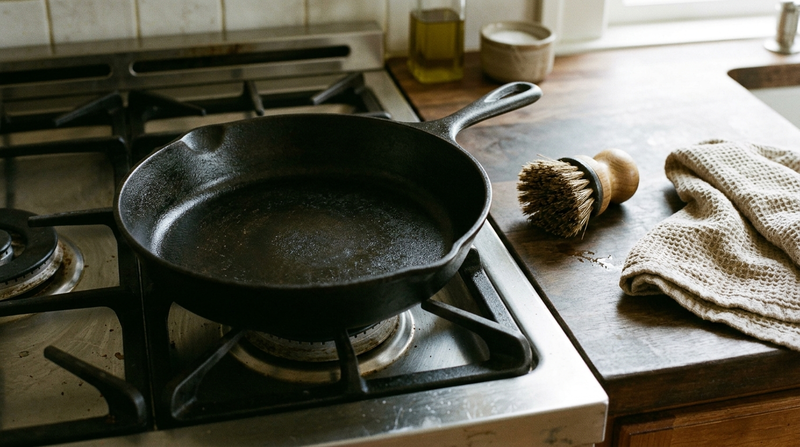
Cast iron has a reputation for being fussy, but a skillet that is cared for properly can last generations. The key idea is that the black, slick surface on a good pan is not paint or coating. It is seasoning, thin layers of oil that have been baked on until they harden. Everything about cast iron care is about building and protecting that layer.
What seasoning is
When a thin film of oil is heated past its smoke point, it undergoes a chemical change called polymerization and bonds to the metal as a hard, slick layer. More layers make a smoother, more nonstick surface. Cooking with fat builds seasoning gradually, which is why a regularly used pan gets better over time.
How to clean it day to day
Forget the old rule that soap ruins cast iron. Modern dish soaps are mild, and a quick wash will not strip well-polymerized seasoning. What does harm is soaking and air-drying.
- While the pan is still warm, rinse it under hot water and scrub with a stiff brush or non-scratch sponge. A little soap is fine.
- For stuck-on food, add coarse salt and scrub with a paper towel, or simmer a little water in the pan for a couple of minutes and scrape with a wooden or silicone spatula.
- Dry it completely right away with a towel, then set it over low heat for a minute or two to drive off any remaining moisture.
- Wipe a very thin film of neutral oil over the cooking surface with a paper towel. Then wipe again as if you were removing it. The pan should look dull-shiny, not greasy.
Things to avoid
- Soaking the pan in the sink or putting it in the dishwasher, which cause rust.
- Letting it air-dry.
- Long simmering of acidic foods like tomato sauce or wine in a pan with thin seasoning. It can strip seasoning and leave a metallic taste. A well-seasoned pan handles short cooking times better.
- Heating it empty on high for long periods, which can damage the seasoning and the pan.
How to re-season in the oven
Do this when the pan looks dull, gray, patchy or feels sticky.
- Wash the pan with warm soapy water, scrub off any loose flaking, and dry it completely.
- Rub a very thin layer of neutral oil, such as canola, vegetable or grapeseed, over the entire pan, inside, outside and handle.
- Wipe off as much as you can with a clean cloth. Too much oil leaves a sticky, blotchy finish. You want the pan to look almost dry.
- Place the pan upside down on the middle rack of an oven preheated to 450°F (230°C). Put a sheet of foil on the rack beneath to catch any drips.
- Bake for one hour, then turn the oven off and let the pan cool inside.
- For a stronger finish, repeat the process two or three times.
Expect some smoke. Open a window and run the vent.
How to rescue a rusty pan
Rust looks alarming, but it is usually cosmetic and fixable.
- Scrub the rust off with steel wool or a stiff brush, using warm water and a little soap, until you see bare gray metal.
- Rinse and dry thoroughly, right away, on a burner over low heat.
- Re-season using the oven method above, ideally two or three rounds.
If a pan is cracked, badly pitted or warped, it is time to retire it. Otherwise, a rusty flea market pan can become a favorite.
Fixing a sticky surface
A tacky finish means the oil was applied too thickly and did not fully polymerize. Bake the pan upside down at 450°F for an hour, and if it stays tacky, scrub with hot water and a stiff brush, dry and try again with a thinner coat.
Cooking tips that protect the seasoning
- Preheat the pan for a few minutes before adding oil and food. Cold food in a cold pan sticks.
- Use enough fat when you first start with a new pan. Eggs and fish are better left until the seasoning is established.
- Fry, sear and roast. Our guide on searing meat works well for a cast iron skillet.
- Store the pan in a dry place. If stacking, put a paper towel in between.
Is it worth owning?
A plain 10 or 12-inch cast iron skillet is inexpensive, holds heat very well, goes from stove to oven and handles high-heat cooking. It does need a few minutes of attention after use, but it rewards you with years of use and a surface that improves each time you cook.