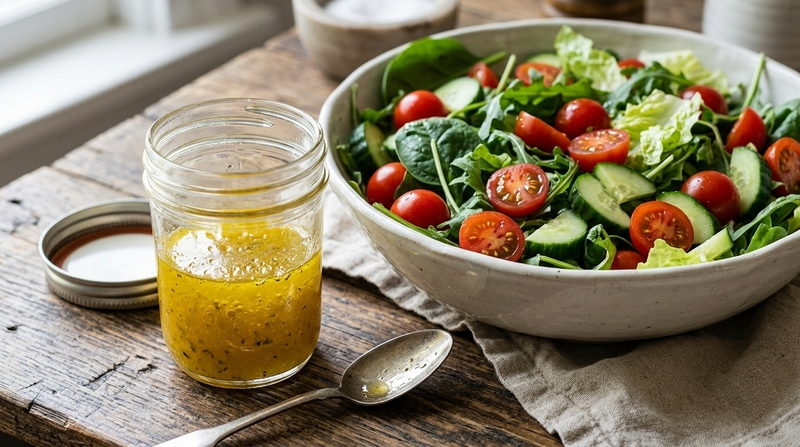
Bottled dressing is convenient, but a basic vinaigrette takes two minutes, costs a fraction as much and tastes noticeably fresher. Once you know the ratio, you will not need a recipe. You will just taste and adjust.
The basic ratio
The classic formula is three parts oil to one part acid, plus a little seasoning. For a dressing for about four salads:
- ¾ cup (180 ml) olive oil
- ¼ cup (60 ml) vinegar or lemon juice
- 1 teaspoon Dijon mustard
- ½ teaspoon salt
- Freshly ground black pepper
- Optional: 1 teaspoon honey, 1 small minced shallot or 1 minced garlic clove
Some people prefer a sharper 2-to-1 ratio. Taste and adjust. The acid and fat you use change how sharp it tastes.
How to make it
- In a small bowl or jar, combine the vinegar, mustard, salt, pepper and any sweetener or shallot. Let it sit for 5 minutes. Soaking the shallot or garlic in acid mellows its raw bite.
- Whisk in the oil slowly, a thin stream at a time, until it thickens slightly and looks creamy. Or put everything in a jar with a tight lid and shake hard for 20 seconds.
- Taste it on a leaf of lettuce, not off the spoon. Plain dressing tastes sharper than it does on greens. Add more salt, acid, or sweetener as needed.
Why mustard helps
Oil and vinegar naturally separate. Mustard contains natural emulsifiers that help bind them, keeping the dressing creamy and stable for longer. A spoonful of honey or a bit of mayonnaise also helps. Without them, the dressing still tastes fine, but you will need to shake it again just before serving.
Choosing your acid
- Red wine vinegar: bold and tangy, good with hearty salads.
- White wine or champagne vinegar: lighter and more delicate.
- Apple cider vinegar: fruity and slightly sweet, great with apples, nuts and cheese.
- Balsamic vinegar: sweet and syrupy, works with a bit less sweetener.
- Lemon or lime juice: fresh and bright, good with fish and light salads.
- Rice vinegar: mild, used in Asian-style dressings.
For choosing the right oil, see our guide to cooking oils. Extra virgin olive oil is the classic, but a milder oil lets other flavors show.
Seven easy variations
- Lemon-herb: use lemon juice for the acid, and stir in 2 tablespoons of chopped parsley, chives or dill.
- Honey-mustard: add 1 tablespoon each of honey and whole-grain mustard.
- Balsamic: use balsamic for the acid, and add a small pinch of sugar if it tastes too sharp.
- Garlic-Parmesan: add 1 minced garlic clove and 2 tablespoons grated Parmesan.
- Sesame-ginger: use rice vinegar and neutral oil, with 1 teaspoon toasted sesame oil, 1 teaspoon grated ginger and 1 teaspoon soy sauce.
- Creamy: whisk in 2 tablespoons of plain yogurt or mayonnaise.
- Citrus: use orange juice for part of the acid with a splash of vinegar, and add a little zest.
How to dress a salad
Add dressing a little at a time, tossing as you go. A common error is adding too much, which weighs down the leaves. Start with about 1 tablespoon per 2 cups of greens, toss gently with your hands or tongs, then taste. Dress the salad just before serving so the greens do not wilt. Dry greens thoroughly first, since water prevents the dressing from clinging.
Uses beyond salad
- Spoon over roasted vegetables just after they come out of the oven.
- Drizzle on grilled chicken or fish.
- Toss with cooked grains, beans or pasta salad.
- Use as a marinade for chicken for up to a few hours.
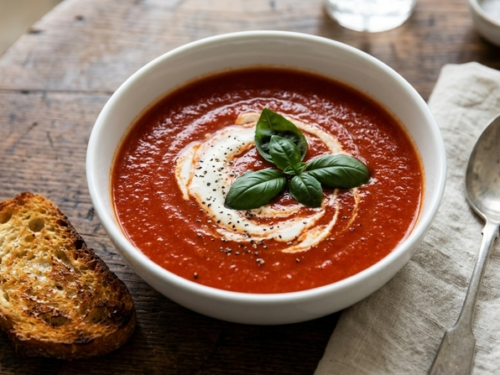
- Serve with tomato soup and a sandwich, as in our creamy tomato soup.
Storing it
Keep vinaigrette in a sealed jar in the refrigerator. Dressings with fresh garlic, shallots or herbs are best within a week. A simple oil and vinegar dressing keeps for a couple of weeks. Olive oil can solidify in the cold, so take the jar out 15 to 20 minutes before using, and shake well.
A quick fix guide
Too sharp: add a little more oil, or a pinch of sugar or honey. Too oily or flat: add a splash of vinegar and some salt. Too salty: add more oil and acid in equal amounts. Separates: whisk in a bit more mustard, or shake again before serving.