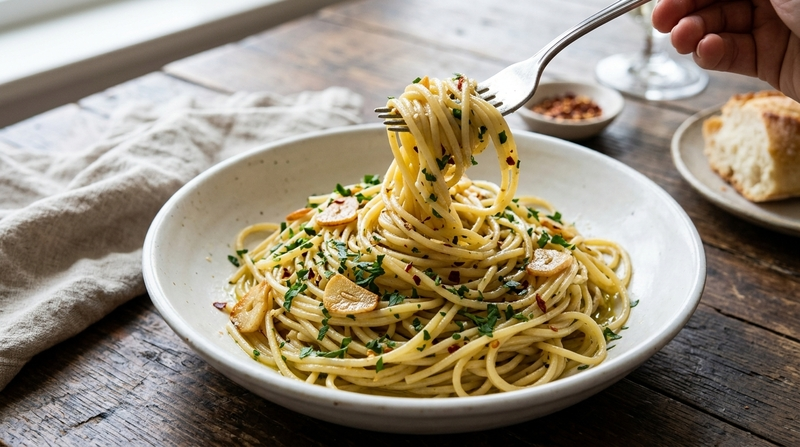
Spaghetti aglio e olio, which means garlic and oil, is the kind of dinner you make when the fridge is nearly empty. It uses about six ingredients and takes 20 minutes. Because there is nowhere to hide, the details matter: how you cook the garlic, how you salt the water and how you finish the sauce.
Serves: 3 to 4. Prep: 5 minutes. Cook: 15 minutes.
Ingredients
- 12 ounces (340 g) spaghetti
- ⅓ cup (80 ml) extra virgin olive oil
- 6 cloves garlic, thinly sliced
- ½ teaspoon red pepper flakes, or to taste
- ½ cup (120 ml) starchy pasta water, reserved
- ¼ cup chopped fresh parsley
- Salt, for the pasta water and to taste
- Freshly ground black pepper
- Optional: grated Parmesan or Pecorino, and a squeeze of lemon
Instructions
- Bring a large pot of water to a boil. Salt it generously until it tastes like mild seawater, about 1 tablespoon per quart.
- Cook the spaghetti about 1 minute short of the package time, until still slightly firm in the center.
- While the pasta cooks, add the olive oil and sliced garlic to a large, cold skillet. Turn the heat to medium-low. Cook gently for 3 to 5 minutes, stirring, until the garlic turns pale golden and fragrant. Do not let it get dark brown, which makes it bitter.
- Add the red pepper flakes and cook for 15 seconds.
- Before draining the pasta, scoop out at least a cup of the cooking water.
- Add the pasta to the skillet with ¼ cup of the pasta water. Toss over medium heat for about a minute, adding more water a splash at a time, until the sauce turns slightly creamy and coats the noodles.
- Remove from the heat. Stir in the parsley, black pepper and a squeeze of lemon, if you like. Taste and add salt if needed. Serve right away, with cheese if you want.
The three things that make it work
Start the garlic in cold oil
Putting the garlic into oil before it heats up lets it infuse gradually, so it turns golden and sweet instead of burning on contact. Sliced garlic is gentler and more forgiving than minced, which cooks fast and scorches easily.
Salt the water
The pasta absorbs seasoning as it cooks. Under-salted water is the main reason homemade pasta tastes flat. The water should taste noticeably salty. Our salt guide explains how different salts measure.
Use the pasta water
The cloudy cooking water is full of starch. Tossing it with oil and pasta over heat makes a light emulsion, a smooth sauce that clings to the noodles. Without it, you get oily spaghetti with a puddle at the bottom of the bowl.
Common mistakes
- Burnt garlic. If it turns brown quickly, the heat is too high. Start over if it tastes bitter. It is a cheap ingredient and worth replacing.
- Drained and dry pasta. Keep the pasta wet and moving when you add it to the pan.
- Overcooked noodles. They finish cooking in the sauce, so pull them early.
- Too little oil. This dish depends on good olive oil, so use a flavorful one.
Variations
- Add anchovies: melt 3 to 4 fillets in the oil with the garlic for a rich, savory depth, without a fishy taste.
- Add vegetables: toss in roasted broccoli, sautéed zucchini or wilted spinach. See our guide to roasting vegetables.
- Add protein: shrimp cooked for 2 minutes in the garlic oil, or a can of drained tuna.
- Add crunch: toasted breadcrumbs fried in a little olive oil are a classic topping.
- Use whole wheat or gluten-free pasta, adjusting the cooking time.
Serving and leftovers
This pasta is best eaten right away, while the sauce is silky. Leftovers keep in the refrigerator for up to three days and can be reheated in a skillet with a splash of water. Serve it with a simple green salad and a sharp vinaigrette to balance the richness.
Choosing pasta and cooking it in less water
Pasta labeled as bronze-cut has a rougher surface that holds on to sauce better than very smooth, slick pasta, and that matters in a dish with so little sauce. Cooking the pasta in a little less water than usual, around three to four quarts for a pound, gives you starchier water, which helps the sauce cling. You still want enough room for the spaghetti to move freely, so use a wide pot and stir during the first minute to stop the strands from sticking together.
Finally, serve this on warm plates if you can. The sauce is mostly oil, which cools and tightens quickly, and a warm bowl keeps it silky for longer.