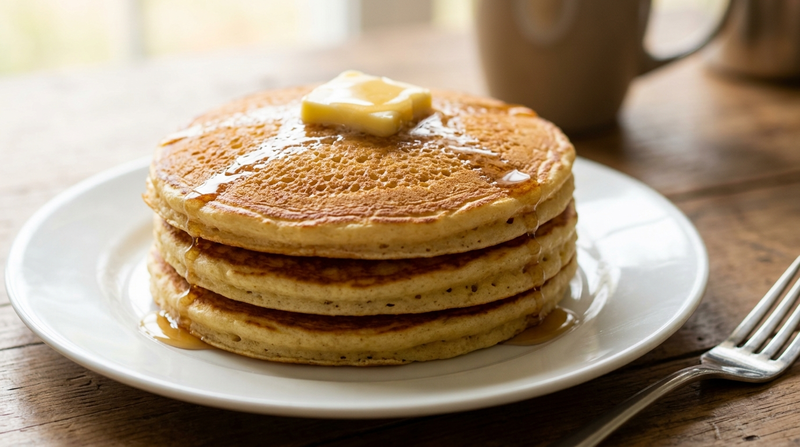
Boxed mix is easy, but pancakes from scratch take only a few more minutes and use ingredients you probably already have. This recipe gives you tall, tender pancakes with golden tops and soft middles. Most of the secret is in how you mix the batter and how you manage the heat.
Makes: about 8 pancakes, serving 3 to 4. Prep: 10 minutes. Cook: 15 minutes.
Ingredients
- 1½ cups (190 g) all-purpose flour
- 3½ teaspoons baking powder
- 1 tablespoon granulated sugar
- ½ teaspoon salt
- 1¼ cups (300 ml) milk
- 1 large egg
- 3 tablespoons butter, melted and slightly cooled, plus more for the pan
- 1 teaspoon vanilla extract (optional)
Instructions
- In a large bowl, whisk together the flour, baking powder, sugar and salt.
- In a second bowl or measuring jug, whisk the milk, egg, melted butter and vanilla until combined.
- Pour the wet ingredients into the dry. Stir with a spatula or whisk just until combined. The batter should be thick and lumpy, with a few streaks of flour. Do not try to smooth it out.
- Let the batter rest for 5 to 10 minutes. It will thicken and bubble slightly.
- Heat a griddle or large nonstick or cast iron skillet over medium heat. Test it by flicking a few drops of water onto it. They should sizzle and dance. Lightly grease with butter.
- Scoop about ¼ cup of batter for each pancake, leaving space between them.
- Cook until bubbles form on the surface and the edges look set, about 2 to 3 minutes. Flip once and cook for another 1 to 2 minutes, until golden and cooked through.
- Serve right away, or keep warm on a baking sheet in a 200°F (95°C) oven.
Why lumpy batter is good
Stirring flour with liquid develops gluten. The more you mix, the tougher and chewier the pancakes. A few small lumps mean you stopped in time, and those lumps vanish while the pancakes cook.
Why resting helps
A short rest lets the flour absorb the liquid and gives the baking powder a head start. The result is a thicker batter and a taller, more tender pancake.
Getting the heat right
This is the most common problem. If the pan is too hot, the outsides burn before the middle cooks. If it is too cool, the pancakes turn pale and flat. The first pancake is a test. If it browns in under a minute, turn the heat down a little. If it takes more than three minutes, turn it up slightly. Wipe the pan between batches if butter turns dark.
When to flip
Do not flip until bubbles have formed across the surface and begin to pop, and the edges look dry and slightly matte. Flip only once, and do not press down on the pancake with the spatula, which squeezes out the air.
Variations
- Buttermilk pancakes: replace the milk with 1¼ cups buttermilk, reduce the baking powder to 2 teaspoons and add ½ teaspoon baking soda.
- Blueberry: sprinkle a few berries onto each pancake right after pouring the batter, rather than stirring them in, which can turn the batter purple.
- Chocolate chip or banana: add chips or thin banana slices on the pancake after pouring.
- Whole wheat: replace up to half the flour with whole wheat flour, and add a splash more milk.
- Cinnamon: add ½ teaspoon ground cinnamon to the dry ingredients.
Make ahead and freeze
Cool leftover pancakes on a rack, then freeze them in a single layer on a baking sheet. Once solid, stack them in a freezer bag with parchment between layers. Reheat from frozen in a toaster or microwave. They keep well for up to two months, and are a good addition to a weekly prep routine, especially for school mornings.
Troubleshooting
Flat pancakes: old baking powder, overmixed batter or too little leavening. Test baking powder by stirring a teaspoon into hot water. It should fizz immediately.
Gummy centers: heat too high or pancakes too thick. Lower the heat and use a slightly thinner batter.
Tough pancakes: overmixing. Stir only until combined next time.
Sticking: the pan was not hot enough or lightly greased. Preheat for a couple of minutes and use a thin film of butter.