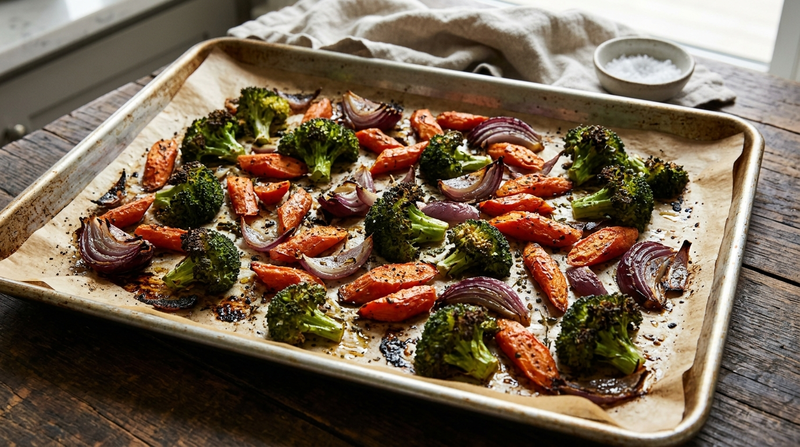
Roasted vegetables should have crisp, caramelized edges and a tender middle. If yours come out limp and pale, nothing is wrong with the vegetables. The problem is almost always moisture, and moisture comes from three places: crowding, temperature and prep.
Heat is higher than you think
Most vegetables roast best between 425°F and 450°F (220°C to 230°C). At 350°F they tend to dry out and soften before they brown. The higher heat evaporates surface water quickly and lets the natural sugars caramelize. Put the oven rack in the upper third, and preheat the sheet pan for ten minutes so the vegetables start sizzling the moment they land.
Give them space
This is the most common mistake. When vegetables are piled together, they release steam, and that steam gets trapped between the pieces. The result is steamed vegetables. Spread them in a single layer with a little room between each piece. If one pan looks full, use two. It takes the same total time and the difference in texture is huge.
Dry them well
If you washed the vegetables, dry them thoroughly with a clean towel before cutting. Wet vegetables simply cannot brown. Toss them in oil in a large bowl rather than drizzling over the pan, so every surface gets a thin coat. As a guide, one tablespoon of oil per pound of vegetables is a good start. Add salt at the same time.
Cut for even cooking
Pieces of similar size finish together. Dense vegetables like potatoes, carrots and beets should be cut smaller, about three-quarter-inch cubes, than quick-cooking ones like zucchini or asparagus. If you want to roast a mix, give the harder vegetables a 15-minute head start.
Timing guide
These are approximate times at 425°F, flipping once halfway:
- Broccoli and cauliflower florets: 20 to 25 minutes
- Carrots (sliced) and parsnips: 25 to 30 minutes
- Potatoes (cubed): 30 to 40 minutes
- Brussels sprouts (halved): 20 to 25 minutes, cut side down
- Asparagus: 10 to 12 minutes
- Zucchini and bell peppers: 15 to 20 minutes
- Winter squash (cubed): 25 to 30 minutes
Ovens vary, so go by color and texture: golden brown at the edges, and a knife slides in without effort.
Cut sides down
For halved vegetables like Brussels sprouts or small squash, place the flat cut side against the hot pan. That contact is what creates the deep brown surface. You should hear a sizzle when they go on.
Skip the foil and parchment for the best browning
Parchment is useful for easy cleanup and works fine at these temperatures, but bare metal or a well-oiled pan gives you the most direct heat and best browning. Avoid covering the pan with foil, which traps steam.
Finish with something bright
Roasted vegetables are rich and sweet, and a little acidity wakes them up. A squeeze of lemon, a splash of vinegar, a spoonful of yogurt sauce or a handful of fresh herbs added after roasting makes a plain pan taste finished. Grated hard cheese and toasted nuts are also good added at the end, because they burn if roasted from the start.
Reheating leftovers
The microwave will soften them. For crisp leftovers, spread them on a sheet pan and reheat at 425°F for five to eight minutes, or toss them in a hot skillet. They also work well chopped into eggs, grain bowls or a pot of tomato soup for extra body.
The short version
- Preheat the oven to 425°F or higher, with the pan inside.
- Dry the vegetables, cut them evenly and coat them lightly in oil and salt.
- Spread them out. One layer, with room.
- Flip once, and roast until the edges are properly brown.
- Finish with acid or fresh herbs.
The right pan and a few seasoning ideas
A heavy, light-colored aluminum rimmed baking sheet is the best everyday roasting pan. It conducts heat evenly and the low rim lets steam escape. Dark, thin pans can scorch the bottoms before the tops brown, and nonstick coatings are not designed for 450°F. If you use parchment, choose one rated for your oven temperature.
Plain salt and oil is a fine start, but a few simple additions change the whole dish. Smoked paprika and garlic powder suit potatoes and cauliflower. Cumin and a pinch of coriander are good on carrots. Lemon zest and red pepper flakes lift broccoli. Add fresh garlic only in the last ten minutes, because minced garlic burns and turns bitter long before the vegetables are done.