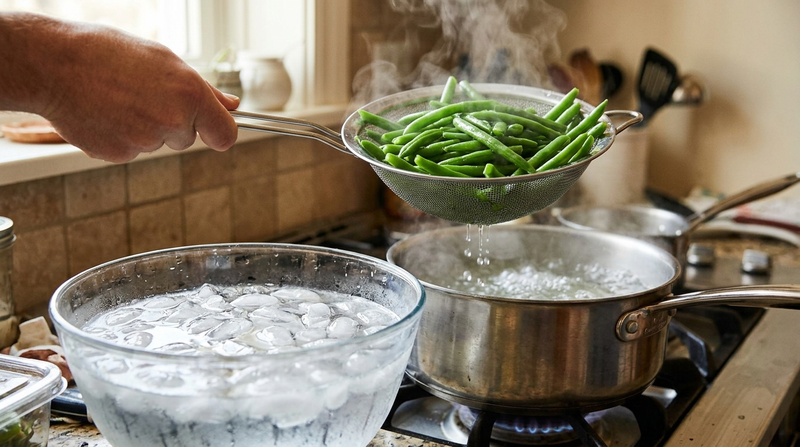
Blanching sounds like fussy restaurant technique, but it is just two quick steps: a short dip in boiling water, then a plunge into ice water. Done well, it keeps green vegetables vividly green, softens raw crunch without making them mushy, and sets you up for freezing or making a salad ahead of time. Done when it is not needed, it is just an extra pot to wash. Here is how to tell the difference.
What blanching does
- Locks in color. Brief heat makes greens look brighter by driving out trapped air from the surface of the vegetable. The ice bath stops cooking before they dull.
- Seasons from the inside. Salted blanching water gives a light seasoning all the way through.
- Softens texture just enough. It takes the raw edge off without turning vegetables to mush.
- Loosens skins. A short boil makes tomatoes and peaches peel easily.
- Prepares food for freezing. Heat slows the enzymes that cause frozen vegetables to lose color, flavor and texture over time.
How to blanch
- Fill a large pot with water, about 4 quarts for each pound of vegetables, and bring it to a rolling boil. Add salt until it tastes like mild seawater, roughly 1 tablespoon per quart.
- Fill a large bowl with ice and cold water.
- Add the vegetables in small batches so the water keeps boiling.
- Cook for the time below, then lift them out with a spider or slotted spoon.
- Move them straight into the ice bath for about the same amount of time they were boiled.
- Drain well and pat dry before using or freezing.
How long for common vegetables
- Green beans: 2 to 3 minutes
- Asparagus: 1 to 2 minutes, depending on thickness
- Broccoli florets: 2 minutes
- Snap peas and snow peas: 1 minute
- Peas (shelled): 1 minute
- Carrot coins: 2 to 3 minutes
- Cauliflower florets: 3 minutes
- Spinach and leafy greens: 30 seconds
- Tomatoes (to peel): 20 to 30 seconds, with a small X cut in the bottom
When it is worth doing
- You are serving green vegetables cold, such as in a salad or on a crudité plate.
- You are cooking for a crowd and want to finish vegetables quickly with a hot pan and butter just before serving.
- You are freezing vegetables from the garden or a big market haul.
- You want peeled tomatoes or peaches for sauce or baking.
- You are removing harsh bitterness, as with some leafy greens.
When you can skip it
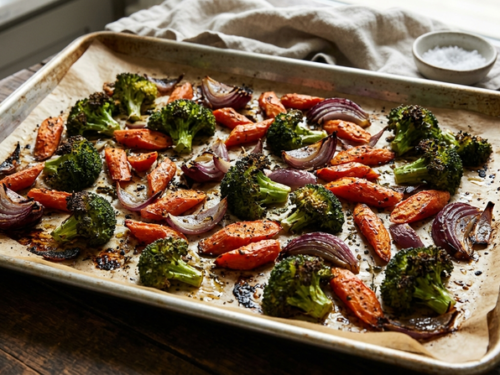
- Roasting. Dry oven heat handles the cooking. See our roasted vegetable guide.
- Quick stir-fries where vegetables go straight into a hot pan.
- Soups and stews, which cook the vegetables anyway.
Common mistakes
Too little water. The temperature drops when the vegetables go in, and they sit in lukewarm water, losing color. Use more water than feels necessary.
No ice bath. Without it, residual heat keeps cooking the vegetables. They continue to soften and turn olive green.
Leaving them in the ice water too long. A soggy vegetable will not recover. Drain once they are completely cool.
Skipping the drying step. Wet vegetables dilute dressings and will not brown in a pan.
Freezing blanched vegetables
After drying, spread the vegetables on a sheet pan in a single layer and freeze for about an hour. Then transfer them to freezer bags or containers, squeeze out the air and label with the date. This keeps them from freezing in one solid block. For best quality, use them within eight to twelve months. For more on what freezes well, see our guide to freezer-friendly meals.
Blanching versus steaming or microwaving
Steaming and microwaving cook vegetables gently and keep more of the cooking liquid out of the picture, which is useful when you want to serve them hot straight away. Blanching, by contrast, is a preparation step. It is aimed at color, texture and storage, and it is most useful when the vegetables will be cooled, held or reheated later. If dinner is going on the table in ten minutes, simply steam or sauté and skip the ice bath.
Three easy ways to use blanched vegetables
- Green bean salad. Toss cooled beans with a sharp vinaigrette, sliced shallot and toasted nuts. Our vinaigrette guide has the dressing.
- Quick sauté. Heat butter or olive oil in a skillet, add the blanched vegetables with garlic and lemon, and warm for a minute or two. This is how many restaurants serve green vegetables quickly to a full dining room.
- Pasta add-in. Drop broccoli or peas into the pasta pot for the last two minutes of cooking. It is blanching and draining in one step, with one fewer pot to wash.
Keep the water working
Blanching water does not need to be changed between batches of the same vegetable, as long as it keeps boiling and stays reasonably clear. Go from lightest-colored vegetables to darkest, and from mildest-flavored to strongest, so nothing picks up an unwanted taste.