Rice looks like the easiest thing in the kitchen, and then you lift the lid on a pot of gluey grains with a burnt layer stuck to the bottom. The good news is that rice is a matter of ratio, heat and patience, not talent. Once you have those three pinned down, it comes out the same every time.
Start by rinsing
Put the rice in a bowl or fine strainer and rinse it under cold water, swishing with your fingers, until the water runs mostly clear. This washes off loose surface starch, which is what makes grains clump into a paste. For long-grain white rice, three or four changes of water is plenty. If you are making sushi-style or risotto-style rice where stickiness is the point, you can skip it.
The ratio that works
Package directions are a good starting point, but these are reliable ratios for a heavy pot with a tight lid:
- Long-grain white rice: 1 cup rice to 1½ cups water
- Jasmine rice: 1 cup rice to 1¼ cups water (it is softer and needs a little less)
- Basmati rice: 1 cup rice to 1½ cups water, ideally after a 20-minute soak
- Brown rice: 1 cup rice to 2 cups water, cooked for 40 to 45 minutes
A cup of dry rice makes about three cups cooked, which feeds three or four people as a side.
The method, step by step
- Add the rinsed rice, the water and a good pinch of salt (about ¼ teaspoon per cup of rice) to a pot with a lid that fits well.
- Bring it to a full boil over medium-high heat. Give it one stir to loosen anything stuck to the bottom, then stop stirring. More stirring means more starch released and stickier rice.
- Turn the heat to its lowest setting, put the lid on, and set a timer for 15 minutes for white rice. Do not peek. Every time you lift the lid you let out the steam that is doing the cooking.
- When the timer goes off, turn the heat off and leave the lid on for 10 more minutes. This rest is not optional. It lets the moisture even out so the top is not wetter than the bottom.
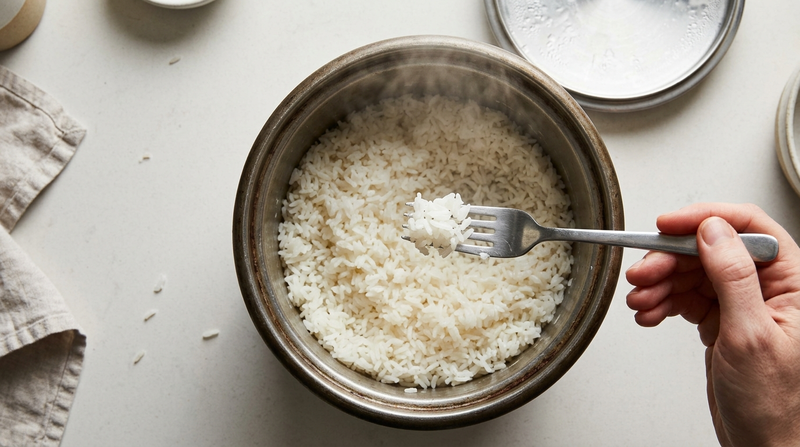
- Fluff with a fork, using a gentle lifting motion rather than stirring.
Fixing common problems
It is mushy or gluey
Too much water, not enough rinsing, or too much stirring. Next time, measure the water level exactly, rinse longer and leave it alone while it simmers. If the pot is already mushy, spread the rice on a baking sheet to steam off excess moisture, and use it for fried rice, where soft grains are less of a problem.
It is crunchy in the middle
The water cooked off before the grains finished, usually because the lid was loose or the heat was too high. Sprinkle in two or three tablespoons of hot water, put the lid back on, and cook on low for five more minutes. A folded dish towel under the lid can help seal a poor fit.
The bottom is scorched
Do not scrape. Spoon the good rice off the top into another dish and leave the burnt layer behind. Thin pots with uneven bottoms scorch much more easily than heavy ones, so if this keeps happening, the pot is probably the real problem.
The grains are broken or stuck together at the top
That usually comes from rough stirring or fluffing with a spoon. A fork or chopsticks keeps the grains whole.
Small upgrades that make a difference
- Toast the dry, rinsed rice in a teaspoon of oil or butter for a minute before adding the water. It gives a nuttier flavor.
- Swap half the water for chicken or vegetable broth.
- Add a bay leaf, a strip of lemon peel or a smashed garlic clove while it cooks, and take it out before serving.
Storing leftover rice safely
Cooked rice can carry bacteria spores that survive cooking, and they multiply if the rice sits at room temperature. Cool it quickly, ideally spread out in a shallow container, and get it into the fridge within two hours. Eat it within three to four days and reheat it until it is steaming hot all the way through. Day-old rice is also exactly what you want for our easy vegetable fried rice.
Quick answers
Can I use a rice cooker instead? Yes, and the same ratios work. The cooker handles the timing for you.
Do I need to soak rice? Not for most white rice. Basmati benefits from a short soak, and brown rice cooks a little more evenly if soaked for 30 minutes.
Why does my rice taste bland? Almost always not enough salt in the cooking water. Rice absorbs seasoning only while it cooks, so add it at the start.