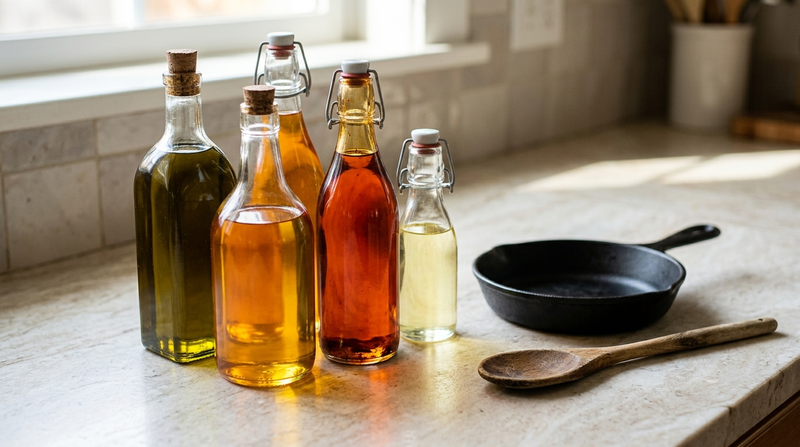
The oil aisle can be overwhelming, and you do not need most of it. A well-stocked kitchen needs two or three oils, each chosen for what it does best. The two things to understand are smoke point and flavor.
What smoke point means
An oil’s smoke point is the temperature at which it starts to break down and smoke. Past that point, it tastes bitter and acrid and can set off your smoke alarm. Refined oils, which have had impurities filtered out, generally have higher smoke points than unrefined ones. These figures are approximate and vary by brand and processing:
- Refined avocado oil: around 500°F (260°C)
- Refined peanut oil: around 450°F (230°C)
- Canola, vegetable and sunflower oil: roughly 400 to 450°F (205 to 230°C)
- Extra virgin olive oil: roughly 350 to 410°F (175 to 210°C)
- Butter: around 300 to 350°F (150 to 175°C), because milk solids burn
- Ghee (clarified butter): around 450°F (230°C)
Flavor matters as much as heat
Some oils taste like almost nothing, and others are the flavor. Neutral oils such as canola, grapeseed and refined avocado let the food shine. Extra virgin olive oil, toasted sesame oil, peanut oil and unrefined coconut oil all bring their own taste, which is good if it suits the dish and distracting if it does not.
Which oil for which job
Searing and high-heat pan cooking
Use a neutral oil with a high smoke point: refined avocado, grapeseed, canola or peanut. Our guide to searing meat explains why the oil should be shimmering before the food goes in.
Sautéing and everyday cooking
Extra virgin olive oil works well for medium-heat sautéing, such as softening onions or cooking garlic. Despite a common myth, it is perfectly fine for regular cooking. Save the most expensive bottle for raw use, where you can taste the difference.
Roasting
For oven temperatures up to 425°F, olive oil or canola both work. At higher heat, switch to a neutral oil with a higher smoke point.
Deep and shallow frying
Peanut, canola, sunflower and vegetable oils are all common. They are stable at 350 to 375°F, they are neutral in flavor, and they are affordable in larger bottles. Use a thermometer so the temperature stays steady, and never leave hot oil unattended.
Salad dressings and finishing
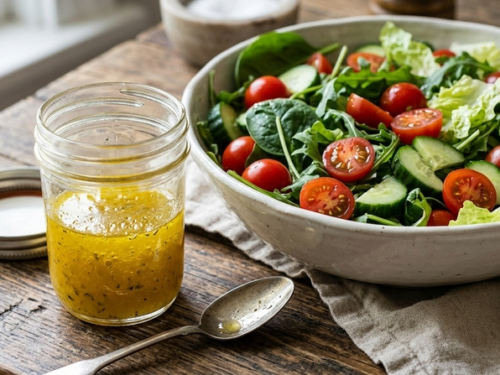
This is where good extra virgin olive oil earns its price. Its peppery, fruity flavor is the star of a simple vinaigrette, drizzled over soup, or spooned on roasted vegetables just before serving.
Asian-style cooking
Toasted sesame oil is a seasoning, not a cooking oil. Add a teaspoon at the end of a stir-fry or in a dipping sauce. Cook the dish itself in a neutral high-heat oil.
Baking
Canola, vegetable or light olive oil make tender, moist cakes and muffins. Melted coconut oil can replace butter in some recipes but will add a coconut flavor if it is unrefined.
A simple starter set
- A neutral, high-heat oil such as canola, grapeseed or refined avocado, for searing, roasting and frying.
- A good extra virgin olive oil for dressings and finishing, plus everyday sautéing.
- Optional: toasted sesame oil for flavor.
How to store oil
Heat, light and air make oil go rancid. Keep bottles in a cool, dark cupboard, away from the stove, with the cap tightly closed. Buy sizes you will use within a few months. Rancid oil smells like crayons, old nuts or putty, and tastes flat or bitter. If it smells wrong, throw it out. Nothing is gained by using it up.
Reusing frying oil
You can strain and reuse frying oil a few times if it has not smoked, turned dark or developed an off smell. Let it cool completely, strain it through a fine sieve or cheesecloth into a sealed container, and store it in a cool, dark place. Oil used for fish picks up flavors that will carry into the next batch, so keep that separate.
Disposing of oil safely
Never pour oil down the drain, where it can solidify and cause clogs. Let it cool, pour it into a sealed container and put it in the trash, or take it to a local collection point if your area offers one.
How much oil you actually need
- Sautéing in a 12-inch skillet: one to two tablespoons, enough to coat the bottom with a thin film.
- Roasting vegetables: about one tablespoon per pound, tossed in a bowl first so it coats evenly.
- Vinaigrette: roughly three parts oil to one part acid.
- Shallow frying: a layer about half as deep as the food.
- Deep frying: at least two to three inches in a heavy pot, never more than half full.
Using a little less than you think is a reasonable default for everyday cooking, since you can always add a drizzle at the end.