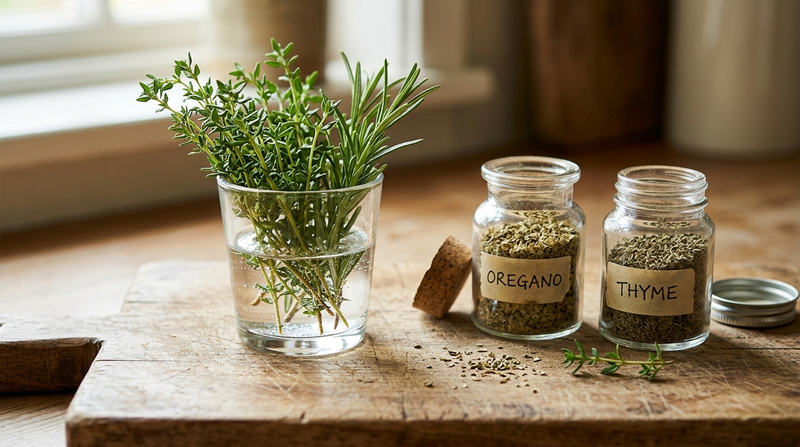
You are halfway through a recipe, it calls for fresh thyme, and all you have is a jar of dried. Can you swap it? Usually yes, but the amounts are not one-to-one and some herbs simply do not survive drying.
The standard conversion
Dried herbs are more concentrated, because the water has been removed. A reliable rule is:
- 1 tablespoon fresh = 1 teaspoon dried
That is a ratio of three to one. For ground dried herbs such as ground sage, use slightly less, since they are even more concentrated. When in doubt, start with less, taste after a few minutes and add more if needed. It is easy to add, and hard to remove.
Hardy herbs and soft herbs
This is the distinction that matters most.
Hardy herbs: dry well
Rosemary, thyme, oregano, sage, marjoram, bay leaves and savory have tough, woody leaves and oils that hold up to drying and long cooking. Dried versions are excellent in stews, braises, soups, roasts, tomato sauces and marinades. Oregano, in fact, is often preferred dried.
Soft herbs: best fresh
Basil, parsley, cilantro, dill, chives, mint and tarragon have delicate leaves. Drying strips away most of their fresh, bright flavor, and what remains tastes dusty and muted. If a recipe uses these as a finishing touch, such as chopped parsley over pasta or cilantro on tacos, fresh is worth seeking out. Dried versions can work in a pinch in cooked dishes such as soups, but expect a much milder result.
When to add them
- Dried herbs go in early. They need time and moisture to rehydrate and release flavor. Add them with the onions or the liquid.
- Fresh soft herbs go in at the end, or at the table. Heat quickly destroys their flavor.
- Fresh hardy herbs can go in early or late. A sprig of rosemary can simmer for an hour in a stew, and chopped leaves can also be scattered on top at the end.
To wake up dried herbs, rub them between your fingers over the pot. This crushes the leaves slightly and releases their oils.
How old is too old?
Dried herbs do not spoil dangerously, but they lose potency. A jar that has been open for more than a year or two will taste faint. To test, crush a pinch in your palm and smell it. If you cannot smell much, it will not do much in a dish. Buy small quantities, keep them away from the stove and light, and write the purchase date on the lid.
Keeping fresh herbs alive longer
- Soft herbs with stems (parsley, cilantro, dill, mint): trim the ends, stand the bunch in a jar with an inch of water, cover loosely with a bag and refrigerate. Change the water every few days.
- Basil: do not refrigerate, as the cold turns the leaves black. Keep it in a jar of water on the counter, out of direct sun.
- Hardy herbs (thyme, rosemary, sage): wrap loosely in a slightly damp paper towel and store in a container or bag in the fridge.
- Chives: store like soft herbs, or snip and freeze them.
Freezing and drying your own
If you have more than you can use, chop herbs, pack them into an ice cube tray with a little olive oil or water, freeze, and then pop the cubes into a bag. Drop a cube into soups, sauces or sautés. To dry hardy herbs at home, hang small bunches upside down in a warm, airy place until crisp, then strip the leaves and store them in an airtight jar.
Quick substitution cheat sheet
- No fresh thyme: use ⅓ the amount of dried.
- No fresh oregano: dried is often better. Use ⅓ the amount.
- No fresh basil: use dried in a cooked sauce, though it will not taste the same. Skip it for caprese or pesto.
- No fresh parsley: use dried only for color in cooked dishes, or leave it out.
- No fresh rosemary: use half the dried amount and crush it well, so the needles are not sharp.
Herbs pair well with other flavors on the plate. See how they work together with the basics in our guide to cooking oils, particularly for dressings and finishing.