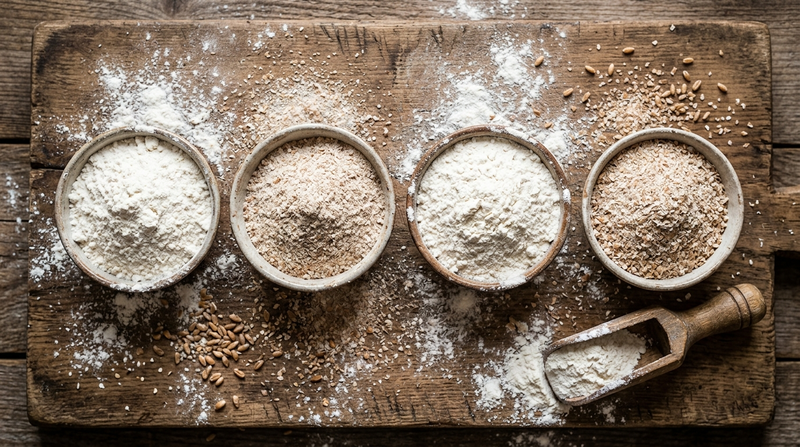
Walk down the baking aisle and you will see all-purpose, bread, cake, pastry, self-rising and whole wheat flour, often in similar bags. The differences matter more than they look. The main thing that separates them is protein content, which becomes gluten when flour is mixed with water.
Why protein matters
Gluten is the stretchy network that gives bread its chew and structure. More protein means more gluten, which means a chewier, sturdier result. Less protein gives a softer, more delicate crumb. Choosing flour is really choosing how much structure you want.
The common types
All-purpose flour
Protein is typically around 10 to 12 percent, which is a middle ground. It is designed to work reasonably well for cookies, pancakes, quick breads, cakes and even yeast bread. If you are stocking only one flour, this is the one.
Bread flour
Protein is around 12 to 14 percent. It builds strong gluten, which traps the gas from yeast and gives bread, pizza dough and bagels a chewy, airy texture. You can often use it in place of all-purpose flour in yeast recipes, though the dough may need slightly more water.
Cake flour
Protein is around 7 to 9 percent, and it is finely milled. It makes cakes tender, light and fine-crumbed. It is usually used in layer cakes and delicate bakes where softness matters more than structure.
Pastry flour
Sits between cake and all-purpose flour, around 8 to 9 percent protein. It gives tender pie crusts, biscuits and scones.
Self-rising flour
All-purpose flour with baking powder and salt already added. It is used in some biscuit and pancake recipes. Do not use it where a recipe calls for plain flour and separate leavening, or the result will be over-risen and salty.
Whole wheat flour
Made from the entire wheat kernel, including bran and germ. It has more fiber and a nuttier flavor, but the bran cuts through gluten strands, so bakes can be denser. Many recipes use half whole wheat and half all-purpose for a balance. Whole wheat flour absorbs more liquid, so batters may need a spoonful or two extra.
Gluten-free flours
Rice, almond, oat and blends work differently from wheat and cannot be swapped one-for-one. Use a recipe designed for gluten-free baking, or a blend labeled as a cup-for-cup replacement. Anyone with celiac disease should check labels for certification, since cross-contact can occur.
Smart substitutions
- Cake flour from all-purpose: for each cup, remove 2 tablespoons of all-purpose flour and add 2 tablespoons of cornstarch. Sift together a few times.
- Self-rising flour from all-purpose: for each cup, whisk in 1½ teaspoons of baking powder and ¼ teaspoon of salt.
- Bread flour from all-purpose: use all-purpose and expect a slightly softer chew. Some bakers add a teaspoon of vital wheat gluten per cup.
- Using whole wheat in place of white: replace up to a third to half of the all-purpose flour first, then add a little extra liquid.
How to measure flour properly
Scooping a measuring cup into the bag compacts the flour and can add 20 percent more than intended, which makes baked goods dry. Fluff the flour with a spoon, spoon it lightly into the cup and level it off with a knife. Better still, weigh it. One cup of all-purpose flour is roughly 120 to 125 grams, though it varies by brand. We cover this in more detail in our guide to measuring cups versus grams.
Storing flour
- Keep white flour in an airtight container in a cool, dry cupboard. It stays good for about a year.
- Whole wheat flour contains oils in the germ that can turn rancid. Store it in the fridge or freezer and use it within a few months.
- If flour smells sour, musty or like old paint, throw it out.
- Check for tiny insects, and freeze new bags for a few days if pantry pests are a concern in your area.
Which flour should you buy?
If you bake occasionally, all-purpose flour covers nearly everything. If you start making bread regularly, add bread flour. Cake flour is the only one that is hard to replace perfectly, but the cornstarch trick above works well enough for most home bakers.
Common questions about flour
Bleached or unbleached? Bleached flour has been treated to whiten it and soften the protein slightly, which some bakers like for cakes and tender biscuits. Unbleached flour is a little sturdier and is often preferred for breads and pastries. In most home recipes, either works.
Do I really need to sift? Not usually. Sifting helps when a recipe calls for it, especially with cocoa, cake flour or powdered sugar, which clump. For everyday cookies and muffins, whisking the dry ingredients together does the job.
Why is my dough so sticky? Often the flour absorbed less liquid than the recipe assumed, or the room is humid. Add flour a tablespoon at a time and stop as soon as the dough handles easily. Too much extra flour makes baked goods dry.