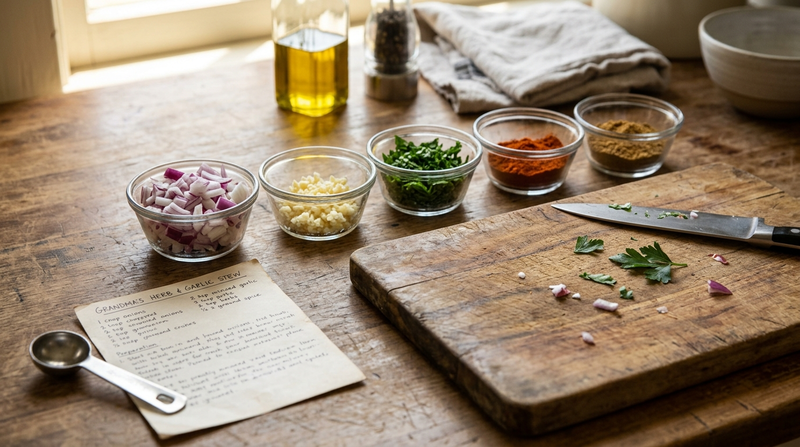
Almost everyone has been there: the onions are browning, the recipe says to add garlic and a spice you have not measured, and suddenly you are scrambling while the pan starts to burn. Most of that panic is preventable with one habit, reading the whole recipe before you turn on the heat, and getting organized before you start.
Step one: read everything, start to finish
Before you touch an ingredient, read the entire recipe from the title to the final note. Not skimming, actually reading. As you go, look for:
- Total time and active time. A dish might say 30 minutes but need an hour of marinating or chilling first.
- Make-ahead steps. Some recipes need dough to rise, beans to soak or butter to soften overnight.
- Equipment. Does it need a blender, a 9×13 dish, a thermometer or a pan with a lid?
- Heat and timing cues. Note where the recipe changes from low heat to high, or switches from stovetop to oven.
- Unfamiliar terms. Look up anything you do not know, such as fold, temper, deglaze or blind bake, before you need it.
Step two: check your ingredients and equipment
Take everything out and compare it to the list. Check quantities, not just whether you own the item. Running out of an ingredient mid-recipe is far more annoying than finding out at the start. If you need a substitution, decide on it now, not with a hot pan waiting.
Step three: understand how ingredients are written
Small wording differences change the amount:
- “1 cup chopped onion” means chop first, then measure.
- “1 cup onion, chopped” means measure first, then chop.
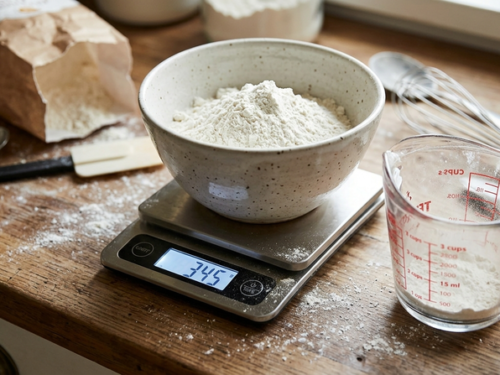
- “2 cups sifted flour” and “2 cups flour, sifted” are different in the same way.
- “Room temperature butter” means soft enough to press a finger into but not melted, usually 30 to 60 minutes out of the fridge.
- “Divided” means the ingredient is used in more than one step, so do not add it all at once.
Step four: set up your mise en place
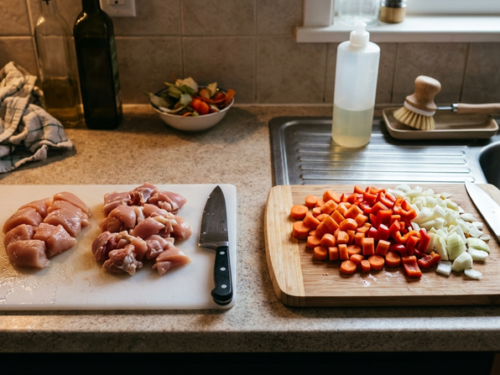
Mise en place is a French phrase meaning everything in its place. In practice, it means chopping, measuring and arranging ingredients before you start cooking. Professional kitchens work this way because cooking moves quickly and there is no time to stop and prep.
At home, you do not need dozens of tiny bowls. A sensible version:
- Preheat the oven if the recipe starts with it.
- Do the chopping first, and group ingredients that go in the pan at the same time on one plate or bowl.
- Measure spices into a single small dish if they are added together.
- Have your oil, salt, pepper and a spoon within reach.
- Get out a towel, a spoon rest and a bowl for scraps.
This is also the best time to think about cleanup. A bowl for trimmings next to your board saves many trips to the trash.
Step five: cook with your senses, not just the clock
Times in a recipe are estimates. Stoves, pans and ingredients vary. Use the time as a reminder to check, but look for the cue the recipe describes: onions golden, liquid reduced by half, a knife sliding easily into a potato. Taste as you go. Seasoning in layers builds better flavor than adding it all at the end.
Take notes
When something works, or does not, write it on the recipe or in a notebook. Did it need five more minutes? Was it too salty? Did you swap an ingredient? Within a few tries, you will have a version tailored to your kitchen, which is more valuable than any printed original.
A five-minute checklist
- Read the whole recipe.
- Check ingredients, quantities and equipment.
- Note any advance steps.
- Preheat and prep.
- Cook, taste and adjust.
The same approach scales up for the week: see our guide to weeknight dinner planning.
A quick worked example
Say a recipe reads: sauté one diced onion for five minutes, add three cloves of garlic, stir in one cup of rice to toast, add two cups of broth, cover and simmer for eighteen minutes, then rest five minutes. Reading it first, you would notice several things. The total cooking time is closer to 35 minutes than the “20” in the headline. The onion must be diced before the pan gets hot. You need a pot with a tight lid. And there is a rest at the end, so you can use those five minutes to set the table or finish a salad.
None of that is complicated, but it is exactly the kind of detail that is easy to discover too late. Reading takes two minutes and saves you from the rushed, anxious version of cooking.