By Harry Cruse | TasteSavory
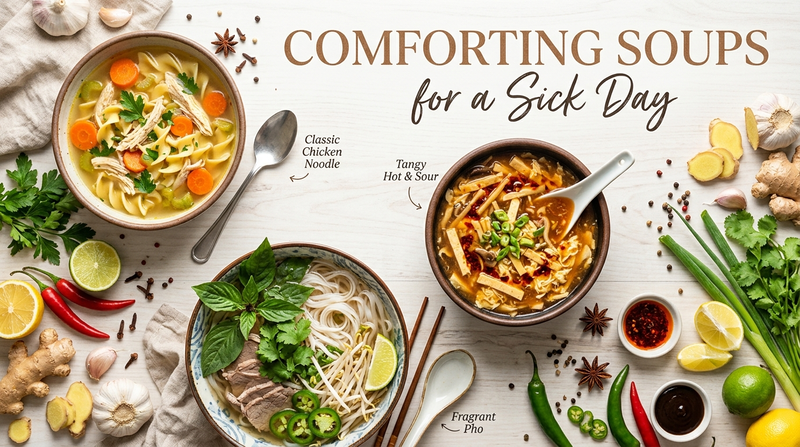
When you’re feeling unwell, soup is often the first thing people reach for: warm, easy to eat, and comforting in a way that’s hard to explain. Ask a group which soup they want on a sick day and the answers vary widely, from classic chicken noodle and matzo ball soup to hot and sour, pho, wonton, and tortilla soup. This guide explains what soup can and can’t do, matches soups to common symptoms, gives an easy chicken, ginger, and rice recipe, offers shortcuts for days when you barely want to cook, and covers the kitchen safety points that matter most when someone in the house is sick. It’s general food information, not medical advice.
The short answer
- Soup provides fluids, warmth, and comfort. Early studies suggest it may modestly ease some cold symptoms, but it isn’t a cure.
- Pick the soup that suits your symptoms: spicy and brothy for congestion, gentle and bland for nausea, smooth and warm for a sore throat.
- Shortcuts are fine. Packet soup, canned soup, and store-bought broth can all be upgraded with a few additions.
- If you have a stomach bug, don’t prepare food for others until at least 2 days after your symptoms stop.
What soup can and can’t do
Hot liquids help you stay hydrated, and steam and warmth can make a stuffy nose or sore throat feel better. Some small studies suggest chicken soup may ease congestion and symptoms slightly, and one found hot chicken soup cleared nasal mucus better than hot water. The researchers describe the evidence as early, though, and no soup treats or cures an illness. Think of soup as a comfortable way to get fluids and some nutrition when you don’t feel like eating much, alongside rest and any care your doctor recommends.
Match the soup to the symptom
| If you have | Try | Notes |
|---|---|---|
| A stuffy head | Hot and sour, pho, tom yum, spicy tortilla soup | Hot, steamy, and flavorful; skip very spicy versions if your throat is sore |
| A sore throat | Smooth or brothy soups served warm, not scalding; soft noodles | Try a blended soup, such as our roasted butternut squash soup |
| Little appetite | Clear broth, or small sips from a mug | Fluids matter more than volume |
| Nausea or an upset stomach | Clear broth, plain rice soup, chicken and rice | Keep it mild, not spicy or greasy |
| Chills and fatigue | Chicken noodle, matzo ball, wonton soup | Hearty but easy to eat |
| Eating in bed | Chicken with small pasta or rice, thicker soups | Less messy than long noodles |
Ten soups people turn to
- Chicken noodle: The classic. Simmer chicken, carrots, celery, and onion in broth and add noodles. For the best flavor, use chicken on the bone or a good broth.
- Chicken and rice or tiny pasta: Less messy than long noodles, and gentle on the stomach.
- Matzo ball soup: Light dumplings in clear chicken broth, a comfort food in Jewish cooking.
- Hot and sour soup: Tangy and peppery, with a gentle burn. The heat comes mostly from white pepper and the sourness from vinegar, so you can adjust both to taste.
- Wonton soup: Small dumplings in light broth. See our wonton wrapper ideas for fillings and cooking methods.
- Pho: A fragrant broth simmered with spices, served with noodles, herbs, and lime. A shortcut is to simmer store-bought broth with ginger, star anise, and a cinnamon stick, then add noodles and toppings.
- Tom yum: A hot and sour Thai soup with lemongrass, lime, and chili. Very spicy, so adjust it to what your throat can handle.
- Tortilla soup: A tomato-chili broth topped with crisp tortilla strips, avocado, and lime.
- Chicken and vegetable soup with lemon: A simple pot with carrots, celery, potatoes, and a squeeze of lemon at the end. Add leafy greens near the end of cooking.
- Dry packet or canned soup: For many people, the soup from childhood is the one that feels right. There’s nothing wrong with it; see the shortcuts below.
Recipe: Sick-day chicken, ginger, and rice soup
Prep time: 10 minutes | Cook time: 35 minutes | Serves: 4
Ingredients
- 1 tablespoon olive oil
- 1 small onion, diced
- 2 carrots, sliced
- 2 celery ribs, sliced
- 3 cloves garlic, minced
- 1 tablespoon grated fresh ginger
- 8 cups (about 2 liters) low-sodium chicken broth
- 1 pound (450 g) boneless, skinless chicken thighs or breasts, or 2 cups shredded cooked chicken
- ¾ cup white rice (or small pasta)
- Salt and pepper, to taste
- 1 to 2 tablespoons lemon juice
- Chopped parsley, optional
Instructions
- Soften the vegetables. Heat the oil in a large pot over medium heat. Add the onion, carrots, and celery with a pinch of salt and cook for 5 to 6 minutes until soft.
- Add the aromatics. Stir in the garlic and ginger for about a minute, until fragrant.
- Add the broth and chicken. Bring to a gentle simmer and cook for 15 to 20 minutes, until the chicken reaches 165°F (74°C). Skip this step if you’re using cooked chicken, and add it with the rice.
- Shred the chicken. Remove it, shred it with two forks, and set it aside.
- Cook the rice. Add the rice to the simmering broth and cook for about 12 to 15 minutes, until tender.
- Finish. Return the chicken to the pot and heat through. Add the lemon juice, taste, and adjust the salt and pepper. Top with parsley.
Notes
- Rice and pasta keep absorbing broth. For leftovers, cook them separately and add to each bowl, or add extra broth when reheating.
- For a gentler soup, leave out the pepper and use a smaller amount of ginger.
- If the soup tastes flat, see our guide to fixing bland soup. For poached chicken with ginger and scallions, see 10 favorite ways to cook chicken.
Shortcuts for low-energy days
- Upgrade canned or packet soup. Add frozen vegetables, shredded cooked chicken, a squeeze of lemon, grated ginger, or an egg stirred in.
- Watch the sodium. Canned and packet soups can be quite salty. Choose lower-sodium versions or dilute with water or unsalted broth.
- Keep a sick-day shelf. Boxed broth, canned soup, dried noodles, rice, crackers, ginger, and frozen vegetables mean you don’t have to shop while unwell.
- Freeze portions. Cook a pot when you feel well and freeze single servings. Our meal prep guide explains how to portion and label them.
- Ask for help. If someone else is well, let them do the cooking, especially if you have a stomach bug.
Kitchen safety when someone is sick
- Wash your hands with soap and water before handling food. Hand sanitizer alone doesn’t work well against norovirus.
- If you have a stomach bug, don’t prepare food or drinks for others while you’re sick and for at least 2 days (48 hours) after symptoms stop.
- Reheat soup until steaming hot (165°F / 74°C).
- Refrigerate leftovers within 2 hours, in shallow containers, and use them within 3 to 4 days. See our kitchen storage guide.
- Clean surfaces and utensils that the sick person has used.
When to get medical help
Most colds clear on their own, but soup isn’t a substitute for care. Contact a doctor or other healthcare provider if you have trouble breathing or shortness of breath, sudden confusion, trouble eating or drinking, signs of dehydration such as a very dry mouth, or symptoms that get worse or don’t improve after several days. Seek advice sooner for young children, older adults, and anyone with a chronic condition.
Troubleshooting
- The soup is too salty: Add water or unsalted broth, and extra vegetables or rice.
- It tastes bland: Add a pinch of salt, then lemon juice, ginger, or herbs.
- It’s too spicy for a sore throat: Stir in extra broth or a spoonful of rice, and add chili separately next time.
- The noodles are mushy: Cook them separately and add to each bowl.
- It’s too thin: Simmer it uncovered for a few minutes to reduce it.
FAQ
Does chicken soup cure a cold?
No. It may ease symptoms a little and helps with fluids and comfort, but it doesn’t treat the illness.
Is packet or canned soup okay?
Yes, especially when you’re tired. Choose lower-sodium versions when you can, and add vegetables or chicken.
What soup is best for an upset stomach?
Clear broth, plain rice soup, or chicken and rice are common gentle choices. Avoid spicy or greasy soups.
Can I freeze soup for sick days?
Yes. Freeze single portions in airtight containers, and thaw them in the refrigerator before reheating until steaming hot.
Conclusion
Soup won’t cure what ails you, but it’s a good way to get fluids, warmth, and a bit of comfort when you feel unwell. Choose one that suits your symptoms, use shortcuts without guilt, and keep a few portions in the freezer for the next time. Wash your hands, follow the food-safety basics, and see a doctor if symptoms are serious or don’t improve.