
By Harry Cruse | TasteSavory
You’ve simmered a big pot of vegetable soup, tasted it, and it’s flat. Nothing is wrong exactly, but nothing is right either. It’s one of the most common kitchen problems, and for people who need to limit sodium it can feel impossible, because salt is the usual fix. The good news is that salt is only one of several things that make soup taste good. Soup that tastes bland is almost always missing acid, fat, savory depth, browning, or fresh aromatics, and each of these can be added without much sodium. This guide explains how to diagnose a bland soup, how to fix a pot right now, how to build flavor from the start, and how to cook flavorful soup on a sodium-restricted diet. It includes a flavor-first vegetable soup recipe.
The short answer
- Taste the soup, and ask what’s missing: brightness, richness, savory depth, or aroma.
- Start with acid. A splash of lemon juice or vinegar is the fastest way to wake up a flat soup.
- Add fat, such as a drizzle of olive oil, and finish with fresh herbs and freshly ground pepper.
- Build depth with browned vegetables, cooked tomato paste, mushrooms, and a good broth.
- If you limit sodium, use these other tools first, and talk to your doctor or dietitian before using salt substitutes.
Why soup tastes bland
Salt makes other flavors more noticeable, so when it’s low, everything seems muted. But it isn’t the only reason. Soup can taste bland because of any of these:
- No acid. Without it, flavors taste heavy and dull, as we explain in flavor and color in cooking.
- Too little fat. Fat carries flavor and gives soup a rounder, richer feel.
- No browning. Vegetables boiled in liquid taste mild, while browned ones taste sweet and savory.
- Thin broth. Water or weak broth gives soup nothing to build on, and many low-sodium broths taste thin.
- Not enough umami. That savory, meaty quality comes from ingredients like tomato paste, mushrooms, and aged cheese.
- Tired herbs and spices. Old jars lose their aroma, and herbs cooked for an hour lose their freshness.
- Too many ingredients. A soup with a long list of things in it can taste muddled, with no clear flavor.
Fix a pot of bland soup right now
Taste after each step, using a small spoonful, and stop when it tastes right.
- Add acid. Stir in ½ teaspoon of lemon juice, red wine vinegar, or apple cider vinegar per bowl, or a tablespoon for a big pot, and taste. This often does more than anything else. Add citrus zest at the end for fragrance.
- Add fat. Drizzle each bowl with good olive oil, or stir in a small knob of butter. A spoonful of pesto or herb oil also adds fat and flavor.
- Add freshly ground pepper. Fresh pepper has far more bite than pepper that simmered for an hour.
- Bloom spices in oil. Warm 1–2 tablespoons of oil in a small pan, add 1 teaspoon of a spice such as smoked paprika, cumin, or curry powder, and stir for 15–30 seconds, until fragrant. Stir it into the soup. This unlocks flavor that spices simmered in a pot don’t give up, as we explain in how to toast and bloom spices.
- Add savory depth. Cook a spoonful of tomato paste in a pan with a little oil until it darkens, and stir it in. Or add mushroom powder or sautéed mushrooms.
- Finish with fresh herbs. Chopped parsley, dill, basil, or cilantro stirred in at the end taste much brighter than herbs added early.
- Concentrate it. Simmer the soup uncovered for 10–20 minutes to reduce it, which intensifies flavor. If any salt or sodium-containing ingredients are in it, they concentrate too, so season afterward.
- Add body. Blend a cup or two of the soup, or mash some of the vegetables, and stir it back in, as in our guide to thickening soup. A thicker soup coats the tongue and tastes fuller.
Diagnose by symptom
| The soup tastes… | Try |
|---|---|
| Flat and dull | Acid first, then salt if allowed, and fresh pepper |
| Thin or watery | Reduce it, blend some of it, or add a little more fat |
| Boring or one-note | Bloomed spices, tomato paste, or mushrooms |
| Heavy or greasy | More acid, and fresh herbs |
| Sweet but not savory | Umami (tomato paste, mushrooms, miso if allowed), acid, and pepper |
| Lacking aroma | Fresh herbs at the end, citrus zest, or a drizzle of herb oil |
Build flavor from the start
It’s much easier to make a soup taste good in the first place than to rescue it. These habits do most of the work.
- Brown the vegetables. Sauté onions, carrots, and celery in oil until they’re golden, before adding any liquid. Or roast them in the oven at 425°F (220°C) until browned, then add them to the pot. Browning creates sweet, savory flavor that boiling doesn’t, as we describe in our cooking habits guide.
- Sear in a dry pan. To brown vegetables with very little fat, cut them with a flat side, and sear them cut-side down in a hot, dry skillet, pressing lightly, until caramelized. Then chop and add them to the soup. Use a stainless steel or cast iron pan, not a nonstick pan.
- Cook the tomato paste. Stir it in the pan for 1–2 minutes until it turns a deeper red, which removes its raw edge.
- Deglaze. After browning, add a splash of wine, vinegar, or broth to the pan and scrape up the browned bits, which hold concentrated flavor.
- Add garlic last. Garlic added in the final minute of sautéing stays sweet and fragrant. Roasting a whole head of garlic and mashing it into the soup adds a mellow depth.
- Use mushrooms. Sautéed mushrooms, or dried mushrooms ground into powder, add savory depth with very little sodium.
- Make a better broth. A homemade stock, simmered from roasted bones or from vegetables, mushrooms, and herbs, beats most store-bought low-sodium broths. If you buy broth, compare labels, since the flavor and sodium vary widely.
- Add herbs in two stages. Hardy herbs such as thyme and rosemary can simmer, while delicate herbs such as parsley and dill go in at the end.
Cooking soup on a low-sodium diet
This section is general food information, not medical advice. If you’ve been told to limit sodium, follow your doctor’s or dietitian’s guidance on how much is right for you.
Know where sodium hides
Most of the sodium in a pot of soup comes from the broth, canned ingredients, and added seasonings, not from the vegetables. Choose no-salt-added canned tomatoes and beans, rinse canned beans and vegetables well, which removes a good part of the added salt, and compare broth labels. Frozen vegetables are usually free of added salt. Remember that “low sodium” still contains some, so check the numbers per serving.
Use flavor tools that aren’t salt
- Acid: Lemon, lime, and vinegar make soup taste brighter and more seasoned, so a little salt seems like more.
- Browning and roasting: The biggest flavor gains come without added sodium.
- Aromatics: Plenty of onion, garlic, leeks, shallots, and celery. Roasted garlic is especially good.
- Heat: Black pepper, red pepper flakes, or a little fresh chile add a warm background that makes flavors stand out.
- Spices and herbs: Smoked paprika, cumin, coriander, curry powder, mustard powder, celery seed, fennel seed, dill, and summer savory. Bloom the spices in oil.
- Umami: Tomato paste, mushrooms, and roasted vegetables. Seaweed such as kombu steeped in the broth adds savory depth, though seaweed contains some sodium.
- Fat: A drizzle of olive oil or a pat of butter, within your dietary advice, carries flavor.
- Salt-free seasoning blends: These work well when they’re made from herbs and spices, but check the label.
About MSG, potassium salts, and umami ingredients
MSG (monosodium glutamate) does contain sodium, but about one-third as much as table salt by weight, and it adds savory flavor, so a small amount can let you use less salt overall. As a rough guide, a quarter teaspoon of MSG has about 150–200 mg of sodium, compared with roughly 575 mg in a quarter teaspoon of table salt, but check the label and count it toward your total. Regulators such as the FDA consider MSG safe for most people at normal levels. Potassium-based salt substitutes, which taste similar to salt, are not suitable for everyone. People with kidney disease, and those taking certain blood pressure or heart medications, can have dangerous reactions to extra potassium, so ask your doctor before using one. Other umami ingredients, such as soy sauce, miso, fish sauce, Worcestershire sauce, and aged cheese, can be high in sodium, so use them sparingly if you’re restricting it.
Give your palate time
Many people find that their taste for salt adjusts over weeks of eating less of it, and food that once seemed bland begins to taste properly seasoned. That’s another reason to build flavor through other means and to avoid chasing the old level of saltiness.
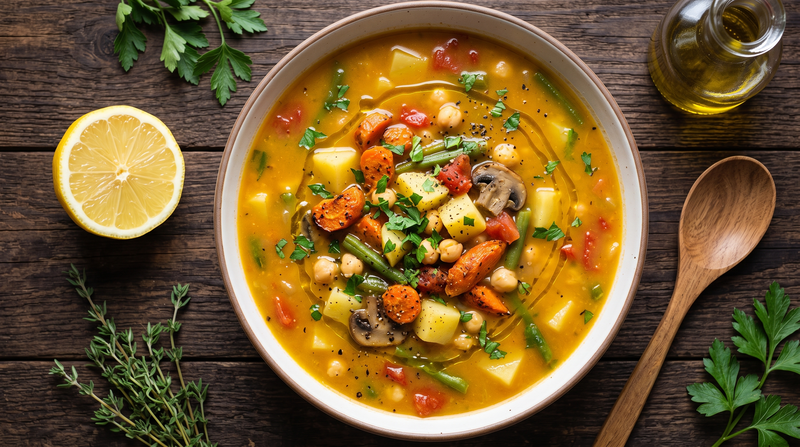
Recipe: Flavor-first vegetable soup
Prep time: 20 minutes | Cook time: 50 minutes | Serves: 6
Ingredients
- 1½ pounds (680 g) carrots, cut into ½-inch pieces
- 2 medium onions, cut into wedges
- 3 celery stalks, cut into ½-inch pieces
- 3 tablespoons olive oil, divided
- 8 ounces (225 g) mushrooms, sliced
- 4 cloves garlic, minced
- 2 tablespoons tomato paste
- 1 teaspoon smoked paprika
- 1 teaspoon ground cumin
- 6 cups (1.4 liters) no-salt-added or low-sodium vegetable broth
- 1 can (14 oz / 400 g) no-salt-added diced tomatoes
- 1 can (15 oz / 425 g) chickpeas, drained and rinsed well
- 2 medium potatoes (about 12 ounces / 340 g), diced
- 1 cup green beans, cut into 1-inch pieces
- 1 bay leaf, and 1 teaspoon dried thyme
- 1–2 tablespoons red wine vinegar or lemon juice, to finish
- Freshly ground black pepper, chopped fresh parsley, and extra olive oil, to serve
Instructions
- Heat the oven to 425°F (220°C). Toss the carrots, onions, and celery with 2 tablespoons of the oil on a large sheet pan. Roast for 25–30 minutes, stirring once, until browned at the edges.
- Meanwhile, heat the remaining tablespoon of oil in a large pot over medium-high heat. Add the mushrooms and cook for 6–8 minutes, until deeply browned, without stirring too often.
- Add the garlic and tomato paste, and cook for 1–2 minutes, until the paste darkens. Stir in the paprika and cumin for 15 seconds.
- Add a splash of broth and scrape up any browned bits. Add the roasted vegetables, the remaining broth, tomatoes, chickpeas, potatoes, bay leaf, and thyme.
- Bring to a simmer and cook for 20 minutes. Add the green beans and cook for 10 minutes more, until all the vegetables are tender.
- Remove the bay leaf. Stir in the vinegar, a teaspoon at a time, and taste. Add pepper. Serve with parsley and a drizzle of olive oil.
Notes: The sodium content depends on your broth and canned goods, so check the labels and calculate per serving if you need to. If you’re allowed some salt, add a small pinch at the end and taste. Add a parmesan rind during simmering for extra depth, but remember that it contains sodium. Leftovers keep for 3–4 days in the refrigerator and freeze well, as we explain in our guide to storing food. For another vegetable soup idea, see our roasted butternut squash soup and our lentil and vegetable soup.
Troubleshooting
- Still flat after acid: It may need more depth. Try bloomed spices, tomato paste, or mushrooms.
- Too sour: You added too much acid. Dilute with a little broth, or add a small amount of fat or a pinch of sugar.
- Tastes harsh or raw: Spices or tomato paste weren’t cooked. Bloom them in oil.
- Tastes muddy: Too many ingredients. Next time, use fewer, and let one or two flavors lead.
- Potatoes taste bland: They absorb flavor and need seasoning. Season the broth well, or roast the potatoes first.
- Broth tastes odd: Some low-sodium broths have a strange taste. Try a different brand, make your own, or dilute a regular broth with water if your dietitian allows it.
FAQ
What is the best thing to add to bland soup?
Acid, such as lemon juice or vinegar, is usually the quickest and most effective fix.
Can I make soup taste good without salt?
Yes, though it takes more attention to other flavors: browning, acid, spices, herbs, fat, and umami ingredients.
Is MSG OK on a low-sodium diet?
It has less sodium than table salt, but it still counts. Ask your doctor or dietitian how it fits your plan.
Is a salt substitute safe?
Not for everyone. Potassium-based substitutes can be dangerous for people with kidney problems or on certain medications, so check with your doctor first.
Why is my soup bland even though I used lots of vegetables?
Vegetables simmered in liquid taste mild. Browning, roasting, and finishing with acid and herbs make the difference.
Conclusion
Bland soup isn’t a lost cause. Taste it, decide what’s missing, and add acid, fat, savory depth, or aroma one step at a time. For future pots, brown the vegetables, cook the tomato paste, bloom the spices, and finish with fresh herbs and a splash of vinegar. These steps work whether you use salt freely or need to limit it, and they turn a pot of “meh” soup into something you’ll look forward to eating.