
By Harry Cruse | TasteSavory
Meal prep has a reputation for being an all-day Sunday project that ends with five identical containers of soggy food. It doesn’t have to be. A simple system, cooking a few building blocks instead of full meals and keeping to safe storage times, gives you quick lunches and dinners without the monotony. This guide shows you how to plan a first prep session, cook in a sensible order, store food safely, and reheat it so it still tastes good.
The short answer
- Prep components (a protein, a starch, a vegetable, and a sauce) rather than fully assembled meals.
- Cook for 3–4 days at a time and freeze the rest, since refrigerated leftovers are best used within 3–4 days.
- Refrigerate cooked food within 2 hours, in shallow containers.
- Reheat to 165°F (74°C).
- Start small, with one protein, one starch, one vegetable, and one sauce.
Two ways to meal prep
Assembled meals are complete portions packed into containers, such as chicken, rice, and vegetables together. They’re the fastest to grab, but everything gets the same reheating, and the vegetables and sauce tend to lose their texture.
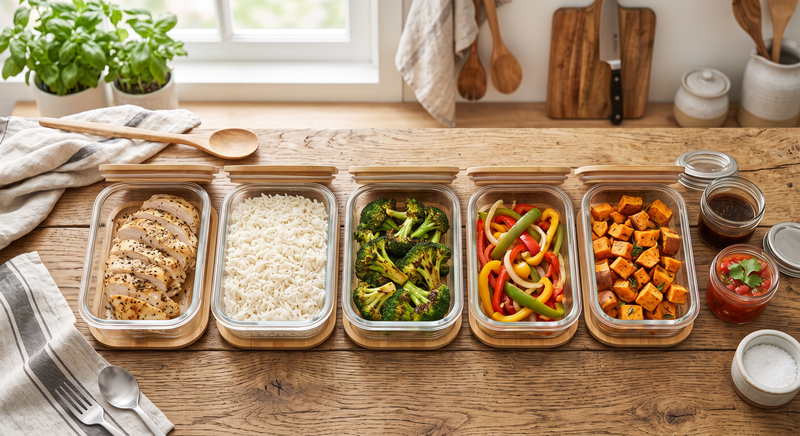
Component prep means cooking separate building blocks and combining them at mealtime. It takes an extra minute to assemble, but you can mix the same ingredients into different meals, keep sauces separate, and reheat each piece the way it prefers. For beginners it’s the more forgiving approach, and it’s what this guide uses.
A simple formula
Choose one item from each column, and you have a balanced meal that comes together in minutes.
| Protein | Starch | Vegetable | Sauce |
|---|---|---|---|
| Pan-seared chicken breast | Rice | Roasted broccoli | Soy-ginger sauce |
| Sheet-pan chicken thighs | Roasted potatoes | Green beans | Garlic-yogurt sauce |
| Seasoned black beans | Rice or quinoa | Roasted peppers and onions | Salsa |
A starter plan for four lunches
This is a manageable first session. Cook everything as described, then divide it into four portions.
- 1½ pounds (680 g) boneless, skinless chicken breasts, cooked with our method for juicy chicken breast
- 1½ cups uncooked long-grain white rice, which makes roughly 4½ cups cooked
- 1½ pounds (680 g) broccoli florets, tossed with oil and salt and roasted at 425°F (220°C) for about 15–20 minutes, until tender with browned edges
- A sauce of your choice, kept in a small separate container
A sensible cooking order
The first session may take one and a half to two hours, and it gets faster with practice. Work so that the oven, the stove, and the counter are all in use at once.
- Preheat the oven and start the rice, since it needs the least attention.
- Toss the broccoli with oil and salt, spread it on a sheet pan, and roast.
- Pat the chicken dry, even out its thickness, salt it, and sear it in a skillet.
- While those cook, make the sauce and wash any fresh produce.
- Check the chicken with a thermometer, and take it off the heat at 165°F (74°C). Rest it for about 5 minutes, then slice it.
- Divide everything into containers and refrigerate promptly.
Storing meal prep safely
- Refrigerate within 2 hours. The USDA advises putting cooked food in the refrigerator within two hours of cooking. You don’t need to wait for it to cool to room temperature first, and hot food can go straight into the refrigerator.
- Use shallow containers. Food cools faster in a shallow layer than in a deep, full pot.
- Keep it cold. The refrigerator should be at 40°F (4°C) or below.
- Use it within 3–4 days. This is the USDA’s guidance for refrigerated leftovers, and it’s the reason to plan your prep in 3–4 day batches.
- Label the containers. Write the date on masking tape so you know when to use or freeze each one.
What holds up well, and what doesn’t
| Holds up well | Better fresh or eaten early |
|---|---|
| Cooked rice, quinoa, and other grains | Crisp or fried foods, which soften as they sit |
| Sturdy roasted vegetables, such as broccoli, carrots, and sweet potatoes | Delicate salad greens, unless the dressing is packed separately |
| Beans, lentils, soups, and stews | Creamy pasta, which thickens as it cools (see our garlic Parmesan pasta for reheating tips) |
| Chicken thighs and meatballs | Cooked shrimp, which is best cold or warmed briefly |
| Sauces and dressings, stored separately | Cut avocado or apples, which brown |
Freezing extras
If you cook more than you’ll eat in 3–4 days, freeze the extra portions right away instead of leaving them in the refrigerator. Soups, stews, cooked chicken, meatballs, and cooked grains freeze well. The USDA notes that frozen leftovers stay safe but can lose moisture and flavor over time, and about 3–4 months is a good target for quality. Thaw them in the refrigerator, or reheat straight from frozen, which takes longer.
Reheating so it tastes good
- Cover the food to hold in moisture, and add a splash of water or broth to dry items such as rice or chicken.
- Stir or rotate halfway through so it heats evenly.
- Reheat until the center reaches 165°F (74°C). An instant-read thermometer makes this easy to check.
- Bring soups and sauces to a rolling boil.
- Season after reheating. Salt, lemon juice, fresh herbs, or a spoonful of sauce revive flavors that dull in the refrigerator.
Troubleshooting
- Food gets soggy: Pack sauces and dressings separately, let roasted vegetables cool a little before covering them, and keep wet and dry components in separate compartments.
- You’re bored by day three: Change the sauce or the way you assemble the same components, for example a grain bowl one day and a wrap the next.
- Everything tastes flat after reheating: Add a pinch of salt, an acid such as lemon juice, or fresh herbs at the end.
- Reheated chicken is dry: Take it off the heat at 165°F (74°C) rather than cooking it much further, and reheat it gently with a splash of broth.
- It feels overwhelming: Cut the plan down to one protein and one vegetable, and cook a grain while they’re in the oven or on the stove.
FAQ
How long does meal prep last in the refrigerator?
The USDA recommends using refrigerated leftovers within 3–4 days. Freeze anything you won’t eat by then.
Can I prep for the whole week?
You can, but do it in two short sessions, or cook for 3–4 days and freeze portions for the rest of the week.
Do I have to reheat everything?
Not always. Grain bowls and salads can be eaten cold if the food was refrigerated promptly and is within the 3–4 day window. If you do reheat leftovers, heat them to 165°F (74°C).
What if I don’t have a big block of time?
Try a shorter session, such as cooking a grain and roasting a tray of vegetables, and add a protein the next day. Even a small head start makes weeknights easier.
Conclusion
Meal prep works best when it’s simple. Cook a few components, keep them separate, refrigerate them promptly, use them within 3–4 days, and freeze the rest. Reheat with a little moisture and finish with fresh seasoning. Start with the four-lunch plan above, see what you enjoy, and build from there.