
By Harry Cruse | TasteSavory
“Anti-inflammatory” is one of the most overused words in food. Products and recipes are often promised to do far more than food realistically can. This guide takes a more practical view. It explains what the phrase means, which everyday foods are commonly built into anti-inflammatory eating, what people usually cut back on, and how to cook with all of it, including three simple recipes. It’s general food information, not medical advice.
The short answer
- There is no single official anti-inflammatory diet. The pattern most often recommended is Mediterranean-style eating: lots of vegetables, fruit, legumes, whole grains, nuts, seeds, fish, and olive oil.
- Variety matters more than any one “superfood”.
- Foods that are often limited include sugary drinks, refined carbohydrates, processed meats, and heavily processed packaged foods.
- Food can support your overall health, but it doesn’t cure diseases. If you have a medical condition, talk to your doctor or a registered dietitian.
What “anti-inflammatory” actually means
Inflammation is part of the immune system’s normal response to injury and infection. The concern is chronic inflammation, where the response stays switched on for a long time. Nutrition researchers describe an anti-inflammatory way of eating as a pattern built around whole, minimally processed foods that provide fiber, antioxidants, and other plant compounds, while limiting the foods that tend to work against them. Research on the Mediterranean pattern is fairly consistent. In one 2023 study, for example, older adults who followed it for six months had lower levels of inflammatory markers in their blood than those who kept eating as usual. That is a promising result about a whole eating pattern, not a promise about any single ingredient or recipe.
Foods to build meals around
| Food group | Examples | Easy ways to use them |
|---|---|---|
| Fatty fish | Salmon, sardines, mackerel | Roasted fillets, sardines on toast, salmon salad |
| Berries and fruit | Blueberries, strawberries, cherries, oranges | Oatmeal, yogurt, smoothies, snacks |
| Vegetables | Leafy greens, broccoli, peppers, tomatoes | Roasted, stirred into soups, added to eggs and grain bowls |
| Legumes | Lentils, chickpeas, black beans | Soups, salads, grain bowls, spreads |
| Whole grains | Oats, brown rice, barley | Breakfasts, bowls, side dishes |
| Nuts and seeds | Walnuts, almonds, chia, flaxseed | Sprinkled on oats, salads, and yogurt |
| Olive oil | Extra-virgin olive oil | Roasting, sautéing, dressings |
| Herbs and spices | Garlic, ginger, turmeric, cinnamon, rosemary | Seasoning soups, roasted vegetables, and marinades |
Some evidence links regularly eating fatty fish with lower levels of C-reactive protein, a blood marker of inflammation. Berries and colorful vegetables supply plant pigments that researchers study for similar reasons. Spices such as turmeric and ginger are often included too, though the amounts used in cooking are small, so treat them as flavor first.
What people usually limit
Anti-inflammatory eating patterns typically go easy on sugary drinks, sweets and baked goods made with refined flour, processed meats such as bacon and hot dogs, and highly processed packaged foods. You don’t need to eliminate them entirely. What counts is the overall pattern of what you eat most days.
A simple way to build a plate
Fill about half your plate with vegetables and fruit, a quarter with whole grains or legumes, and a quarter with a protein such as fish, poultry, or beans. Cook with olive oil, and use herbs and spices for flavor so you’re not relying on heavy sauces. Each recipe below follows that approach.
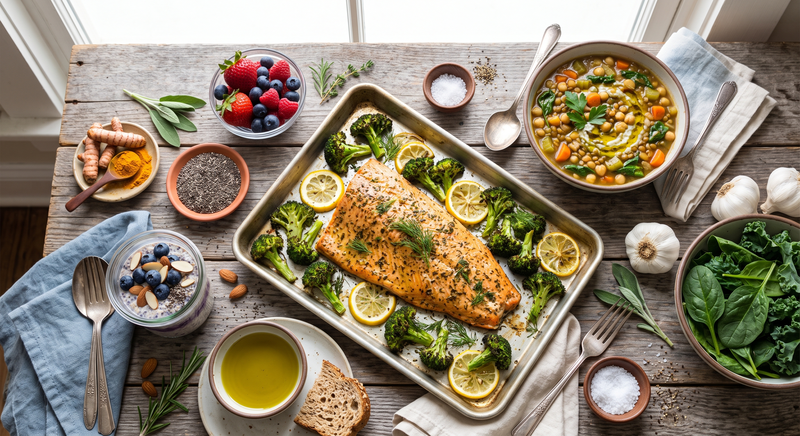
Recipe 1: Sheet-pan lemon-herb salmon with broccoli
Prep time: 10 minutes | Cook time: 22–25 minutes | Serves: 4
Ingredients
- 4 salmon fillets (5–6 oz / 140–170 g each, about 1 inch thick)
- 1 pound (450 g) broccoli florets
- 1 small red onion, cut into wedges
- 3 tablespoons extra-virgin olive oil, divided
- 1 lemon, zest of half, the rest sliced, plus juice for serving
- 3 cloves garlic, minced
- 1 tablespoon chopped fresh dill or parsley
- ¾ teaspoon salt, divided
- ¼ teaspoon black pepper
Instructions
- Heat the oven to 400°F (200°C). Toss the broccoli and onion with 2 tablespoons of the oil and ½ teaspoon of the salt. Spread on a large sheet pan and roast for 8–10 minutes.
- Meanwhile, pat the salmon dry. Mix the garlic, lemon zest, remaining 1 tablespoon oil, remaining ¼ teaspoon salt, and the pepper, and rub it over the fillets.
- Push the vegetables to the edges of the pan and place the salmon in the center, skin-side down. Top with lemon slices. Roast for 12–15 minutes, until the salmon flakes easily and reads 145°F (63°C) in the thickest part. An instant-read thermometer takes the guesswork out.
- Finish with a squeeze of lemon juice and the fresh herb.
Note: Thicker fillets need a few more minutes, and thinner ones need fewer, so start checking early.
Recipe 2: Blueberry chia overnight oats
Prep time: 5 minutes, plus chilling | Serves: 1
Ingredients
- ½ cup (45 g) rolled oats
- ½ cup (120 ml) milk of your choice
- ¼ cup (60 g) plain yogurt
- 1 tablespoon chia seeds
- ¼ teaspoon cinnamon
- Pinch of salt
- ½ cup (75 g) blueberries, fresh or frozen
- Chopped walnuts, to top
- 1 teaspoon honey or maple syrup (optional)
Instructions
- Stir the oats, milk, yogurt, chia, cinnamon, and salt together in a jar or bowl.
- Cover and refrigerate for at least 4 hours or overnight, until the oats are soft and the mixture has thickened.
- Stir in a splash of milk if it’s too thick. Top with the blueberries, walnuts, and sweetener if using.
Note: Keep prepared jars refrigerated and eat them within 3–4 days. They’re an easy addition to a weekly meal prep routine.
Recipe 3: Lentil and vegetable soup
Prep time: 15 minutes | Cook time: 35 minutes | Serves: 4–6
Ingredients
- 1 tablespoon extra-virgin olive oil
- 1 medium onion, diced
- 2 carrots, diced
- 2 celery stalks, diced
- 3 cloves garlic, minced
- 1 teaspoon ground cumin
- ½ teaspoon ground turmeric
- 1 cup (about 200 g) dried brown or green lentils, rinsed
- 5 cups (1.2 liters) low-sodium vegetable or chicken broth
- 1 can (14 oz / 400 g) diced tomatoes
- 2 cups baby spinach
- 1–2 tablespoons lemon juice
- Salt and black pepper, to taste
Instructions
- Heat the oil in a large pot over medium heat. Cook the onion, carrots, and celery for 6–8 minutes, until softened.
- Add the garlic, cumin, and turmeric and cook for about 30 seconds, until fragrant.
- Add the lentils, broth, and tomatoes. Bring to a boil, then reduce the heat, partially cover, and simmer for 25–30 minutes, until the lentils are tender.
- Stir in the spinach and cook for 2 minutes, until wilted. Add the lemon juice, then season with salt and pepper.
Note: The soup thickens as it sits, so loosen it with a splash of broth or water when reheating, and bring it to a rolling boil. It keeps 3–4 days in the refrigerator and freezes well in portions.
FAQ
Can an anti-inflammatory diet cure arthritis or other conditions?
No. Eating this way can support your overall health, but it’s not a treatment or cure. If you’re managing a medical condition, follow your healthcare provider’s advice and ask them before making major changes.
Do I need to buy expensive “superfoods”?
No. Frozen berries, canned beans, lentils, oats, and seasonal vegetables all fit the pattern. Variety and consistency matter more than any single product.
Is olive oil okay for roasting?
Extra-virgin olive oil is generally suitable for the typical temperatures used in home roasting and sautéing. Use a neutral oil for very high-heat cooking.
Do I need to avoid nightshade vegetables like tomatoes and peppers?
Strong evidence doesn’t support that for most people, and these vegetables are staples of Mediterranean-style eating. If a particular food seems to bother you, discuss it with your doctor or dietitian rather than cutting it out on your own.
Conclusion
Anti-inflammatory eating isn’t about a secret ingredient. It comes down to a steady pattern of vegetables, fruit, legumes, whole grains, fish, nuts, and olive oil, with fewer sugary and heavily processed foods. Start with one of the recipes above, add more color to your plate, and build from there. If you have health concerns, use this guide as a starting point for a conversation with a professional.