
By Harry Cruse | TasteSavory
Shrimp cooks fast, and that’s both its appeal and its main risk. A minute too long and it goes from tender and sweet to tight and rubbery. The good news is that shrimp is forgiving once you know what to look for: buy the right size, thaw it properly, dry it well, and take it off the heat as soon as it turns opaque. This guide covers buying, preparing, and cooking shrimp four different ways, with a garlic butter sauté you can use as the base for weeknight dinners.
The short answer
- Buy by count per pound rather than by size names, and consider frozen shrimp.
- Thaw it in the refrigerator or in cold water, then pat it dry.
- Cook it until it’s opaque and curled into a loose “C”, usually 2–3 minutes per side for large shrimp.
- Take it off the heat right away, because it keeps cooking in a hot pan.
- The USDA’s minimum safe internal temperature for shellfish is 145°F (63°C).
Buying shrimp
Fresh or frozen?
Much of the shrimp sold thawed at seafood counters was frozen earlier, so a bag of frozen shrimp is often a good choice. It lets you thaw only what you need, when you need it. Look for a bag without heavy ice crystals or signs of freezer burn, which can suggest the shrimp thawed and refroze at some point. Fresh or thawed shrimp should smell mild and briny, not sour or like ammonia.
Shrimp sizes
Size names like “large” and “jumbo” vary from store to store, so go by the count per pound on the package. A count of 21/25 means 21 to 25 shrimp per pound.
| Count per pound | Size | Good for |
|---|---|---|
| 31/40 | Small to medium | Pasta, fried rice, salads |
| 21/25 | Large | All-purpose: sautéing, roasting, boiling |
| 16/20 | Extra large | Grilling and skewers |
Shell-on or peeled?
Shell-on shrimp can add flavor and are slightly more protected from overcooking, but they take longer to prepare and are messier to eat. Peeled shrimp are quicker for weeknight meals. Either works with any method below.
Preparing shrimp
- Thaw safely. Move frozen shrimp to the refrigerator overnight, or seal them in a bag and submerge in cold water for 20–30 minutes, changing the water if it warms up. Don’t thaw them on the counter.
- Peel and devein. Pull off the shell and, on larger shrimp, make a shallow cut along the back and lift out the dark vein. It’s harmless, but it can be gritty. Kitchen scissors make this quick.
- Pat dry. Wet shrimp steam instead of browning, so blot them well with paper towels.
- Season just before cooking. Salt, pepper, and any spices go on right before they hit the heat.
How to tell shrimp is done
Raw shrimp is gray and translucent. When it’s cooked, the flesh turns opaque and takes on a pink or coral tinge, although the exact color varies by species. The shape is the most useful clue: a loose “C” means it’s done, while a tight “O” usually means it’s overcooked. Shrimp is too small to probe easily, so appearance is the practical guide. On large shrimp you can confirm the USDA’s 145°F (63°C) minimum in the thickest part with an instant-read thermometer.
Four ways to cook shrimp
The times below are for large (21/25) shrimp. Smaller shrimp cook faster, and larger ones take a bit longer.
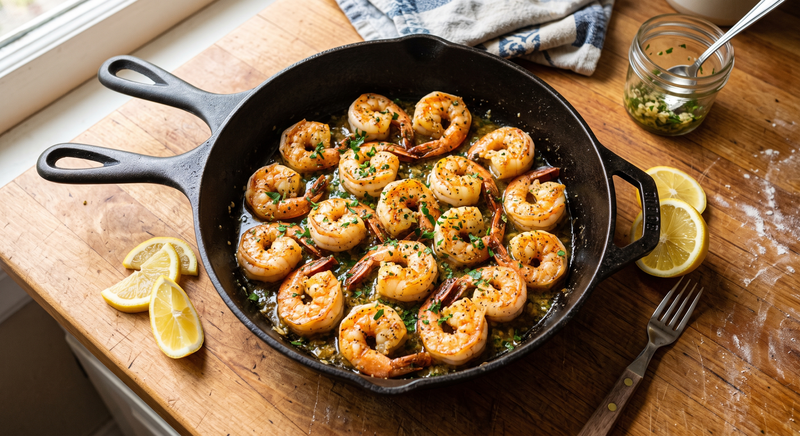
1. Garlic butter sauté (base recipe)
Serves 3–4
- 1 pound (450 g) large shrimp (21/25), peeled and deveined
- ½ teaspoon salt
- ¼ teaspoon black pepper
- 1 tablespoon olive or neutral oil
- 2 tablespoons unsalted butter
- 3 cloves garlic, minced
- 1 tablespoon lemon juice
- 1 tablespoon chopped parsley
- Pat the shrimp very dry and season with the salt and pepper.
- Heat the oil in a 12-inch skillet over medium-high heat until it shimmers. Add the shrimp in a single layer, working in batches if the pan is crowded. Cook without moving for about 2 minutes, until the bottoms are pink and lightly golden.
- Flip the shrimp, reduce the heat to medium, and add the butter and garlic. Cook 1–2 minutes more, stirring the garlic, until the shrimp are opaque and curled into a “C” and the garlic is fragrant but not brown.
- Remove the pan from the heat and stir in the lemon juice and parsley. Move the shrimp to a serving dish right away so they don’t keep cooking in the hot pan.
2. Roasted
Toss the shrimp with a tablespoon of oil, salt, and your seasonings, and spread them in a single layer on a sheet pan. Roast at 425°F (220°C) for about 6–8 minutes, until opaque. This is the easiest method for a larger batch, since there’s no stirring or flipping.
3. Boiled or poached
Bring a pot of well-salted water, with a lemon half if you like, to a gentle simmer. Add the shrimp and cook 2–3 minutes, until opaque. For chilled shrimp, plunge them into ice water straight away to stop the cooking. This method suits shrimp cocktails and cold salads.
4. Grilled
Thread large shrimp onto two parallel skewers, which keeps them from spinning when you flip them. Brush with oil and grill over medium-high heat for about 2–3 minutes per side, until opaque with light char marks. Choose 16/20 or larger shrimp so they don’t slip through the grates.
Troubleshooting
- Rubbery or tight: The shrimp was overcooked. Watch for the “C” shape and remove them as soon as they turn opaque. Smaller shrimp need even less time than the estimates above.
- Watery pan and no browning: The shrimp was wet or the pan was crowded. Dry them thoroughly, preheat the pan, and cook in batches.
- Bland: Season right before cooking, and finish with something bright such as lemon juice, or a pinch more salt.
- Gritty texture: The vein wasn’t removed. It’s harmless, but deveining large shrimp improves the texture.
- Strong ammonia or sour smell: Don’t cook it. Throw the shrimp away.
Seasoning, serving, and variations
Shrimp takes on flavors quickly. Try a Cajun-style spice mix, lemon and dried herbs, or garlic with red pepper flakes. Serve it over rice, tossed with pasta, tucked into tacos, or on a green salad, with crusty bread for the pan juices. To add it to our Creamy One-Pot Garlic Parmesan Pasta, cook the shrimp separately with the sauté method above and stir it into the finished pasta, so it doesn’t overcook in the pot.
Storage and reheating
Store raw shrimp in the refrigerator and cook it within a day or two of buying or thawing. Refrigerate cooked shrimp within two hours and eat it within 3–4 days. Cooked shrimp toughens easily when it’s reheated, so it’s often best eaten cold in salads or warmed only briefly over low heat, until just hot.
FAQ
Can I cook shrimp from frozen?
It’s possible, especially for poaching or roasting, but expect a little more cooking time and less browning. Thawing first gives better seasoning and texture.
Do I have to devein shrimp?
No, it’s not a safety issue. The vein can be gritty, though, so it’s worth removing on larger shrimp.
Why did my shrimp turn out tough?
Almost always overcooking. Shrimp cooks in just a few minutes, so remove it from the heat as soon as it turns opaque.
Is pink the only sign of doneness?
No. Color varies by species, so look for opaque flesh and a loose “C” shape as well.
Conclusion
Tender shrimp comes down to a few habits: choose a size that suits the method, thaw it properly, dry it well, and stop cooking the moment it turns opaque and curls into a “C”. Start with the garlic butter sauté, then try roasting or grilling once you’re comfortable with the timing. With those cues, shrimp becomes one of the quickest and most reliable dinners you can make.