By Harry Cruse | TasteSavory
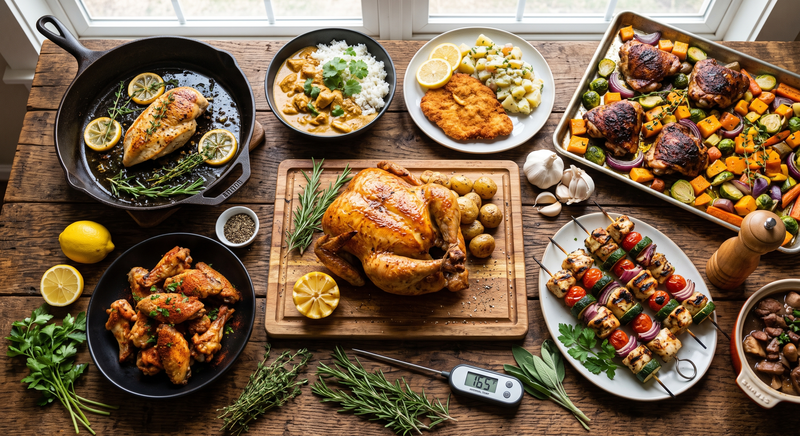
Ask a room of home cooks for their favorite way to make chicken, and you’ll get answers from every part of the world: lemony cutlets, charcoal-grilled marinades, crispy thighs finished in the oven, a whole bird with nothing but salt, ginger-scented poached chicken over rice. It sounds like chaos, but the answers fall into a handful of methods, and each one suits a particular cut. This guide walks through ten of the most popular ways to cook chicken, explains which cut works best for each, and gives you the timing cues and safe temperatures to cook it with confidence. Use it as a menu of ideas the next time you’re tired of the same weeknight chicken.
The short answer
- Lean breasts do best with fast, even cooking: pounded cutlets, quick sears, gentle poaching, or a brine before grilling.
- Thighs and drumsticks are more forgiving, so they suit roasting, braising, grilling, and slow cooking.
- Salt early, dry the surface, and use a thermometer instead of the clock.
- Chicken is safe at 165°F (74°C) in the thickest part, and many cooks take dark meat a little higher for a more tender texture.
- Pick the method that fits your evening: 20 minutes on the stove, an hour in the oven, or a few hours that mostly look after themselves.
Match the cut to the method
| Cut | What it’s like | Methods that suit it |
|---|---|---|
| Breast | Lean, mild, and quick to dry out | Pan-searing, cutlets, poaching, stir-frying, grilling after pounding or brining |
| Thighs and drumsticks | Richer, with more fat and connective tissue, so they’re forgiving | Sear-and-roast, sheet-pan dinners, braising, slow cooking, grilling |
| Whole chicken | Both white and dark meat, and good value | Roasting, spatchcocking, rotisserie or grilling, slow cooking, poaching |
| Wings | Skin-heavy and good for crisping | Baking, air frying, grilling |
| Ground chicken | Very lean, so it needs help staying moist | Patties, meatballs, stir-fries |
1. Sear on the stove, finish in the oven
This is the technique many cooks reach for first with thighs and other bone-in pieces. Pat the chicken dry, season it well, and sear it skin-side down in an oven-safe skillet over medium-high heat for 5–7 minutes, until the skin is deeply golden and releases from the pan. Flip it, then move the pan to a 400°F (200°C) oven for roughly 20–30 minutes for bone-in pieces, or 15–20 for boneless thighs. The stovetop builds a crust, and the oven cooks the inside gently without burning the outside. Check with a thermometer: 165°F (74°C) is the safe minimum, though many cooks prefer bone-in thighs at around 175–185°F (80–85°C), when the connective tissue has softened. The pan drippings make an instant sauce, following the principles in our cooking habits guide.
2. One-pan thighs with vegetables
For a low-effort dinner, toss bone-in thighs with sliced potatoes, carrots, squash, or cherry tomatoes, plus oil, salt, garlic, and whatever seasoning you like, in a roasting pan or sheet pan. Roast at 425°F (220°C) for about 35–45 minutes. Cut the vegetables into similar-sized pieces, about 1 inch, and add quick-cooking vegetables such as tomatoes or green beans partway through. A spicy sauce, a herb paste, or a yogurt sauce from our essential sauces makes a simple finish. The vegetables soak up the chicken juices, and there’s a single pan to wash.
3. A simple whole roast chicken
Many experienced cooks say the plain roast chicken is hard to beat. Salt it generously, ideally a day ahead, and leave it uncovered in the refrigerator so the skin dries. Roast it at about 425°F (220°C) for roughly an hour to 1¼ hours for a 4-pound (1.8 kg) bird, until the thickest part of the breast, the innermost part of the thigh, and the innermost part of the wing all reach 165°F (74°C). Spatchcocking, which means removing the backbone and pressing the bird flat, can cut the time to around 40–50 minutes and gives crisper skin. Rest it for 10–15 minutes before carving. Leftovers become sandwiches, soup, or pasta salad, and the carcass makes stock. See our holiday meal ideas for more on roasting poultry.
4. Slow cooker
A slow cooker suits thighs and drumsticks especially well. They turn tender without drying out, and the juices become a sauce. Browning the chicken first isn’t required but adds flavor. Cooking thighs on low often takes about 4–6 hours, though cookers vary, and very long cooking can leave lean breast meat stringy. For a whole chicken, thaw it first and start with a bed under it so it isn’t sitting in its juices. Some cooks use balls of foil for this. Aluminum foil can transfer small amounts of aluminum into food, particularly acidic food, so a small rack made for the cooker, or a thick layer of sliced onions and carrots, is a simple alternative. A whole bird in a slow cooker is often done in about 4–6 hours on low, but check the temperature in the breast, thigh, and wing, and make sure each reaches at least 165°F (74°C).
5. Marinate and grill
Marinades from many cuisines work well here: citrus and garlic in the style of a Cuban mojo, soy sauce with vinegar and garlic, buttermilk, or a lemongrass and fish sauce blend. Marinate chicken in the refrigerator, never on the counter, for anywhere from 30 minutes to about 12 hours. Very acidic marinades left on for too long can make the surface mushy. Grill over medium heat, using two zones so thick pieces can finish on the cooler side without burning. Bone-in pieces often take 35–45 minutes in total, and boneless pieces cook in about 5–7 minutes per side, but go by temperature. Don’t reuse a marinade that has touched raw chicken as a sauce unless you bring it to a full boil first, or set some aside before the raw chicken goes in. See our outdoor kitchen guide for grill safety.
6. Pan-seared cutlets with a pan sauce
This is the foundation of chicken piccata, marsala, and saltimbocca, and it’s one of the fastest ways to cook breasts. Slice a breast in half horizontally, or pound it to an even ½–¾ inch, season it, and dredge it lightly in flour. Sear in oil or butter over medium-high heat for 2–3 minutes per side, until golden and 165°F (74°C). Remove the chicken, pour wine, lemon juice, or broth into the hot pan, scrape up the browned bits, and simmer until reduced by about half. Finish with a spoonful of butter and capers, herbs, or mushrooms. Our tips for juicy chicken breast explain why even thickness and resting matter, and flavor and color in cooking shows how to balance the sauce.
7. Crispy breaded cutlets
Thin chicken cutlets coated in flour, egg, and panko breadcrumbs are a family favorite because they’re good hot or cold, in sandwiches, over salads, or on their own. Pound or slice the chicken to about ½ inch, season it, and bread it. Shallow-fry in about ⅛–¼ inch of oil over medium heat for roughly 3–4 minutes per side, until deep golden and 165°F (74°C), and drain on a rack. Keep the oil from smoking, and keep children away from hot oil, since it can spatter. An air fryer or a hot oven on a rack also works for a lighter version.
8. Stir-fry and thin-sliced chicken
Thinly sliced thigh or breast cooks in minutes over high heat. Freeze the chicken for 20–30 minutes first, which firms it for slicing, and cut it about ¼ inch thick. A short marinade in soy sauce, sugar, garlic, and scallions, as in many Korean-style dishes, adds flavor, and a little cornstarch helps keep the meat tender. Heat a skillet or wok until very hot, cook the chicken in small batches so it browns, and finish in 2–4 minutes. Serve over rice with vegetables. The same method works for lo mein and for dishes made with ground chicken, such as egg roll in a bowl. Our ways to cook meat guide explains the slicing and batching principles, and the soy-ginger sauce in our essential sauces is a good fit.
9. Braised in cider, wine, or tomatoes
Braising suits bone-in thighs and legs. Brown the chicken, soften onions and other aromatics in the same pot, add about a cup of liquid, such as apple cider, white wine, or crushed tomatoes, and simmer covered over low heat for 30–45 minutes until tender. Classic versions include cacciatore and apple-and-cider dishes in the style of Normandy, often finished with a splash of cream. Because dark meat has plenty of connective tissue, it stays moist during a longer cook, and the sauce develops as it simmers. Braised chicken reheats well and is a good candidate for meal prep.
10. Gentle poaching or steaming
Poaching is a quiet favorite for chicken breasts and whole birds. Cover the chicken with cold water or broth, add ginger, scallions, and salt, bring it to a bare simmer, and keep it there, because a hard boil toughens the meat. Boneless breasts often finish in about 12–18 minutes, until they reach 165°F (74°C), and a whole bird takes considerably longer. The cooking liquid becomes broth, and in dishes such as Hainanese-style chicken rice it also flavors the rice and the sauce. The result is tender, mild chicken that suits salads, rice bowls, and soups.
Bonus: air fryer and leftovers
An air fryer is a convenient way to crisp drumsticks, wings, and breaded cutlets. A common range is about 380–400°F (195–205°C) for 20–30 minutes, flipping halfway, but models vary, so use a thermometer. Leftover chicken is just as useful as a main dish. Shred it into pasta salad, wraps, tacos, soups, or a chilled lemony chicken salad. Store cooked chicken in the refrigerator for 3–4 days, as described in our guide to storing food in the kitchen.
Flavor ideas from around the world
| Style | Typical flavors | Method that suits it |
|---|---|---|
| Italian-American | Lemon, capers, wine, mushrooms, tomato, Parmesan | Pan-seared cutlets, braising |
| Cuban-style | Citrus, garlic, onion, oregano | Marinate and grill |
| Korean-style | Soy, garlic, sugar, scallion, sesame | Stir-fry, grilling |
| Southeast Asian | Lemongrass, fish sauce, garlic, cilantro, ginger | Marinate and grill, poaching |
| South Asian | Yogurt, garlic, ginger, cumin, paprika, garam masala | Marinate and grill, braising |
| Mexican | Chiles, lime, cumin, onion | Shredded for tacos and enchiladas, grilling |
| French | Cider, apples, cream, mustard, herbs | Braising, roasting |
Spices taste better when you wake them up first, as we explain in how to toast and bloom spices. A glaze with honey or maple, as in our sweet and salty guide, works on nearly any of these methods when it’s added near the end.
Food safety for chicken
- Cook to 165°F (74°C). Check the thickest part with an instant-read thermometer, away from bone. Color alone isn’t reliable.
- Thaw safely. Thaw in the refrigerator, or in cold water changed every 30 minutes. Never thaw on the counter, and thaw chicken fully before it goes into a slow cooker.
- Don’t wash raw chicken. Rinsing can splash bacteria around your sink and counters. Cooking is what makes it safe.
- Keep raw and cooked apart. Use separate boards, plates, and tongs, and wash your hands after handling raw chicken.
- Store it properly. Raw chicken keeps 1–2 days in the refrigerator. Refrigerate cooked chicken within 2 hours, eat it within 3–4 days, and reheat it to 165°F (74°C).
Troubleshooting
- Dry breast meat: It was probably overcooked. Pound it to an even thickness, salt it ahead, and take it off the heat at 165°F (74°C).
- Rubbery or pale skin: The skin was wet or the pan wasn’t hot enough. Pat the chicken dry, salt it ahead, and let it brown before moving it.
- Burnt outside, undercooked inside: The heat was too high for the size of the piece. Use the oven to finish thick cuts, or the cooler zone on the grill.
- Bland chicken: Salt it earlier, and finish with acid, fresh herbs, or a sauce.
- Stringy slow cooker chicken: It cooked too long. Use thighs, check earlier, and shorten the time.
FAQ
What’s the easiest way to cook chicken for a beginner?
Bone-in thighs, seared and finished in the oven, or roasted on a sheet pan. They’re forgiving and still taste good if they run a few minutes long.
Should I brine chicken?
It helps lean breast meat stay moist. A dry brine of salt applied ahead of time is the simplest version. Our juicy chicken breast guide explains how.
Can I cook chicken from frozen?
It’s safe in an oven or on a stovetop, but it takes about 50% longer, and the results are less even. Don’t cook frozen chicken in a slow cooker.
Is it okay if chicken is a little pink?
Color isn’t a reliable guide. Chicken can stay slightly pink near the bone when it’s done, and it can look cooked when it isn’t. Rely on the thermometer.
Conclusion
The best way to cook chicken depends on the cut and on how much time you have. Cutlets and stir-fries suit weeknights, thighs and whole birds reward a slower cook, and grilling and braising bring in flavors from all over the world. Whichever method you choose, salt early, dry the surface, and let the thermometer decide. Pick one method from this list that you haven’t tried, and cook it this week.