By Harry Cruse | TasteSavory
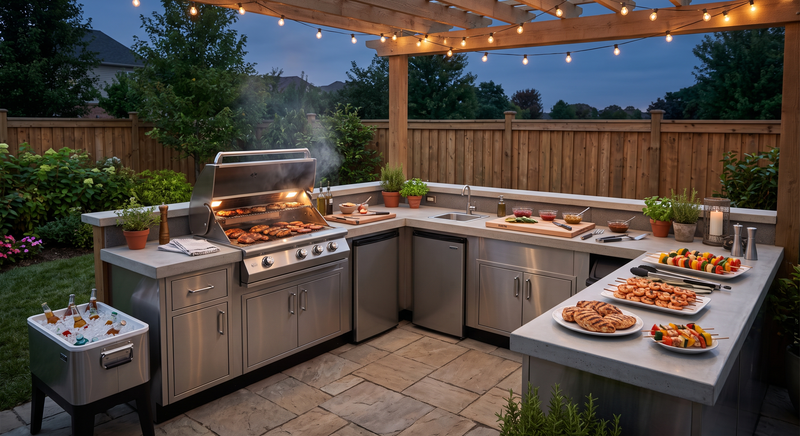
An outdoor kitchen can be anything from a portable grill and a folding table to a fully built cooking area with counters, storage, and a refrigerator. What makes one work isn’t the size or the budget, but whether it fits the way you actually cook. This guide walks through how to plan a backyard cooking space, from three setup levels and a zone-by-zone layout to choosing a grill, staying safe around fire and gas, and keeping food safe when you cook outside.
The short answer
- Start with how you cook, how often, and for how many people, before you choose any equipment.
- Plan five zones: cooking, prep, cold storage, cleanup, and serving.
- Begin with a simple setup and add to it as you learn what you need.
- Keep grills outdoors and at least 10 feet from your home, and never leave them unattended.
- Keep raw and cooked food separate, keep cold food cold, and check temperatures with a thermometer.
Start with how you cook
Before you choose a grill or a layout, answer a few questions.
- What will you cook most? Burgers and vegetables need different equipment from pizza, whole chickens, or slow-smoked meats.
- Who are you cooking for? A weeknight dinner for two and a party for twenty call for very different amounts of space.
- How often will you use it? A space you use weekly deserves more investment than one you use a few times a year.
- What is your climate? Wind, rain, sun, and cold seasons affect where you put things and what materials you choose.
Three setup levels
| Level | What it includes | Best for |
|---|---|---|
| Starter | A portable grill, a sturdy folding prep table, a cooler, and a bin for tools | Trying outdoor cooking without a big commitment |
| Middle | A larger grill on a cart or base, a side burner or second cooking surface, a proper prep counter, covered storage, and a hand-washing setup | Regular cooking and hosting |
| Full | Built-in cabinetry and counters, a built-in grill, an outdoor refrigerator, a sink, and options such as a pizza oven or smoker | Frequent entertaining, and people who cook outside most of the year |
You don’t need to build everything at once. Many people start at the first level, notice what frustrates them, and add the right upgrade later.
Plan five zones
- Cooking zone: The grill and any other heat source. Keep this area clear of anything that can catch fire, and place it where smoke won’t blow toward seating or into windows.
- Prep zone: A flat, easy-to-clean surface next to the grill for seasoning, slicing, and holding platters. Many designers suggest leaving at least 18–24 inches of counter space beside the grill so you’re not balancing plates.
- Cold zone: A cooler or refrigerator within easy reach, so raw ingredients stay cold until they’re cooked.
- Cleanup zone: A place to wash hands, rinse tools, and dispose of trash. Even a portable hand-washing station or a bucket of soapy water and wipes helps.
- Serving zone: A separate spot for cooked food, so it never touches surfaces that held raw meat.
Keep the distance between these zones short. If you have to walk to the kitchen for every tool, the outdoor setup isn’t saving you anything. Lighting also matters more than most people expect, so plan for it if you’ll cook after dark.
Choosing a grill or cooking surface
| Type | Strengths | Trade-offs |
|---|---|---|
| Gas | Quick to start, easy temperature control, simple cleanup | Less smoky flavor, and it needs a propane tank or gas line |
| Charcoal | High heat and classic smoky flavor | Slower to start, more cleanup, and harder to control |
| Pellet | Steady temperatures and good smoke flavor, useful for low-and-slow cooking | Needs electricity and pellets, and usually costs more |
These are general trade-offs, and models vary. A side burner is useful for sauces and sides, and a pizza oven or smoker adds range if you’ll use it regularly. Choose weather-resistant materials for counters and cabinets, and keep combustible materials away from heat sources.
Fire, gas, and code safety
- Use grills only outdoors. Charcoal and gas grills produce carbon monoxide and should never be used in a garage, tent, or any enclosed space. A covered patio must be well ventilated, and only equipment rated for it should be used under a roof.
- Keep a safe distance. A common fire-safety guideline is to keep a grill at least 10 feet from your house, deck railings, and any structure, and out from under eaves and low branches.
- Check for gas leaks. Before using a propane grill, especially at the start of the season, brush a soapy water solution over the hose and connections and turn on the gas. Bubbles indicate a leak. Turn off the gas, and if it continues, get the grill serviced or call the fire department.
- Never leave the grill unattended, and keep children and pets well away from it.
- Clean grease buildup from grates and drip trays, because grease can cause flare-ups.
- Handle coals carefully. Let them cool completely and dispose of them in a metal container.
- Store propane tanks outdoors, upright, and away from the house.
- Follow codes and hire professionals. Built-in kitchens have clearance requirements from manufacturers and local building rules. Gas lines and electrical work should be done by licensed professionals, and you may need permits.
Food safety when you cook outside
- Keep cold food cold. Store raw meat, poultry, and seafood at 40°F (4°C) or below, in a cooler with plenty of ice or ice packs, and take items out only as you’re ready to cook.
- Separate raw from cooked. Use different plates, tongs, and cutting boards for raw and cooked food. Never put cooked food back on the plate that held raw meat.
- Cook to the right temperature. Grill marks and color aren’t reliable. Use an instant-read thermometer: poultry to 165°F (74°C), ground beef and pork to 160°F (71°C), steaks and chops to 145°F (63°C) with a 3-minute rest, and fish to 145°F (63°C).
- Watch the clock. Don’t leave perishable food out for more than 2 hours, or 1 hour if it’s above 90°F (32°C) outside. Keep hot food at 140°F (60°C) or above.
- Wash your hands and tools. Use soap and water or wipes, especially after handling raw meat.
What to cook first
Start with foods that suit a grill and are forgiving. Pounded chicken breasts stay tender when you follow our tips for juicy chicken breast. Large shrimp on skewers cook in minutes, as explained in our shrimp guide. Salmon works well too, and our lemon-herb salmon recipe can be adapted for a grill or grill pan. Vegetables such as peppers, zucchini, and corn pick up flavor and color from the heat, and the same principles apply that we describe in flavor and color in cooking: dry surfaces, a hot grate, and no crowding.
Weather, seasons, and upkeep
- Wind and sun: Place the cooking area so smoke blows away from seating, and consider shade for the cook and for food waiting on the counter.
- Covers: Use covers to protect grills, counters, and cushions between uses.
- Cold seasons: If you won’t use the kitchen in winter, clean it thoroughly, disconnect and store propane safely, and cover it.
- Pests: Store food in sealed containers, and clean up spills and crumbs promptly.
Common mistakes
- Too little counter space: This is the most common frustration. Plan a prep surface right next to the grill.
- The grill is too far from the house: If it’s inconvenient, you’ll stop using it. Balance distance for safety with convenience for cooking.
- No lighting: Cooking in the dark is difficult and unsafe.
- Overbuilding before you’ve cooked outside: Start simple and see how you use the space.
- Forgetting storage: Tools, fuel, and platters need a dry, convenient place.
FAQ
Do I need a permit for an outdoor kitchen?
It depends on where you live and what you’re building. A portable grill usually doesn’t, but built-in structures, gas lines, and electrical work often do. Check with your local building department.
What is the cheapest way to start?
A portable grill, a sturdy prep table, a cooler, and a good thermometer. You can add pieces as you go.
Can I grill under a covered patio?
Only if the grill and the space are designed for it, with good ventilation and the required clearances. Check the manufacturer’s instructions and local codes, and never use a grill in an enclosed area.
How big should the prep area be?
Enough to hold a cutting board, seasonings, and a platter for cooked food at the same time. Many designers suggest 18–24 inches of counter on each side of the grill as a starting point.
Conclusion
A good outdoor kitchen is planned around how you cook. Choose a simple setup, arrange the five zones close together, put safety around fire and gas first, and keep food at safe temperatures. Cook a few meals, notice what’s missing, and build from there.