
By Harry Cruse | TasteSavory
When apple season arrives or a trip to the orchard leaves you with a surplus of fruit, standard desserts like apple pie, cobblers, and crisps are usually the first ideas that spring to mind. But if your pantry is already stocked with sweet preserves and you prefer savory, stovetop cooking over baking, fresh apples offer incredible culinary versatility well beyond the dessert table.
Apples bring natural tartness, crisp texture, and subtle sugars that balance salty meats, cut through rich dairy, and complement earthy autumn spices. From pan-seared pork chops and chicken curry to vibrant slaws and hearty soups, here is a complete culinary guide to using fresh apples in everyday savory meals.
The short answer
- Pair with rich meats: Combine cooked apples with pork chops, chicken thighs, duck, or sausages for a classic sweet-and-savory balance.
- Balance sharp ingredients: Add sliced apples to sauerkraut, braised cabbage, or curries to tone down intense acidity and heat.
- Upgrade cold dishes: Use thin apple matchsticks or dice in tuna, chicken, or chickpea salads for fresh crunch.
- Elevate breakfasts: Sauté diced apples with butter, cinnamon, and oats, or layer thin slices directly into pancake batter.
- Preserve in savory forms: Turn large batches into spiced apple chutneys, quick pickles, or savory sauces.
1. Savory Meat Dishes and Pan Sauces
The natural affinity between fruit and savory proteins is one of classic cooking’s best pairings. Apples contain malic acid and natural pectin, which brighten pan sauces while helping them reduce into a glossy finish.
- Pork Chops with Caramelized Apples and Onions: Sauté sliced apples and yellow onions in butter until tender and lightly browned. Remove from the pan, sear seasoned pork chops, then deglaze the skillet with a splash of apple cider, chicken stock, or white wine. Reintroduce the apples and finish with a knob of butter for a rich dinner.
- Chicken Normandy-Style Cream Sauce: Sauté diced apples and shallots in olive oil, deglaze with cider or chicken stock, and stir in a spoonful of mustard and heavy cream. Simmer until slightly reduced and pour over pan-roasted chicken breasts or thighs. For more ideas on achieving tender meat, review our guide on how to keep chicken breast juicy.
- Dutch Oven Apple Chicken: Arrange quartered tart apples and sliced onions at the bottom of a heavy pot, place seasoned chicken pieces on top, and roast at high heat. The apples absorb chicken drippings while caramelizing into a savory compote.
2. Comforting European and Braised Classics
Central and Eastern European cuisines regularly rely on apples to balance fermented, sour, or heavy ingredients.
- Kielbasa and Sauerkraut with Apples: Fold thinly sliced apples directly into sauerkraut along with sliced kielbasa or pork chops before baking. The mild sweetness tones down the sharp sourness of the cabbage.
- Braised Red Cabbage: Simmer shredded red cabbage with diced tart apples, red wine vinegar, and a pinch of ground clove or cinnamon for a classic seasonal side dish.
- Himmel und Erde (Heaven and Earth): Boil equal parts peeled, cubed apples and potatoes. Drain and mash together with butter and a splash of cream, then top with deeply browned, crispy onions.
3. Salads, Slaws, and Sandwiches
When raw, apples bring an irreplaceable crunch and refreshing acidity to lunch dishes and side salads.
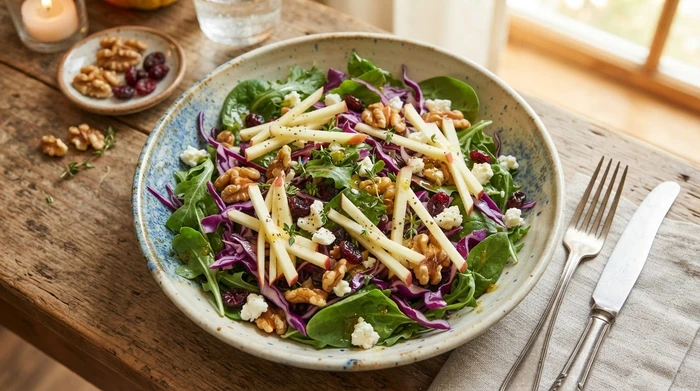
- Tangy Apple Coleslaw: Matchstick tart apples like Granny Smith or Honeycrisp and toss them into shredded cabbage and carrots dressed with a light apple cider vinaigrette.
- Updated Waldorf Salad: Combine diced crisp apples, sliced celery, halved grapes or dried cranberries, and toasted walnuts in a light citrus-herb dressing instead of heavy mayonnaise.
- Chicken, Tuna, or Chickpea Salad: Add finely diced apples to tuna or chicken salad to introduce texture. For more weeknight lunch inspiration, see our guide on meal prep systems for beginners.
- Gourmet Grilled Cheese: Layer paper-thin apple slices inside a grilled cheese sandwich made with sharp cheddar, brie, or goat cheese. Learning how to balance these tastes is explained further in our article on sweet and salty flavor combinations.
4. Savory Soups and Condiments
When working with large quantities of apples, cooking them down into soups or condiments extends their usefulness throughout the week.
- Roasted Butternut Squash and Apple Soup: Roast quartered apples alongside butternut squash, garlic, and onions, then blend with warm vegetable or chicken broth until smooth.
- Sweet and Spicy Apple Chutney: Simmer diced apples with cider vinegar, brown sugar, mustard seeds, ginger, and chili flakes. Serve this versatile preserve alongside roasted meats, curry dishes, or cheese boards. Storing homemade condiments safely is covered in our kitchen food storage guide.
How to Choose the Right Apple Variety
| Variety | Flavor Profile | Best Culinary Use |
|---|---|---|
| Granny Smith | Tart, sharp, firm | Braising, sauerkraut, pork pan sauces, coleslaw |
| Honeycrisp / Braeburn | Sweet-tart, juicy, crisp | Roasting with chicken, salads, fresh sandwiches |
| Fuji / Gala | Sweet, mild, tender | Blending into smooth soups, mashing into potato dishes |
FAQ
Do I need to peel apples before cooking them into savory dishes?
For smooth sauces, mashes, and purées, peeling is recommended for a uniform texture. However, when roasting, braising, or tossing in raw salads, leaving the peel on adds color, fiber, and structural firmness.
How do I keep raw apple slices from browning in salads?
Toss sliced or diced apples in a small bowl of cold water with a squeeze of fresh lemon juice or a pinch of salt for 5 minutes, then drain before assembling your dish.
Can I freeze fresh apples for future cooking?
Yes. Peel, core, and slice the apples, then toss them with a little lemon juice. Spread them in a single layer on a sheet tray to freeze solid before transferring them to airtight freezer bags.
Conclusion
Fresh apples are far more than a filling for sweet baked goods. Their natural balance of sweet sugars and crisp acidity makes them an exceptional ingredient for seared meats, braised dishes, crunchy slaws, and flavorful pan sauces. By matching the right apple variety to your cooking technique, you can easily turn an extra harvest into memorable, savory everyday meals.