
By Harry Cruse | TasteSavory
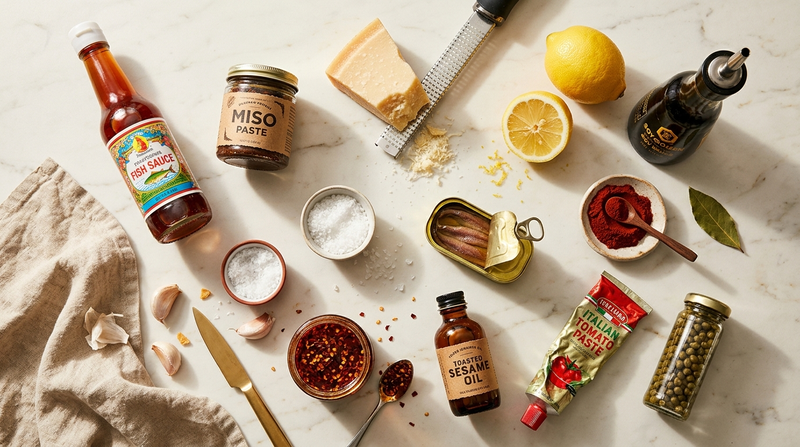
Most home cooks have had the same experience: a dish tastes fine but flat, and one small addition makes it taste like it came from a better kitchen. Often that addition is a pantry staple, such as a few drops of fish sauce in tomato sauce, a splash of vinegar in a pot of beans, or a spoonful of miso in soup. These are not tricks so much as fixes for two things most dishes lack: savory depth and brightness. This guide explains why they work, lists twelve boosters with starting amounts, shows how to add them without overdoing it, covers MSG and allergen cautions, and includes a tomato sauce recipe built around the method.
The short answer
- Most flat dishes are missing umami (savory depth) or acid (brightness), and a small pantry ingredient can supply either.
- Add a little at a time, stir, wait a minute, and taste. The goal is a dish that tastes better, not one that tastes like the booster.
- Use one or two boosters per dish, not all of them, and reduce the salt when you add salty ones.
- Check labels for allergens, since fish sauce, anchovies, and traditional Worcestershire contain fish, and let guests know.
Why a small addition works
Our tongues detect five basic tastes: sweet, salty, sour, bitter, and umami. A dish can lack one and still taste fine, but it won’t taste complete. Umami, the savory, meaty depth you find in Parmesan, tomatoes, mushrooms, and soy sauce, is the most common gap. Acid, from vinegar or citrus, is the other; it lifts heavy or muted flavors. Our guide to flavor and color in cooking explains how these tastes balance each other.
Twelve pantry flavor boosters
| Booster | What it adds | Try it in | Starting amount (about 4 servings) |
|---|---|---|---|
| MSG | Savory depth, without a distinct flavor | Soups, sauces, stews, burgers, vegetables | ¼ to ½ teaspoon, in place of some salt |
| Fish sauce | Salty, savory depth that doesn’t taste fishy in small amounts | Tomato sauce, stews, marinades, stir-fries | ½ to 1 teaspoon |
| Anchovy fillets or paste | Deep umami that melts into the dish | Tomato sauce, braises, dressings | 2 fillets, mashed, or ½ teaspoon of paste |
| Worcestershire sauce | Tangy, savory, slightly sweet depth | Burgers, meatloaf, chili, tuna salad, casseroles | 1 teaspoon, or a few dashes |
| Soy sauce | Salt plus umami | Soups, gravies, sauces, even tomato dishes | 1 teaspoon, with less salt |
| Miso | Salty, fermented depth | Soups, dressings, glazes, buttered vegetables | 1 teaspoon, stirred in off the heat |
| Vinegar or citrus | Brightness and balance | Beans, greens, chili, soups, rich dishes | ½ teaspoon per bowl, or 1 to 2 teaspoons per pot |
| Smoked paprika | Smoky, sweet warmth | Rubs, stews, eggs, roasted vegetables, stroganoff | ½ teaspoon, or swap for part of the regular paprika |
| Real maple syrup or honey | Rounder sweetness and depth | Pizza sauce, glazes, baked goods, cocktails | ½ to 1 teaspoon in sauces |
| Almond extract | Warm, cherry-like aroma | Cakes, cookies, frosting | ¼ teaspoon, or in place of part of the vanilla |
| Nutmeg | Warm, nutty depth | White sauce, creamy vegetables, mashed potatoes | A small pinch, freshly grated |
| Celery salt | Savory, vegetal saltiness | Potato salad, egg salad, soups, Bloody Marys | ⅛ to ¼ teaspoon, in place of some salt |
These are starting estimates, not rules. For cinnamon, cocoa, and other additions in chili, see our guide to making better chili.
How to add a booster without overdoing it
- Taste first. Decide what’s missing: salt, depth, brightness, or sweetness.
- Add a small amount. Use the starting amounts above, or less.
- Stir and wait a minute. The flavor needs time to blend.
- Taste again, and add more only if needed.
- Change one thing at a time. If you add several boosters at once, you can’t tell which one helped.
- Test on a spoonful. To experiment, scoop a small portion into a bowl and try the booster there first.
- Adjust the salt. Soy sauce, fish sauce, Worcestershire, miso, and anchovies all contain salt, so add less salt to match.
For examples of fixing a flat pot, see our guide to fixing bland soup.
What to know about MSG
MSG, or monosodium glutamate, is the sodium salt of glutamic acid, an amino acid that occurs naturally in tomatoes, Parmesan, mushrooms, and soy sauce. The body handles glutamate from MSG the same way as glutamate from food. The FDA considers it generally recognized as safe. It contains about one-third as much sodium as table salt, so replacing part of the salt with MSG can lower the sodium in a dish. Some people report feeling unwell after eating it, and if you’re among them, skip it. Otherwise, a small pinch goes a long way, and it works best as a quiet background boost in savory dishes.
Which dishes benefit most
| Dish | Booster to try |
|---|---|
| Spaghetti or tomato sauce | Fish sauce, anchovy, a pinch of chili powder, or a little honey |
| Burgers and meatloaf | Worcestershire sauce; see our burger guide |
| Chicken noodle soup | A spoonful of miso, stirred in off the heat |
| Beans, chili, and greens | Vinegar or lemon juice, added at the end |
| Creamy or cheesy dishes | A pinch of nutmeg, or a pinch of cayenne |
| Tuna, egg, or potato salad | Celery salt or a dash of Worcestershire |
| Cakes and cookies | Almond extract in place of part of the vanilla |
| Pecan pie and cocktails | Real maple syrup in place of part of the corn syrup or simple syrup; see sweet and salty |
Allergens, diets, and sodium
- Fish allergy: Fish sauce and anchovies contain fish, and so does traditional Worcestershire sauce. Check labels, and tell anyone you’re cooking for if you use them, since they’re easy to miss in a finished sauce.
- Soy and wheat: Soy sauce and miso contain soy, and many soy sauces contain wheat. Look for tamari or labeled gluten-free versions if needed.
- Tree nuts: Almond extract is made from almond flavoring, so check the label if anyone has a nut allergy.
- Vegetarian and vegan cooking: Fish sauce, anchovies, and many Worcestershire sauces aren’t suitable. Try soy sauce, miso, mushrooms, or a vegetarian Worcestershire.
- Sodium: Most boosters contain salt. Taste before salting, and use low-sodium versions if you’re watching your intake.
Recipe: Upgraded 20-minute tomato sauce
Prep time: 5 minutes | Cook time: 20 minutes | Makes: about 3 cups, enough for 1 pound of pasta (4 servings)
Ingredients
- 2 tablespoons olive oil
- 1 small onion, finely diced
- 3 cloves garlic, minced
- 1 can (28 ounces / 800 g) crushed tomatoes
- ½ teaspoon salt, plus more to taste
- Boosters, choose one or two: 1 teaspoon fish sauce, or 2 mashed anchovy fillets; ½ to 1 teaspoon honey; a pinch of chili powder or red pepper flakes
- A splash of red wine vinegar or lemon juice, to finish
- Fresh basil, optional
Instructions
- Soften the aromatics. Heat the oil in a saucepan over medium heat. Cook the onion for 5 to 6 minutes until soft, then add the garlic for 30 to 60 seconds.
- Add the tomatoes and salt. Stir in the tomatoes, bring to a gentle simmer, and cook for 15 minutes, stirring now and then.
- Taste the plain sauce. Decide what it needs before adding anything.
- Add one booster. Stir in the fish sauce or mashed anchovy, simmer for a minute, and taste. Add honey if the sauce tastes sharp, or chili for a hint of warmth.
- Finish. Stir in a small splash of vinegar or lemon juice and the basil. Taste once more and adjust the salt.
Vegetarian swap: Use ½ teaspoon soy sauce or 1 teaspoon miso in place of the fish sauce or anchovies. For more sauce ideas, see our six essential sauces.
Troubleshooting
- It’s too salty: You added too many salty boosters. Dilute with more of the base, such as tomatoes or unsalted broth, and skip the extra salt.
- It tastes fishy: You used too much fish sauce or anchovy. Add acid and more of the main ingredient, and use less next time.
- It’s too sour: Add a pinch of sugar or a little honey.
- It tastes muddy: You may have added too many boosters. Start over with one.
- The smoked paprika is bitter: It scorched. Stir it into the dish with liquid, or warm it briefly in oil over low heat.
- The nutmeg overpowers: It’s strong, so use a tiny pinch of freshly grated nutmeg.
FAQ
Will my food taste like fish sauce?
Not in small amounts. It adds savory depth, and the fishy smell largely fades as it cooks.
Is MSG safe?
The FDA classifies it as generally recognized as safe, and it occurs naturally in many foods. If you personally feel unwell after eating it, skip it.
Which booster should I buy first?
A good vinegar or lemon for brightness, and soy sauce or Worcestershire for savory depth, are the most versatile.
How should I store them?
Refrigerate miso and anchovy paste after opening. Fish sauce, soy sauce, and vinegar keep well in the pantry or refrigerator per the label.
Conclusion
Better flavor often comes from small changes: a dash of fish sauce, a splash of vinegar, a spoonful of miso, or a pinch of nutmeg. Taste first, add a little, and change one thing at a time. Keep allergens and sodium in mind, tell the people you’re cooking for what’s in the pot, and let the dish, not the secret ingredient, be the thing everyone remembers.