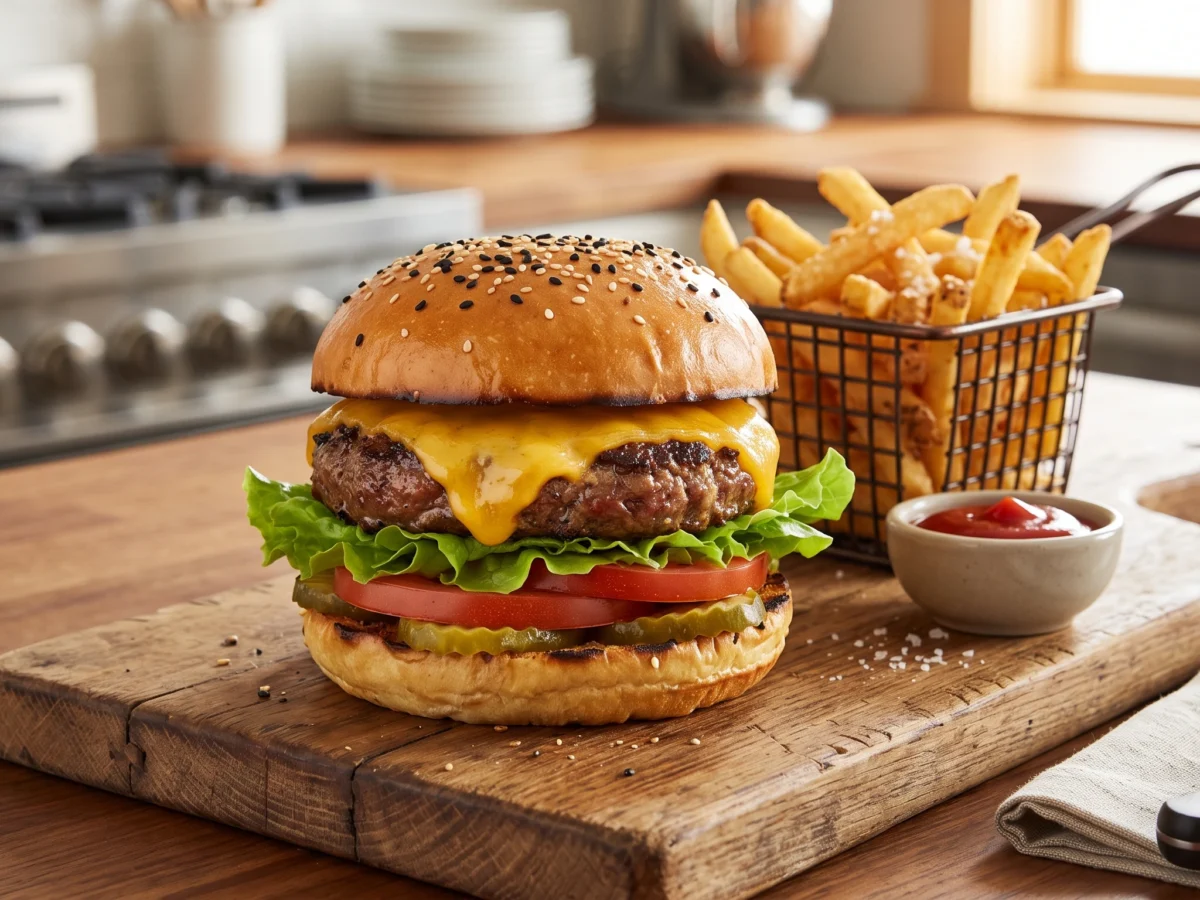
By Harry Cruse | TasteSavory
Almost everyone has had a burger that tasted far better than anything they make at home, and wondered what the secret was. The answer is rarely a mystery spice. Great burgers come from four things: the right fat content, good cuts of beef, gentle handling, and smart seasoning and cooking. This guide explains how each one works, which seasonings and umami boosters actually help, and how to cook a classic burger and a crisp-edged smash burger. It includes food-safety advice for ground beef, troubleshooting, and tips for freezing patties.
The short answer
- Choose ground beef with about 20% fat (80/20). Leaner beef is the most common reason for dry burgers.
- Better beef makes a better burger. Chuck, brisket, and short rib add flavor and richness.
- Handle the meat as little as possible, and keep it cold until it goes in the pan.
- Salt the outside of the patties just before cooking, not the inside of the mixture.
- Cook burgers to 160°F (71°C), checked with a thermometer.
Fat: the biggest factor
Fat carries flavor and keeps a patty juicy, so it matters more than any seasoning. Ground beef labeled 80/20, meaning 80% lean and 20% fat, is the standard choice for burgers. Some cooks go a little higher, around 75/25 or 73/27, for an even richer result. Much leaner beef, such as 90/10 or 93/7, tends to turn out dry and crumbly unless you compensate with sauces and toppings. Keep in mind that fat cooks out as the burger heats. On a grill, a lot of it drips away, while in a skillet or on a griddle the patty cooks in its own rendered fat, which many people find tastier. More fat means more shrinkage and more flare-ups on a grill, so aim for balance instead of the highest number.
Cuts and grind
Supermarket ground beef can come from a variety of trimmings. If you can buy beef ground to order, or choose a labeled cut, you control the flavor.
| Cut | What it brings | Notes |
|---|---|---|
| Chuck | Beefy flavor and good natural fat | The classic burger base, often around 80/20 |
| Brisket | Rich, deeply beefy flavor and plenty of fat | Often blended with chuck |
| Short rib | Rich, buttery, and tender | More expensive, and often used in blends |
| Sirloin | Lean and beefy | Blend it with a fattier cut, or it can dry out |
A butcher counter is the easiest place to get a good blend. Ask for chuck on its own, or a mix of chuck with brisket or short rib, ground fresh, and explain that you’re making burgers. Many cooks also prefer a coarser grind, which gives a looser, more tender texture, while a very fine grind packs tightly and can turn dense. If you grind meat at home, keep the meat and the equipment very cold, and wash everything thoroughly afterward, since grinding spreads surface bacteria through the meat.
Handle it gently
Overworking ground beef makes it dense and rubbery. Divide the meat into portions, and shape each one lightly, just until it holds together. Don’t knead it or squeeze it into a tight ball. Keep the meat refrigerated until you’re ready to cook, because cold fat holds its shape and gives a better texture. If you’re mixing in other ingredients, fold them in with your fingertips, gently.
Salt and seasoning
Many cooks salt only the outside of a patty, just before it goes on the heat. Mixing salt into the meat well ahead of time begins to break down its proteins, which can leave the cooked burger firm and sausage-like. Salting the surface gives a seasoned crust and a tender center. Season generously, because a thick patty needs more salt than you expect, and add pepper at the same time.
Beyond salt and pepper, a few additions are worth knowing about.
| Addition | What it does | Starting amount per pound of beef |
|---|---|---|
| Worcestershire sauce | Adds savory, tangy depth | About 1 teaspoon, worked in lightly or brushed on |
| Garlic and onion powder | Warm, savory background flavor | About ¼ to ½ teaspoon each, and go easy on garlic powder |
| Steak seasoning blend | A ready-made mix of salt, pepper, garlic, and spices | Sprinkle it on the outside, and cut back on extra salt |
| MSG (monosodium glutamate) | Boosts savory, meaty flavor | A small pinch to ¼ teaspoon |
| Soy sauce or tomato paste | Natural sources of umami | About 1 teaspoon, mixed in lightly |
| Brown sugar | Helps browning and adds slight sweetness | A very small pinch on the surface, since it burns easily |
The reason these additions work is umami, the savory taste that makes meat, cheese, and tomatoes satisfying. Commercially seasoned patties often get their punch from ingredients such as yeast extract, dried beef stock, and sugar, all of which add umami and help browning. MSG itself is considered safe for most people by regulators such as the FDA when it’s used in normal amounts, though some people report sensitivity to it. Our guide to flavor and color in cooking explains umami and browning in more detail. Don’t overdo it: if you can clearly taste one added ingredient, there’s probably too much. Some top burgers use nothing but beef, salt, and pepper, so treat these as optional upgrades.
Recipe 1: Classic burgers
Prep time: 15 minutes, plus chilling | Cook time: 8–10 minutes | Makes: 4 burgers
Ingredients
- 1½ pounds (680 g) freshly ground beef, 80/20
- ¾–1 teaspoon fine salt
- ½ teaspoon black pepper
- 1 tablespoon neutral oil, for the pan (if using a skillet)
- 4 slices cheese (optional)
- 4 burger buns, toasted
- Toppings: lettuce, tomato, pickles, onion, sauce
Instructions
- Divide the beef into four equal portions of about 6 ounces (170 g). Shape each one gently into a patty about ¾ inch thick and slightly wider than the bun, since patties shrink as they cook. Press a shallow dimple into the center of each one so it doesn’t puff up into a dome.
- Refrigerate the patties on a plate for 15–30 minutes while you prepare toppings and heat the pan or grill.
- Heat a heavy skillet or griddle over medium-high heat, or a grill over medium-high heat. Brush the grill grates with oil.
- Just before cooking, season both sides of each patty with the salt and pepper.
- Cook for about 3–4 minutes per side in a skillet, or 4–5 minutes per side on a grill with the lid closed, without pressing down on the patties. Flip once. Add the cheese during the last minute, and cover briefly to melt it.
- Check the center with an instant-read thermometer inserted from the side. It should read 160°F (71°C).
- Rest the burgers for 2–3 minutes, then serve on toasted buns.
Notes: Don’t press down on the patties with a spatula, which squeezes out the juices. Toast the buns in the pan with a little butter for a crisp surface that holds up to the juices. If you’re cooking on a grill, follow the fire and gas precautions in our outdoor kitchen guide.
Recipe 2: Smash burgers
Prep time: 10 minutes | Cook time: 6–8 minutes | Makes: 4 double-patty burgers
Ingredients
- 1 pound (450 g) ground beef, 80/20
- ½–¾ teaspoon fine salt
- ¼ teaspoon black pepper
- 1 tablespoon neutral oil
- 4 slices cheese
- 4 soft burger buns, toasted
- Toppings: pickles, thinly sliced onion, sauce
Instructions
- Divide the beef into 8 loose balls, about 2 ounces (57 g) each. Don’t pack them tightly. Keep them cold.
- Heat a cast iron skillet or griddle over high heat until very hot. Add a thin film of oil.
- Place 2–3 balls in the pan, spaced well apart. Immediately press each one flat with a sturdy spatula, putting a small piece of parchment between the spatula and the meat to prevent sticking, until about ¼ inch thick. Hold for 10 seconds.
- Season the tops with salt and pepper. Cook for about 2 minutes, until the edges are deeply browned and crisp.
- Scrape under each patty with a firm spatula to keep the browned crust, and flip. Add cheese to half the patties, and cook for 30–60 seconds more.
- Stack a plain patty on a cheese patty, put them on a toasted bun, and add the toppings. Repeat in batches. Thin patties cook through quickly, so check that they’re cooked through with no pink raw meat remaining.
Notes: Smash burgers need strong heat and good ventilation, so turn on the exhaust fan. The browning comes from the direct contact and the thin patty, as in our guide to cooking habits: dry surface, hot pan, and let it sit.
Food safety for ground beef
Grinding spreads bacteria from the surface of the meat throughout the patty, which is why the USDA’s safe minimum temperature for ground beef is 160°F (71°C), higher than for a whole steak. That means a burger cooked to medium-rare isn’t recommended, especially for children, pregnant women, older adults, and anyone with a weakened immune system. Color is not a reliable indicator of doneness, so use a thermometer. Keep raw ground beef in the coldest part of the refrigerator, use it within 1–2 days or freeze it, and wash your hands, tools, and surfaces after handling it. Don’t put cooked burgers back on the plate that held raw patties. See our guide to storing food in the kitchen for more.
Freezing patties
Shape the patties, place a square of parchment between each one, and freeze them on a tray until firm. Then move them to a freezer bag, squeeze out the air, and label it with the date. Ground beef keeps good quality for about 3–4 months in the freezer. Thaw patties in the refrigerator for the best results. Cooking from frozen is safe but takes longer, and the outside may overcook before the center reaches 160°F, so check with a thermometer. Smash burgers should be made from chilled meat, not frozen.
Sauces and toppings
A good sauce can finish a burger. Try the garlic-yogurt sauce or a simple tomato sauce from our six essential sauces, or a mix of mayonnaise, ketchup, mustard, and chopped pickles. Add something fresh and acidic, such as pickles, tomato, or raw onion, to balance the richness. Toast the buns, and don’t pile on more toppings than the burger can hold.
Troubleshooting
- Dry burgers: The beef was too lean, the patties were overcooked, or the meat was overworked. Choose 80/20, mix gently, and take the burgers off at 160°F.
- Dense, rubbery texture: The meat was handled too much, or salt was mixed in well ahead of time. Shape gently and salt the outside just before cooking.
- Patties fall apart: The meat was too warm or loosely formed, or it was flipped too soon. Chill the patties, and wait until a crust forms and the patty releases.
- Patties puff up into domes: Add a shallow dimple in the center, and don’t overpack.
- Flare-ups on the grill: Fat is dripping onto the flames. Move the burgers to a cooler zone, close the lid, and keep the grill clean.
- Burnt outside, undercooked inside: The heat was too high, or the patties were too thick. Lower the heat and use the thermometer.
- Bland flavor: There wasn’t enough salt on the outside. Season generously, and try a small amount of Worcestershire sauce or another umami booster.
FAQ
What’s the best fat percentage for burgers?
About 20% (80/20) is the standard. Go a little higher for a richer burger, or lower if you prefer a lighter one and plan to add sauce.
Should I mix seasoning into the meat?
It’s best to season the outside with salt and pepper. If you add other ingredients to the mix, fold them in gently, and salt the surface just before cooking.
Do I need MSG?
No. It’s an optional way to boost flavor. Worcestershire sauce, soy sauce, tomato paste, or a dash of mushroom powder add similar savory depth.
Can I add breadcrumbs or egg?
You can, but they make a burger more like meatloaf, with a softer, firmer texture. Most burger cooks skip them if the beef is fatty enough.
Can I grind my own beef?
Yes, but keep everything very cold and clean, and cook the burgers to 160°F (71°C). Buying beef freshly ground from a butcher is easier.
Conclusion
The secret to a great burger isn’t a secret spice. Start with beef that has enough fat and good flavor, handle it gently, season the outside, cook it hot, and check the temperature. Try the classic recipe first, then the smash burger, and then experiment with a small amount of Worcestershire sauce or another umami booster. Once the basics are right, your burgers will taste a lot more like the ones you remember.