By Harry Cruse | TasteSavory
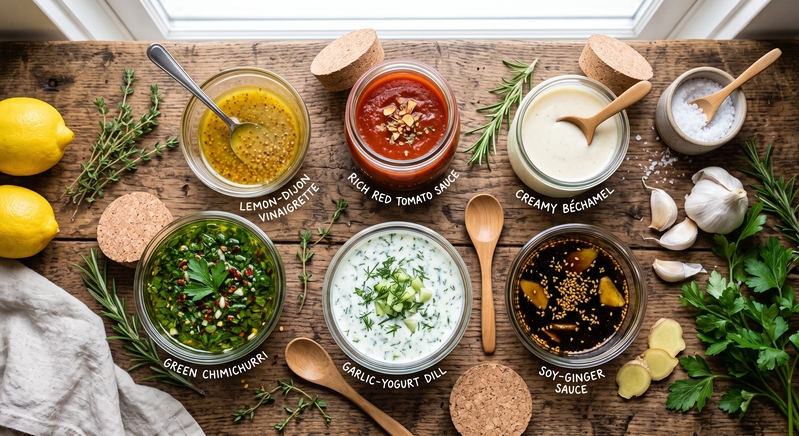
A good sauce can rescue plain chicken, lift a bowl of rice, or turn leftover vegetables into dinner. Knowing a handful of sauces by heart is one of the most useful kitchen skills, because each one works across dozens of meals. This guide covers six that do different jobs: a bright vinaigrette, a simple tomato sauce, a classic white sauce, a cooling garlic-yogurt sauce, a soy-ginger stir-fry sauce, and a fresh herb sauce. Each recipe includes quantities, cooking cues, ways to use it, and how long it keeps.
How these six were chosen
The six sauces cover the main flavor families: acid and oil, tomato, dairy and starch, cool and creamy, salty and savory, and fresh and herby. Together they can dress a salad, sauce pasta, finish a steak, season a stir-fry, and top a baked potato. All of them use ingredients found in most grocery stores, and none needs special equipment. As you try them, notice how each one balances salt, acid, fat, and sweetness, the same ideas we explain in flavor and color in cooking.
| Sauce | Flavor | Good with | Keeps in the refrigerator |
|---|---|---|---|
| Lemon-Dijon vinaigrette | Bright, tangy | Salads, grain bowls, roasted vegetables | About 5 days |
| Simple tomato sauce | Sweet, savory | Pasta, pizza, meatballs, eggs | 3–4 days |
| White sauce (béchamel) | Mild, creamy | Macaroni and cheese, lasagna, gratins | About 3 days |
| Garlic-yogurt sauce | Cool, tangy | Chicken, lamb, falafel, roasted vegetables | 3–4 days |
| Soy-ginger sauce | Salty, savory | Stir-fries, noodles, rice bowls | About 5 days |
| Chimichurri | Herby, sharp | Steak, pork, grilled fish, eggs | 3–4 days |
1. Lemon-Dijon vinaigrette
Makes about ¾ cup
- 3 tablespoons lemon juice
- 1 tablespoon Dijon mustard
- 1 tablespoon finely minced shallot
- 1 teaspoon honey (optional)
- ½ teaspoon fine salt
- ¼ teaspoon black pepper
- ½ cup (120 ml) extra-virgin olive oil
Whisk the lemon juice, mustard, shallot, honey, salt, and pepper in a bowl, or shake them in a jar. Add the oil slowly while whisking, or shake hard for 20–30 seconds, until the dressing looks creamy and thick instead of separated. Taste it on a lettuce leaf, which shows you how it will actually taste, and adjust the salt or lemon. The mustard acts as an emulsifier that helps the oil and lemon stay blended.
Variations: Swap the lemon for red wine vinegar, or add a spoonful of chopped fresh herbs. Storage: Keep it in a jar in the refrigerator for about 5 days. Olive oil can turn cloudy and firm when cold, so let it sit at room temperature for 10 minutes and shake before using. If you’d like garlic, add it fresh to each serving, because garlic stored in oil should be refrigerated and used quickly.
2. Simple tomato sauce
Makes about 3 cups
- 3 tablespoons olive oil
- 1 small onion, finely diced
- 3 cloves garlic, minced
- 1 can (28 oz / 800 g) whole peeled tomatoes, with their juices
- ½ to 1 teaspoon fine salt
- Pinch of sugar, if needed
- A few fresh basil leaves (optional)
Heat the oil in a saucepan over medium heat. Cook the onion for 5–6 minutes, until soft and translucent but not browned. Add the garlic and cook for 30–60 seconds, until fragrant, keeping it pale gold so it doesn’t turn bitter. Pour in the tomatoes and crush them with a spoon or your hands as they go in. Add ½ teaspoon of salt, bring to a gentle simmer, and cook partially covered for 20–25 minutes, stirring occasionally, until the sauce thickens and the oil glistens on the surface. Taste, and add more salt. If the sauce tastes sharp, a small pinch of sugar rounds it out. Stir in the basil at the end.
Uses: Toss it with pasta, spread it on pizza, simmer meatballs in it, or poach eggs in it. Storage: Refrigerate for 3–4 days, or freeze in portions for up to about 3 months. See our meal prep guide for freezing basics.
3. White sauce (béchamel)
Makes about 2 cups
- 3 tablespoons unsalted butter
- 3 tablespoons all-purpose flour
- 2 cups (480 ml) whole milk, warmed
- ¼ teaspoon fine salt, plus more to taste
- Pinch of ground nutmeg and black pepper
Melt the butter in a saucepan over medium-low heat. Whisk in the flour and cook for 1–2 minutes, stirring constantly, until the mixture smells slightly nutty but has not taken on color. Pour in the warm milk about ¼ cup at a time, whisking well after each addition so no lumps form. Once all the milk is in, simmer gently for 5–8 minutes, stirring often, until the sauce is thick enough to coat the back of a spoon. Season with salt, nutmeg, and pepper.
Uses: Stir in grated cheese off the heat for macaroni and cheese, layer it into lasagna, or pour it over vegetables for a gratin. For a lighter creamy pasta sauce made without a roux, see our garlic Parmesan pasta. Storage: Press plastic wrap directly onto the surface to prevent a skin, and refrigerate for up to about 3 days. Reheat gently, whisking in a splash of milk. It doesn’t freeze as reliably, because the texture can turn grainy.
4. Garlic-yogurt sauce
Makes about 1¼ cups
- 1 cup (240 g) plain whole-milk or Greek yogurt
- 1 small garlic clove, finely grated
- 1 tablespoon lemon juice
- 1 tablespoon olive oil
- ¼ teaspoon fine salt, plus more to taste
- 2 tablespoons chopped fresh dill, mint, or parsley
- ½ cup grated cucumber, squeezed dry (optional)
Stir everything together and let it sit for 10 minutes so the garlic mellows and the flavors blend. Taste and adjust with salt or lemon. Raw garlic is strong, so start with a small clove. If the cucumber releases water and the sauce looks thin, use thicker Greek yogurt next time, and squeeze the cucumber harder.
Uses: It cools spicy food, makes a good sauce for chicken prepared with our juicy chicken breast method, and works as a dip for vegetables or a dressing for grain bowls. Storage: Refrigerate in a covered container for 3–4 days. Stir before using, since a little liquid can separate.
5. Soy-ginger stir-fry sauce
Makes about ¾ cup, enough for 4 servings of stir-fry
- ¼ cup (60 ml) low-sodium soy sauce
- ¼ cup (60 ml) water
- 2 tablespoons rice vinegar
- 1 tablespoon honey or maple syrup
- 1 tablespoon freshly grated ginger
- 2 cloves garlic, minced
- 2 teaspoons toasted sesame oil
- 1 teaspoon cornstarch mixed with 1 tablespoon cold water (optional, to thicken)
Whisk the soy sauce, water, vinegar, honey, ginger, garlic, and sesame oil together. Cook your stir-fry first, following the high-heat methods in our guide to ways to cook meat. At the end, pour in the sauce and let it bubble for 1–2 minutes. For a glossier, clinging sauce, stir the cornstarch mixture again and add it to the pan, then cook for another minute, until the sauce turns translucent and coats the food. Add the cornstarch only at cooking time, not to the stored sauce.
Variations: Add chili flakes or a spoonful of chili paste for heat, or a squeeze of lime for brightness. Storage: Keep the uncooked sauce, without cornstarch, in a jar in the refrigerator for about 5 days. Soy sauce is salty, so taste before adding more.
6. Chimichurri
Makes about ¾ cup
- 1 cup tightly packed fresh flat-leaf parsley leaves, finely chopped
- 3 cloves garlic, minced
- 3 tablespoons red wine vinegar
- ½ cup (120 ml) olive oil
- 1 teaspoon dried oregano
- ½ teaspoon fine salt
- ¼ teaspoon red pepper flakes
Chop the parsley by hand until fine but not pasty, since a food processor can turn it into a dull, muddy paste. Combine it with the garlic, vinegar, oregano, salt, and pepper flakes, then stir in the oil. Let it stand for 15–30 minutes before serving, so the garlic softens and the flavors meld. It should taste sharp, herbal, and slightly salty.
Uses: Spoon it over grilled or seared steak, pork, or fish, or stir it into eggs and roasted potatoes. Storage: Because it combines raw garlic with oil, keep it refrigerated and use it within 3–4 days. Don’t leave it at room temperature for long periods.
Stocking a sauce-ready kitchen
Most of these sauces come from a short list of staples: olive oil, red wine and rice vinegar, Dijon mustard, low-sodium soy sauce, canned whole tomatoes, flour, butter, milk, plain yogurt, garlic, ginger, lemons, and fresh parsley. Keep them on hand, and most weeknight dinners can be finished with a sauce made in under 15 minutes.
Troubleshooting
- Vinaigrette separates: Whisk in a teaspoon of water or a little more mustard, or simply shake it again before using.
- White sauce is lumpy: The milk went in too fast or was cold. Whisk vigorously, or pass the sauce through a fine strainer.
- White sauce tastes floury: The roux wasn’t cooked long enough, or the sauce didn’t simmer. Cook for a few more minutes over low heat.
- Tomato sauce tastes sharp or flat: Add salt first, then a small pinch of sugar, and simmer a few minutes longer.
- Yogurt sauce is watery: Use thicker yogurt, or squeeze vegetables dry before adding them.
- Any sauce is too salty: Add more of the base ingredient, such as oil, yogurt, or tomatoes, or a little acid.
FAQ
Which sauce should I learn first?
Start with the vinaigrette, since it takes 2 minutes and makes plain vegetables and greens taste better. Then try the tomato sauce.
Can I make these ahead?
Yes. All six keep well in the refrigerator for the times above. Always use clean utensils and airtight containers.
Can I freeze them?
Tomato sauce freezes well. Yogurt and white sauces generally don’t, since the texture can change, and vinaigrette and chimichurri are best fresh.
Can I use dried herbs in place of fresh?
In chimichurri and the yogurt sauce, fresh herbs are much better. Dried herbs work better in cooked sauces such as tomato sauce.
Conclusion
These six sauces cover most of what a home kitchen needs, and each one teaches a useful technique, from emulsifying to building a roux. Start with one or two, taste as you go, and adjust the salt and acid until they suit your cooking. Once they feel familiar, you’ll find yourself turning simple proteins, grains, and vegetables into full meals with a spoonful of sauce.