By Harry Cruse | TasteSavory
A rack of lamb is a special-occasion cut, and most recipes say to serve it pink. That’s a problem when your guests won’t touch meat with any pink in it. The good news is that you don’t have to ruin the rack for everyone, and you don’t have to overcook the whole thing. This guide gives four practical strategies, a temperature guide for each level of doneness, and a full herb-rubbed recipe built around the easiest solution: cook the rack once, then finish some of the chops further.
The short answer
- The simplest plan: roast the rack to medium-rare or medium, rest it, cut it into chops, and cook the well-done portions longer in a pan with sauce.
- Don’t slow-roast a rack for hours. It’s lean and small, so it dries out. For truly well-done meat, choose leg, shoulder, or shanks instead.
- The USDA minimum for lamb chops and roasts is 145°F (63°C) with a 3-minute rest. Cooking below that is a personal choice.
- Use an instant-read thermometer, because color and time are unreliable.
Why rack of lamb is hard to overcook gracefully
A rack is a row of tender rib chops with a thin layer of fat. It has little connective tissue, so it doesn’t benefit from long, slow cooking the way a shank or shoulder does. Once the meat passes medium, the juices tighten out and it turns firm and dry. That’s why most guides recommend medium-rare. It doesn’t mean well-done lamb is unsafe or wrong, since many cuisines prefer it. It means the cut needs a different approach for people who want no pink.
Four strategies
| Strategy | How it works | Best when |
|---|---|---|
| 1. Cook once, finish some chops longer | Roast the rack to medium-rare, rest it, slice into chops, then cook the well-done chops further in a covered pan with sauce. | You have mixed preferences at the table. This is the most flexible option. |
| 2. Cut into chops first | Separate the rack into individual chops and sear each to its own doneness. | You want fast, precise control over each portion. |
| 3. Change the cut | Serve leg of lamb, shoulder, or shanks, which stay tender when cooked through. | Everyone wants well-done, or you want the most forgiving dish. |
| 4. Use sous vide | Cook the rack in a water bath held at your target temperature, then sear or crust it. | You own a circulator and want even doneness edge to edge. |
Strategy 1 in detail
Partly cooked chops are already tender and have rendered most of their fat, so they take less time to finish than raw ones. A covered pan with a little stock or sauce adds moisture back, which helps offset what’s lost by cooking them further. The smaller chops from the ends of the rack also cook faster, so they’re a natural choice for the well-done portions.
Strategy 3 in detail
If the guests are firmly set on well-done meat, a different cut makes the whole dinner better. A bone-in leg of lamb roasted until fully cooked stays tender and slices easily. Shoulder and shanks are made for braising; they cook for hours and become soft rather than dry. Greek-style leg and shoulder dishes, with garlic, lemon, and oregano, are a classic way to serve lamb cooked through. For general guidance on matching cut and method, see our guide to six ways to cook meat.
A note on sous vide
Sous vide cooks meat at a steady temperature, so it avoids the gray overcooked band under the surface. Set the bath to the final temperature you want, follow a trusted chart for the time, and finish by searing or roasting briefly. Timing depends on thickness, and food safety depends on both temperature and time, so use a reliable source.
Lamb doneness temperatures
Charts differ from one source to another, especially for medium-well and well-done, so treat these as approximate guides. Remove the meat from the heat about 5°F (3°C) below your target, since it rises as it rests.
| Doneness | Pull from heat at (approx.) | Final temperature after rest (approx.) |
|---|---|---|
| Medium-rare | 125–130°F (52–54°C) | 130–135°F (54–57°C) |
| Medium | 135–140°F (57–60°C) | 140–145°F (60–63°C) |
| Medium-well | 145–150°F (63–66°C) | 150–155°F (66–68°C) |
| Well-done (no pink) | 155°F (68°C) or above | 160°F (71°C) or higher |
The USDA’s safe minimum for lamb chops and roasts is 145°F (63°C) with a 3-minute rest, as noted in our thermometer guide. Insert the probe into the thickest part of the meat, away from the bone.
Recipe: Garlic-rosemary rack of lamb with a well-done finish
Prep time: 15 minutes | Cook time: 35 minutes | Resting time: 10 minutes | Serves: 4 to 5 (two racks)
Ingredients
- 2 racks of lamb, 8 ribs each, frenched (about 1¼ to 1½ pounds each)
- 2 tablespoons olive oil, divided
- 1½ teaspoons kosher salt
- ½ teaspoon black pepper
- 2 tablespoons Dijon mustard
- 3 cloves garlic, minced
- 1 tablespoon chopped fresh rosemary
- 1 tablespoon chopped fresh thyme or parsley
- ¾ cup beef or chicken stock (for finishing the well-done chops)
- 1 tablespoon butter
- 1 teaspoon lemon juice
Instructions
- Prepare the lamb. Take the racks out of the refrigerator about 30 minutes before cooking. Heat the oven to 425°F (220°C). Pat the lamb dry and season with salt and pepper. Mix the mustard, garlic, rosemary, and thyme.
- Sear. Heat 1 tablespoon of the oil in a large oven-safe skillet over medium-high heat. Sear each rack, fat side down first, for 3 to 4 minutes until deeply browned, then briefly on the other sides. Brush the herb mixture over the fat side.
- Roast. Put the skillet in the oven, bone side down. Start checking at about 10 to 12 minutes. Pull the racks when the thickest part reads 125–130°F (52–54°C), which gives a medium-rare to medium result after resting. Exact time depends on the size of the rack.
- Rest. Move the racks to a board and tent loosely with foil for 10 minutes. This lets the juices settle; see our cooking habits for why resting works.
- Slice. Cut between the bones into individual chops. Set aside the chops for guests who like pink.
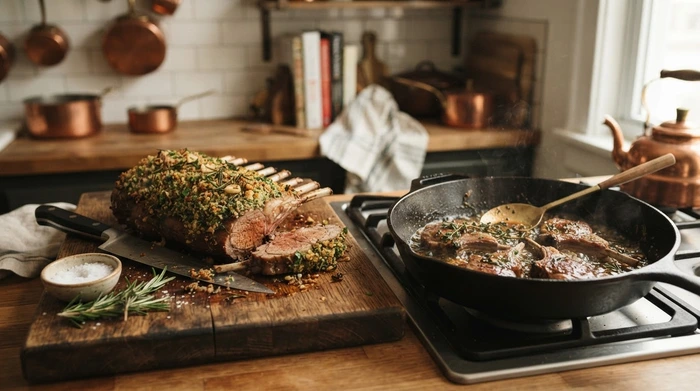
- Finish the well-done chops. Pour off most of the fat from the skillet and set it over medium-low heat. Add the stock, butter, and a little more thyme. Lay the chops in a single layer, cover, and simmer gently for 5 to 10 minutes, turning once, until the thickest part reaches 160°F (71°C). Add the lemon juice and spoon the sauce over the chops.
Notes
- Use separate serving plates for chops that are finished and any that are still resting, and keep raw lamb away from cooked lamb.
- If you prefer a roast-only method, wrap the well-done chops with a little stock in foil and finish them in a 350°F (175°C) oven, checking the temperature often.
- Serve with a simple sauce; our essential sauces include options that work with lamb.
Storage and leftovers
Refrigerate cooked lamb within 2 hours, and use it within 3 to 4 days. Reheat gently in a covered pan with a splash of stock until steaming hot. Raw lamb chops and roasts keep about 3 to 5 days in the refrigerator, as listed in our kitchen storage guide.
Troubleshooting
- The chops are dry after finishing: The pan was too hot or the lid was off. Use medium-low heat, keep the pan covered, and spoon the sauce over them.
- The thermometer reads oddly low: The tip may be touching bone or sitting in fat. Reinsert it into the center of the thickest part of the meat.
- The crust or rub burned: The pan was too hot or the herbs were added too early. Lower the heat and add fresh herbs near the end.
- The racks cook unevenly: They varied in size. Check each one separately, and remove each when it’s ready.
- Guests still see pink in a safe chop: Color can vary with the cooking method. Rely on the thermometer, and cook longer if they ask for it.
FAQ
Can I slow-roast a rack of lamb for hours?
It isn’t recommended. A rack is lean and small, so long cooking tends to dry it out. Use shoulder or shanks for slow cooking.
Is medium-rare lamb safe?
The USDA’s minimum for lamb chops and roasts is 145°F (63°C) with a 3-minute rest. Cooking below that carries more risk, especially for pregnant people, older adults, young children, and anyone with a weakened immune system. If any of those are at your table, cook to at least the USDA minimum.
Should I tell my guests how I’m cooking it?
It helps to ask in advance, and to offer the option. Most guests are happy to hear that you can cook their portion the way they like it.
What if I only have one rack?
Use the same plan: roast it to medium-rare or medium, slice it, and finish only the chops that need more.
Conclusion
You can serve rack of lamb to a table with mixed tastes without a compromise that spoils it for everyone. Cook the rack once, rest it, slice it, and finish the well-done chops gently in a covered pan with sauce. If everyone wants meat cooked through, choose a leg, shoulder, or shank instead. Whichever route you take, keep a thermometer handy and let it, not the color, tell you when each portion is ready.