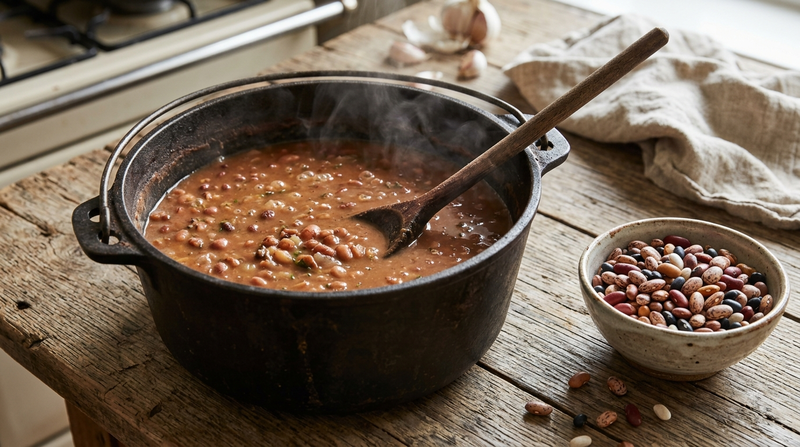
Canned beans are convenient, and there is nothing wrong with them. But a pot of beans cooked from dried is cheaper, tastes better, and gives you a flavorful cooking liquid you can use in soups and sauces. It takes more time, but very little of that time needs your attention.
How much to cook
One pound of dried beans, about 2 cups, makes roughly 5 to 6 cups cooked. That is about the same as four cans. A standard 15-ounce can holds about 1½ cups of drained beans, so you can use that as a guide when swapping them into recipes.
Sort and rinse
Spread the beans on a plate and pick out any stones, shriveled beans or debris. Rinse them in a strainer under cold water.
To soak or not to soak
Soaking shortens cooking time and helps beans cook more evenly. It is optional, though. Here are your options:
- Overnight soak: cover the beans with a few inches of cold water and leave them for 8 to 12 hours. Drain and rinse before cooking.
- Quick soak: cover with water, bring to a boil for 2 minutes, turn off the heat and let sit, covered, for 1 hour. Drain and rinse.
- No soak: works fine, but add 30 to 60 minutes of cooking time, and keep an eye on the water level.
Some people drain the soaking water in the belief that it reduces the gas-causing compounds in beans. Others keep it for flavor. Either way, the beans are safe once cooked properly.
The method
- Put the soaked, drained beans in a heavy pot and cover them with fresh water by about two inches.
- Add flavor: half an onion, a couple of smashed garlic cloves, a bay leaf, and optionally a strip of kombu, a ham hock or a spoonful of olive oil.
- Bring to a boil, then turn the heat down to a very gentle simmer. A hard boil breaks the skins and gives you mushy, split beans.
- Cook, partially covered, adding hot water if the level drops below the beans.
- Start tasting after the minimum time in the chart below. They are done when creamy inside with no chalky center.
- Season with salt, and let the beans cool in their liquid. This keeps the skins from wrinkling.
Approximate cooking times
These are for soaked beans at a gentle simmer. Add time if unsoaked:
- Black beans: 60 to 90 minutes
- Pinto beans: 60 to 90 minutes
- Navy and great northern beans: 60 to 90 minutes
- Kidney beans: 60 to 90 minutes, after the safety boil below
- Chickpeas: 60 to 120 minutes
- Cannellini beans: 60 to 90 minutes
- Lentils (no soak needed): 20 to 30 minutes
Age matters. Beans that have been sitting in the pantry for years can take much longer, and some never soften. Buy from a store with good turnover.
Important safety note on kidney beans
Raw and undercooked red kidney beans contain a natural toxin called phytohaemagglutinin that can cause severe stomach upset. The U.S. Food and Drug Administration advises soaking kidney beans, draining the water and then boiling them vigorously for at least 10 minutes before simmering until tender. Do not cook raw kidney beans in a slow cooker on low heat, since the temperature may not be high enough to destroy the toxin. Boil them first, then transfer them.
When to add salt and acid
The old rule that salt makes beans tough is not supported by experience. Salting the soaking water or the pot early gives better-seasoned beans. Acidic ingredients, such as tomatoes, vinegar or citrus, can slow down softening, so add those after the beans are tender.
Storing cooked beans
- Fridge: keep in their cooking liquid in a covered container for three to five days.
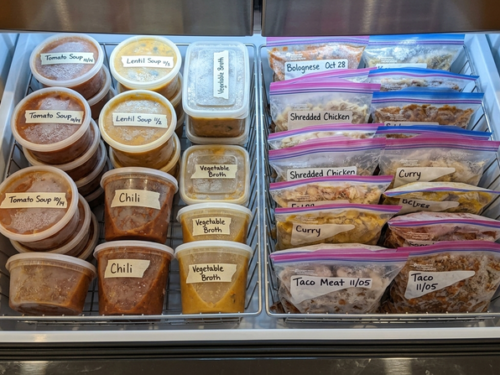
- Freezer: portion into containers or bags with some liquid and freeze for up to six months. Thaw in the fridge overnight.
Freezing a batch in 1½-cup portions gives you the equivalent of a can, ready to use in chili, soups, salads and rice bowls. This is one of the best moves in a Sunday meal prep session.
Ways to use them
Mash them on toast with olive oil and lemon, stir them into soup, simmer them with tomatoes and onions, toss them into a salad with a good vinaigrette or serve them over rice. Save the cooking liquid, sometimes called pot liquor, to thicken and flavor soups and sauces.