
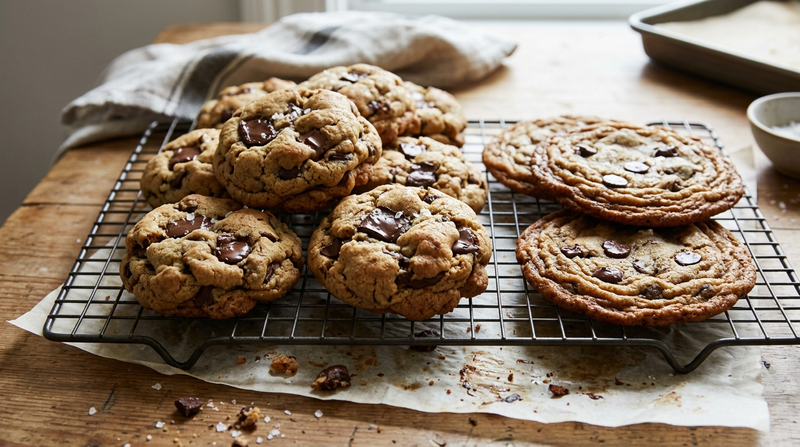
You scoop the dough into neat mounds, slide the tray into the oven, and come back to one giant, thin, greasy cookie. It is frustrating, and it is rarely random. Cookie spread comes down to a few well-understood causes, and once you can spot them, you can fix them.
First, what makes cookies spread
As cookies bake, the fat melts, and the dough flows outward until the structure sets. Flour, eggs and sugar help hold the shape. If the fat melts too early, or there is not enough structure, the cookie spreads before it sets.
1. The butter was too soft or melted
This is the most common cause. For most cookie recipes, “room temperature” butter should be cool to the touch and give slightly when pressed, around 65°F (18°C). If it is shiny, greasy or squishy, the dough will spread. Unless the recipe specifically asks for melted butter, take it out of the fridge about 30 to 60 minutes ahead, not hours.
2. There was too little flour
Scooping flour with a measuring cup can pack in more than needed, but the opposite error also happens: measuring too lightly, or accidentally leaving an extra bit out. Weighing flour removes the guesswork. A cup is about 120 to 125 grams. See our guide to measuring cups versus grams.
3. The dough was not chilled
Chilling lets the butter firm up so it melts more slowly in the oven. It also lets the flour absorb moisture, which gives better texture and deeper flavor. Refrigerate scooped dough for at least 30 to 60 minutes, or up to 48 hours. If your cookies spread badly, chilling is often the simplest fix.
4. The baking sheet was hot
Putting dough on a pan that has just come out of the oven starts the melting early. Let the sheet cool completely between batches, or rotate between two pans. Running the back of the pan under cold water and drying it also works.
5. The pan was greasy or the wrong kind
Greased pans encourage spreading. Use parchment paper or a silicone baking mat instead, which grips the dough slightly. Very thin, dark pans can also cause uneven results. A heavy, light-colored aluminum baking sheet is a reliable choice.
6. Too much sugar or too much leavening
Sugar melts as it bakes and makes dough looser. An extra spoon of sugar, or using more granulated sugar in place of brown, creates thinner, crisper cookies. Too much baking soda or baking powder can make cookies rise quickly and then collapse. Measure leaveners carefully with proper spoons. Also check that yours is fresh. Old baking soda can behave unpredictably.
7. The oven temperature was off
If the oven is cooler than the dial says, the butter melts and the dough spreads before the cookie sets. Many home ovens are off by 25°F or more. An inexpensive oven thermometer is worth having. Preheat fully and wait a few extra minutes after the oven says it is ready.
8. Over-creaming the butter and sugar
Beating butter and sugar for a long time whips in a lot of air, which can cause cookies to puff and then fall flat. Cream just until combined and smooth, about one to two minutes, unless the recipe says otherwise.
Quick fixes for dough that is already too soft
- Chill it for 30 to 60 minutes before baking.
- Stir in one or two extra tablespoons of flour.
- Bake a test cookie first. If it spreads, adjust before baking the whole batch.
- Scoop taller, rounder mounds rather than flattening them.
How to tell when cookies are done
Pull cookies when the edges are set and golden but the centers still look slightly soft. They will finish baking on the hot pan for a couple of minutes. Cool on the sheet for five minutes, then move them to a rack.
If your cookies are too thick instead
That is the opposite problem. The butter may be too cold, there may be too much flour, or the dough may have been chilled too long. Let the dough sit at room temperature for ten minutes, or press the mounds down slightly before baking.
Use a test cookie
When you are working with a new recipe, or a dough that feels softer than usual, bake a single cookie first. Watch how it behaves. If it spreads into a thin lace, chill the rest of the dough, add a tablespoon of flour, or both, then test again. If it holds its shape and tastes right, bake the rest. This costs you five minutes and saves a whole tray.
It also helps to use a cookie scoop so every mound is the same size. Uniform cookies bake evenly, and when you adjust one variable, such as chill time, you can see the difference clearly. Change one thing at a time and write it down.