By Harry Cruse | TasteSavory
Baked salmon is one of the easiest dinners to cook, and one of the easiest to pair badly. Salmon is rich and a little oily, so a heavy, creamy side can make the plate feel flat, while a bright, crisp one makes the fish taste even better. This guide explains what salmon needs from its sides, then offers twenty options sorted into starches, vegetables, and fresh sides, along with five complete plate ideas, a timing plan for cooking everything on one pan, and a full recipe for lemon-shallot salmon with potatoes and broccolini.
The short answer
- Pair salmon with something acidic or fresh, something crisp or green, and a mild starch to catch the juices.
- Match intensity: a simply seasoned fillet suits herby, bright sides, while a bold glaze needs plain rice or potatoes.
- Pick sides that roast at 400–425°F (200–220°C), so everything can share the oven.
- Cook salmon to 145°F (63°C), and put the longest-cooking side in the oven first.
What baked salmon needs from a side dish
Salmon has a high fat content, which gives it its tender, buttery texture. Three things tend to balance it well.
- Acidity: Lemon, vinegar, tomatoes, or a tangy vinaigrette cut through richness and keep each bite lively. For more on this balance, see our guide to flavor and color in cooking.
- Texture contrast: Baked salmon is soft, so crisp-tender vegetables, toasted nuts, or crunchy greens make the plate more interesting.
- A neutral base: Rice, potatoes, or grains soak up juices and sauce without competing with the fish.
A useful rule is to avoid stacking similar textures. If the starch is soft, such as risotto or mashed potatoes, choose a vegetable with some snap. If you serve a creamy sauce on the fish, go lighter on the sides.
Starches and grains
- Rice pilaf: Toast the rice in butter, then cook it in stock with onion and herbs. A dependable match for almost any salmon recipe.
- Wild rice blend: Chewy and nutty, especially good cooked in stock and stirred with toasted pecans or almonds. It takes longer than white rice, so start it early.
- Herbed couscous or pearl couscous: Quick to cook. Stir in lemon zest, parsley, and a little feta or toasted pine nuts.
- Farro: Nutty and chewy. Cook it in broth, and check the package for timing, since pearled and whole farro differ.
- Risotto: Lemon, fennel, or asparagus risotto makes a more formal dinner, though it needs attention at the stove.
- Creamy polenta: A soft base for salmon and a green vegetable. Finish with a little Parmesan.
- Roasted potatoes: Halved baby potatoes with olive oil, salt, and thyme or rosemary roast alongside the fish. Smashing them first gives more crispy edges.
- Mashed sweet potatoes: Slightly sweet, so they pair nicely with a lemony or mustardy salmon. Add a little butter and lemon zest.
Vegetables
- Roasted asparagus: Toss with oil and salt, roast at 425°F for about 8 to 12 minutes depending on thickness, and finish with lemon.
- Roasted broccolini or broccoli: Roasting gives crisp, charred edges. Broccolini takes roughly 12 to 15 minutes at 425°F.
- Green beans: Steam or sauté until bright and tender, then finish with butter, lemon zest, or toasted almonds.
- Roasted fennel: Cut into wedges, leaving a bit of core attached, and roast at 425°F for about 30 minutes, turning once, until tender and browned. It has a mild anise flavor that suits fish.
- Brussels sprouts: Halve them and start roasting before the salmon goes in. A drizzle of balsamic vinegar or honey adds balance.
- Sautéed greens: Spinach, kale, or chard wilted with garlic. A splash of vinegar brightens them.
- Glazed carrots: Roast or simmer with a little butter, honey, and thyme or ginger.
- Zucchini: Slice thin, brush with oil, and roast or broil briefly with Parmesan on top.
If you like cauliflower, our cauliflower guide has roasted and pan-cooked ideas that suit fish.
Fresh and cold sides
- Massaged kale salad: Slice kale thinly and rub it with lemon juice and olive oil for a few minutes to soften it. Add Parmesan or toasted nuts.
- Orange and fennel salad: Thin fennel and orange segments with a little oil and salt. Crisp and refreshing.
- Cucumber-dill salad: Cool and tangy, especially with yogurt or a vinegar dressing.
- Tomato and basil: Best in summer, dressed with oil, salt, and a little lemon juice or vinegar.
Five complete plates
- Lemon-shallot salmon: Green beans and rice pilaf, or lemony potatoes and a simple salad.
- Weeknight sheet pan: Roasted baby potatoes and broccoli, all cooked on one pan.
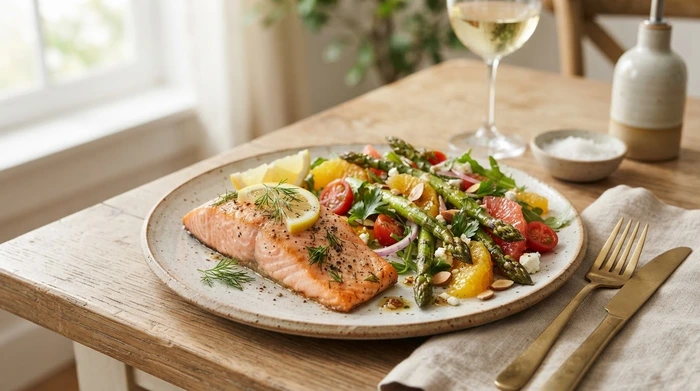
- Dinner party: Lemon risotto, roasted asparagus, and a fennel-orange salad.
- Lighter plate: Salmon over sautéed greens with roasted fennel and no starch.
- Bowl: Rice, sliced cucumber, avocado, and a drizzle of soy sauce or spicy mayonnaise.
A sauce also helps. A garlic-yogurt sauce, chimichurri, or a lemon-Dijon vinaigrette from our six essential sauces works well on salmon.
How to time a one-pan dinner
The easiest way to serve salmon with roasted sides is to stagger them. Set the oven to 425°F (220°C) and use this order as a guide, adjusting for the size of your pieces.
| Item | Approximate time in oven | When to add |
|---|---|---|
| Halved baby potatoes | 30–35 minutes | First |
| Brussels sprouts, halved | 20–25 minutes | About 10 minutes after potatoes |
| Broccoli or broccolini | 12–15 minutes | With the salmon |
| Asparagus | 8–12 minutes | With the salmon, or 3 minutes later |
| Salmon fillets, about 1 inch thick | 12–15 minutes | Last |
Recipe: Sheet-pan lemon-shallot salmon with potatoes and broccolini
Prep time: 15 minutes | Cook time: 35 minutes | Total time: 50 minutes | Serves: 4
Ingredients
- 1½ pounds (680 g) baby potatoes, halved
- 3 tablespoons olive oil, divided
- 1 teaspoon kosher salt, divided, plus more to taste
- ½ teaspoon black pepper, divided
- 8 ounces (225 g) broccolini, trimmed
- 4 skin-on or skinless salmon fillets, about 6 ounces (170 g) each
- 2 shallots, thinly sliced
- 1 lemon, half sliced into thin rounds and half reserved for juice
- 2 tablespoons butter, cut into small pieces
- Chopped fresh parsley or dill, for serving
Instructions
- Heat the oven. Set a rack in the middle and heat the oven to 425°F (220°C).
- Start the potatoes. Toss the potatoes on a large rimmed sheet pan with 2 tablespoons of the oil, ½ teaspoon of the salt, and ¼ teaspoon of the pepper. Spread them cut-side down and roast for 20 minutes, until they begin to brown.
- Prepare the rest. Toss the broccolini with the remaining tablespoon of oil and a pinch of salt. Pat the salmon dry and season with the remaining salt and pepper.
- Add the salmon and broccolini. Push the potatoes to one side, add the broccolini, and set the salmon on the pan. Scatter the shallots and lemon rounds over and around the fish, and dot the fillets with butter.
- Bake. Roast for 12 to 15 minutes, until the thickest part of the salmon reaches 145°F (63°C) and flakes easily. The potatoes should be golden and tender, and the broccolini charred at the tips.
- Finish. Squeeze the reserved lemon half over everything, taste for salt, and scatter with herbs.
Notes
- If the pan is crowded, use two pans so the vegetables roast instead of steaming.
- Thicker fillets need a few more minutes, and thinner ones a few fewer. A thermometer takes the guesswork out; see our guide to using an instant-read thermometer.
- For more ways to cook the fish itself, see our salmon guide.
Leftovers and storage
Cool leftovers within 2 hours and refrigerate them, using them within 3 to 4 days. Cold flaked salmon is good over a salad or in a grain bowl, and reheats best gently, in a low oven or a covered pan with a splash of water. For more guidance, see our kitchen storage guide.
Troubleshooting
- The plate feels heavy: You may have paired rich with rich. Add lemon, vinegar, or a fresh salad, and skip the cream sauce.
- The vegetables are soggy: The pan was crowded or too cool. Use more space and a hot oven.
- The salmon is dry but the sides are ready: Salmon overcooks quickly. Pull it at 145°F and add it last.
- The sides taste bland next to the fish: Season in layers, and finish with lemon zest, herbs, or flaky salt.
FAQ
What vegetables go best with salmon?
Asparagus, broccolini, green beans, fennel, and leafy greens are common choices because their fresh, slightly bitter flavors balance the fish.
What starch should I serve if I don’t want potatoes?
Rice pilaf, couscous, farro, wild rice, or polenta all work. Choose based on how much time you have.
Can I cook everything on one sheet pan?
Yes. Start the longest-cooking item first, add the quicker ones later, and keep the pan from becoming crowded.
What should I serve with salmon that has a sweet glaze?
Choose plain sides, such as steamed rice and a crisp green vegetable, so the glaze remains the focus.
Conclusion
The best sides for baked salmon are the ones that offset its richness: something bright, something crisp, and a mild starch to anchor the plate. Choose sides that share the oven, stagger the cooking times, and take the fish out at 145°F. Start with the sheet-pan recipe above, then swap in rice, farro, or a fennel salad once you know what you like.