By Harry Cruse | TasteSavory
White chocolate has a reputation for being difficult, and the reputation is earned. It can turn thick, lumpy, or grainy in seconds, and then it clings to a spoon instead of dripping off smoothly. The cause is almost always heat, water, or the wrong product, and all three are fixable. This guide explains what you may actually be melting, why white chocolate scorches so easily, two gentle melting methods (microwave and stovetop), how to thin it for dipping, and how to coat strawberries without wrinkles or weeping. For the separate question of getting chocolate to set hard, see our guide to chocolate coating that sets hard.
The short answer
- Melt white chocolate gently: low microwave power in short bursts, or a bowl over barely simmering water, with constant stirring.
- Keep every bowl, spatula, and piece of fruit completely dry. A few drops of water can make it seize.
- Check the label. Real white chocolate contains cocoa butter, while many white chips and wafers use other fats and behave differently.
- Thin it with a small amount of the right fat, not water, and dip fruit that is dry and at room temperature.
First, what are you actually melting?
“White chocolate” on a package can mean several different products. In the US, a product needs at least 20 percent cocoa butter to be called white chocolate, and many white chips, wafers, and coatings use other vegetable fats and carry other names.
| Product | What it is | How it melts |
|---|---|---|
| White chocolate bar or callets | Cocoa butter, sugar, milk solids, and vanilla | Tastes best, but it’s heat-sensitive and scorches easily |
| White baking chips | Often made to hold their shape in cookies, sometimes with other fats | Often thick when melted |
| White melting wafers, candy melts, or confectionery coating | Sugar and milk solids with vegetable fat in place of cocoa butter | Designed to melt easily and set firm without tempering, but still burns if overheated |
Look at the ingredient list. If cocoa butter appears and no other vegetable fat is listed, it’s closer to real white chocolate. If the first fat listed is palm kernel oil or similar, it’s a compound coating, and thinning it with a solid fat will work well.
Why white chocolate goes wrong
- It scorches at a low temperature. White chocolate has no cocoa solids to buffer the heat, so its sugar and milk solids can overheat quickly. A melting target of about 105–115°F (40–46°C) is much lower than the dark chocolate most recipes assume.
- Microwave hot spots. Full power heats unevenly. Parts of the bowl scorch while other parts are still solid, and the bowl continues to heat the chocolate after you stop.
- Water. Steam, a wet spatula, a damp bowl, or a flavoring that contains water can make the chocolate stiffen into a thick paste, which is called seizing.
- The wrong product. Chips are thicker than wafers, and old or humid-stored chocolate can behave unpredictably.
- Cold items. Dipping something cold can make the coating thicken, wrinkle, or sweat.
Method 1: Melt in the microwave
This works well if you take it slowly, as in a busy kitchen where a microwave is the only option.
- Use a dry, microwave-safe bowl. Chop bars into small, even pieces. About 8 ounces (225 g) is a good amount to start with.
- Set the power to 50 percent. If your microwave doesn’t have power levels, use the shortest bursts you can.
- Heat for 30 seconds, then stir. Stir thoroughly, scraping the bottom and sides.
- Continue in 10 to 15 second bursts. Stir after each one, even if the chocolate looks mostly solid; it often looks less melted than it is.
- Stop when it’s about three-quarters melted. The warmth of the bowl and the stirring will finish the job. If you wait until it’s fully liquid, it’s probably too hot.
- Don’t cover the bowl. Condensation can drip back in.
Method 2: Melt over gentle steam
- Set up a double boiler. Put an inch or two of water in a saucepan, heat it until it barely simmers, then reduce the heat to low. Set a dry heatproof bowl on top. The bottom must not touch the water.
- Add the chopped chocolate and stir constantly with a dry spatula.
- Lift the bowl off the heat when most of the pieces have melted, and keep stirring until smooth. Wipe the base of the bowl before pouring so water doesn’t drip in.
- Check the temperature if you can. An accurate digital probe works; see our thermometer guide for how to check accuracy. Aim to stay under about 115°F (46°C).
If you don’t own a double boiler, a heatproof glass bowl on a saucepan works just as well. Our essential kitchen tools list covers the basics.
How to thin white chocolate for dipping
If the chocolate is melted properly but still too thick to drip off a spoon, thin it. Which fat to use depends on what you’re melting.
| What you’re melting | What to add | Notes |
|---|---|---|
| Real white chocolate | A little melted cocoa butter | Keeps the flavor and set closest to the original |
| Chips or compound wafers | Shortening, refined coconut oil, or a coating thinner sold for this purpose | Fats that are solid at room temperature help the coating set firm |
| Any of them, in a pinch | A small amount of neutral oil | Works for drizzling, but a coating with liquid oil may set softer |
Start with about 1 teaspoon per cup of chips or chopped chocolate, stir until smooth, and add more only if needed. These are starting estimates, so adjust to your product. Refined coconut oil has little coconut flavor. Avoid anything that contains water, including many flavor extracts; use oil-based flavorings made for chocolate.
How to dip strawberries and other fruit
- Wash and dry the fruit thoroughly. Do it hours ahead if possible, and pat it dry. Moisture on the surface keeps the chocolate from sticking.
- Bring it to room temperature. Cold fruit can make the coating thicken, wrinkle, or sweat.
- Keep the chocolate fluid and warm, not hot. If it thickens while you work, warm it briefly in a few short bursts.
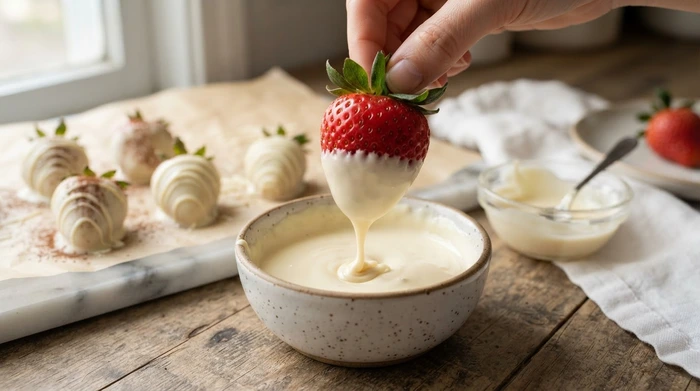
- Dip, twist, and lift. Hold the stem, dip, then let the excess drip back into the bowl. Scrape the bottom gently against the bowl’s edge.
- Set on parchment in a cool, dry place.
- Serve soon. Fresh fruit releases moisture over time, so these are best the same day or within about a day.
Coloring white chocolate
Water-based food coloring can cause white chocolate to seize. Use oil-based colors or powdered colors made for chocolate, and add them a little at a time. Colored chocolate can overheat more easily, so keep the heat low and stir frequently.
Troubleshooting
- It’s grainy, lumpy, or thick and won’t drip: It was probably overheated. Stir in a small amount of the right fat, and if it’s scorched (a burnt smell or hard bits), discard it and start over with lower heat.
- It seized after water got in: It won’t coat well anymore. You may be able to stir in a spoonful of warm cream to make a soft sauce or ganache, but not a dipping coating.
- The strawberries look wrinkled or the coating weeps: The fruit was cold or wet. Dry it and bring it to room temperature next time.
- The coating won’t set firm: Too much liquid oil, a warm room, or untempered real chocolate. Use less fat, chill briefly, or see our tempering guide.
- It looks streaky or dull afterward: It may have bloomed from temperature swings. It’s still safe to eat.
- It thickens halfway through dipping: The bowl cooled. Warm it again for a few seconds, stirring, or work in smaller batches.
Storage
Keep leftover melted chocolate dry, let it set, and store it airtight in a cool, dry place to re-melt later. Dipped fruit is best kept cool and eaten within a day. For more on storing baked treats and sweets, see our baking tips for beginners and our kitchen storage guide.
FAQ
Why is my white chocolate chunky even though I stir it?
It has most likely overheated. Lower the microwave power, shorten the bursts, and stop before it’s completely melted.
Can I use white chips instead of white chocolate?
Yes, for casual dipping, but they’re often thicker, and they usually need a little thinning fat.
Can I re-melt white chocolate?
Yes, if it wasn’t scorched. Warm it gently and stir. Real white chocolate that has been melted and set will not be in temper.
Do I need to temper white chocolate?
Only if it contains cocoa butter and you want a glossy, firm set. Wafers and coatings don’t require it.
Can I add milk or cream to melted chocolate?
Not for a coating. Adding liquid usually makes it seize, while cream is fine when you’re deliberately making a ganache.
Conclusion
White chocolate melts best when you treat it gently. Use low heat, stir often, stop before it is completely liquid, and keep everything dry. Check the label to know whether you’re working with real white chocolate or a compound coating, thin it with a suitable fat if needed, and dip fruit that is dry and at room temperature. With those habits, the clumps and clinging, dull coatings mostly disappear.