By Harry Cruse | TasteSavory
Baking is more precise than most cooking. A soup forgives an extra pinch of salt, but a cake can turn out dense or dry when the flour is off by a few tablespoons or the oven runs 25 degrees hot. The good news is that most baking failures come from a small set of habits. These 15 tips cover measuring, ovens and pans, mixing, leaveners, doneness, and cooling, and each one explains why it matters, so you can apply it to any recipe.
The short answer
- Weigh your ingredients, or spoon and level your flour.
- Use an oven thermometer and preheat fully.
- Mix gently once the flour goes in.
- Check that your baking powder and baking soda are fresh, and never swap one for the other.
- Judge doneness by cues, not just the timer.
Before you start
- Read the recipe all the way through, and set everything out first. Baking has fixed timing, so you don’t want to discover halfway through that you need to soften butter or chill dough. Measure the ingredients, prepare the pans, and preheat the oven before you begin mixing.
- Use ingredients at the temperature the recipe calls for. Cakes and cookies usually call for butter that is cool room temperature: soft enough to dent when pressed, but not greasy or melting. Room-temperature eggs blend more evenly into batter, and you can warm cold eggs by placing them in a bowl of warm water for about 10 minutes. Pastry, biscuits, and scones are the opposite, because they rely on cold butter to create flaky layers.
Measuring
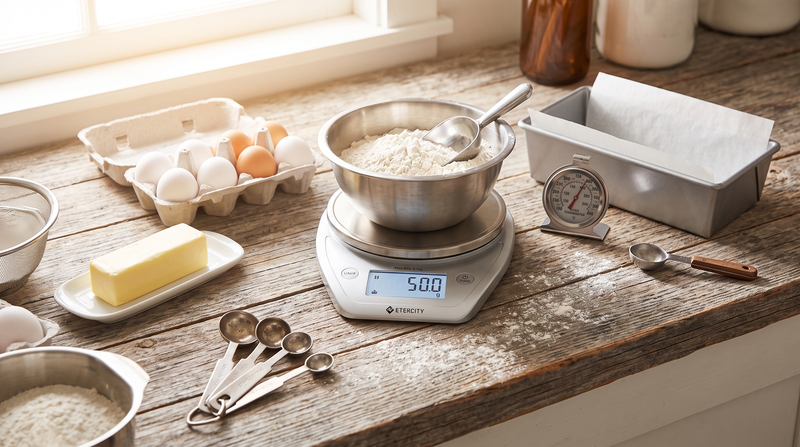
- Weigh ingredients whenever you can. A kitchen scale is the most reliable way to bake, because a cup of flour can vary a great deal depending on how it’s packed. If a recipe lists grams, use them.
- Measure by volume carefully. Too much flour is the most common cause of dry, dense baked goods. Fluff the flour with a spoon, spoon it into the measuring cup, and level it off with a knife instead of scooping directly from the bag. A cup measured this way usually weighs roughly 120–130 g, depending on the brand. Pack brown sugar firmly, and measure liquids in a clear liquid measuring cup, reading it at eye level.
Your oven and pans
- Use an oven thermometer. Home ovens often run hotter or cooler than the dial says, and a small oven thermometer shows the real temperature. If yours is off, adjust the setting to compensate.
- Preheat fully and use the center rack. Give the oven at least 15–20 minutes to come up to temperature, even if the display says it’s ready sooner. The center rack usually gives the most even heat.
- Use the pan size the recipe calls for. A different size changes the depth of the batter, and therefore the baking time. Dark metal pans brown faster than light ones, and glass pans hold heat differently, so many bakers lower the oven temperature slightly for glass. If you must change pans, start checking for doneness earlier.
- Prepare the pan properly. Grease it and line it with parchment, with extra paper hanging over the sides to lift the bake out. This keeps cakes and breads from sticking, as in our banana bread.
- Keep the oven door closed early on. Opening it in the first part of baking lets heat escape and can make cakes and breads sink. Use the oven light instead, and check once the bake is mostly set.
Mixing
- Cream butter and sugar when told to. Beating them together for a few minutes, until pale and fluffy, works small air pockets into the batter that help it rise. Add eggs one at a time so they blend in smoothly.
- Don’t overmix once the flour goes in. Stirring flour develops gluten, which makes cakes, muffins, and quick breads tough or rubbery. Mix until the dry streaks disappear, and stop. Lumps in muffin and quick bread batter are fine.
- Keep pastry ingredients cold, and chill cookie dough if the recipe says to. Cold butter creates flaky layers in pie crust and biscuits. Chilling cookie dough for 30–60 minutes firms the butter, which often reduces spreading in the oven.
Leaveners
- Check that your leaveners are fresh, and don’t swap them. Baking powder and baking soda lose strength over time. To test baking powder, stir ½ teaspoon into hot water, and it should fizz vigorously. To test baking soda, stir ¼ teaspoon into a splash of vinegar, and it should bubble right away. The two are not interchangeable. Baking soda needs an acid in the recipe, such as ripe bananas, buttermilk, or brown sugar, while baking powder already contains its own acid.
Knowing when it’s done, and cooling
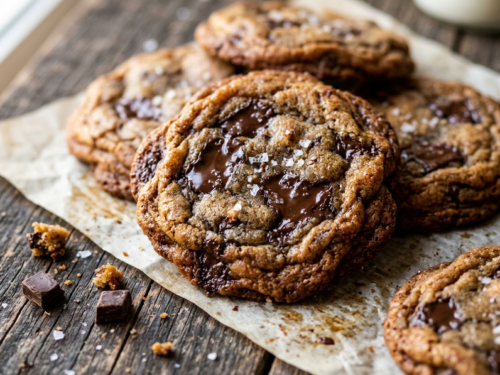
- Judge doneness by cues, not just the timer. Ovens and pans vary, so use the recipe’s time as a guide and look for the signs. Cakes and quick breads should spring back lightly, pull slightly from the pan sides, and a toothpick in the center should come out clean or with a few moist crumbs. Cookies are done when the edges are set, even if the centers still look slightly soft. For a firmer check on cakes and loaves, many bakers look for a center temperature of roughly 200–210°F (93–99°C) with an instant-read thermometer, although this varies by recipe.
- Cool as the recipe directs. Most cakes and loaves rest in the pan for about 10 minutes and then move to a rack, so they can firm up without steaming in the pan. Cookies usually rest on the baking sheet for a few minutes before moving. Cutting into a warm loaf too early can leave the center gummy, because it is still setting.
Common baking problems and fixes
| Problem | Likely cause | What to try |
|---|---|---|
| Dense, heavy texture | Too much flour, overmixing, or old leavener | Weigh or spoon-and-level the flour, mix gently, and test leaveners |
| Sunken center | Underbaked, oven door opened early, or too much leavener | Bake until set, keep the door closed, and measure leaveners exactly |
| Dry or crumbly | Overbaking or too much flour | Start checking early and measure flour carefully |
| Cookies spread too much | Butter too warm, dough not chilled, or a hot baking sheet | Use cool butter, chill the dough, and use a cool sheet |
| Dark outside, raw inside | Oven too hot, a dark pan, or the rack too high | Check the oven temperature, use the center rack, and tent with foil |
| Tough texture | Overmixed batter | Fold gently, and stop when the flour disappears |
| Sticks to the pan | Pan not prepared | Grease and line with parchment |
Storing baked goods
Most cookies, quick breads, and unfrosted cakes keep well in an airtight container at room temperature for a few days. Anything with a perishable filling or topping, such as cream cheese frosting, custard, or whipped cream, belongs in the refrigerator. Many baked goods freeze well when wrapped tightly, and slices are convenient because you can take out only what you need. See our meal prep guide for freezing basics, and our holiday meal ideas for desserts that can be made a day ahead.
FAQ
Can I substitute baking powder for baking soda?
Not directly. They work differently and are used in different amounts, so swapping them can leave your bake flat, soapy-tasting, or overly dense. If you have to substitute, use a reliable conversion chart for that specific recipe.
Do I need to sift flour?
For many recipes, no. Whisking or fluffing the flour before measuring is often enough. Sift only when the recipe asks for it, such as in delicate cakes.
Can I use a different pan size?
Yes, but the baking time will change. A larger pan makes a thinner bake that finishes sooner, and a smaller one makes a deeper bake that needs longer, so watch for the doneness cues rather than the timer.
Is it safe to eat raw cookie dough or cake batter?
It’s best not to. Raw flour and raw eggs can both carry bacteria, so bake the dough before eating it.
Conclusion
Most baking problems trace back to a few causes: inaccurate measuring, an oven that isn’t at the temperature you think, overmixing, or pulling a bake out too early. Fix those habits, and your results become far more consistent. Pick one or two tips to start with, such as a scale and an oven thermometer, and add the others as you go.