
By Harry Cruse | TasteSavory
If your cabinets, walls, and the top of the stove feel sticky after you fry something, you’re not alone, and your range hood may not be broken. Cooking with oil releases tiny droplets and vapor that rise, cool, and settle on whatever is nearby. A hood catches a good share of them, but not all. This guide explains what’s happening, how to cook in ways that put less grease into the air, how to get more out of the hood you have, and how to clean the film off safely. The cleaning advice is general, so check any cabinet finish or appliance manual before you try a new product.
The short answer
- No hood captures every particle of grease. Some always escapes when you fry, sear, or sauté at high heat.
- Cook in ways that create less airborne oil: dry the food, control the heat, and use a splatter screen.
- Use the hood well: turn it on before you start, favor the back burners, and keep the filters clean.
- Wipe surfaces regularly. A quick wipe now is much easier than scrubbing a sticky layer later.
Why grease escapes the hood
When oil heats up, some of it breaks into fine droplets and vapor, and any water in the food bursts and throws more oil into the air. These particles ride the rising plume of hot air. The hood pulls part of that plume away, but the rest drifts out into the room and settles on the nearest surfaces as a thin, sticky film. It’s the same reason a kitchen can smell of last night’s dinner.
Hood performance depends on several things, not only how powerful the fan is.
| Factor | Why it matters | What to check |
|---|---|---|
| Ducted or recirculating | A ducted hood sends air outside. A recirculating hood filters air and returns it to the kitchen, so more grease and moisture stay in the room. | Look for a duct leaving the hood through the wall or roof. Many over-the-range microwaves recirculate. |
| Capture area | A hood that is narrower than the cooktop, or mounted too high, lets the plume slip around its edges. | The hood should cover the burners you use and be mounted at the height the manufacturer recommends. |
| Filters | Clogged filters restrict airflow and stop trapping grease. | Clean or replace them as the manual advises. |
| Fan speed | A low setting may not move enough air when you’re frying. | Use a higher speed for frying and searing. |
| Airflow and ductwork | Long, narrow, or leaky ducts reduce performance. In a tight home, the fan may struggle to pull air in. | If performance seems poor, ask a qualified installer to check the duct. Opening a window slightly can help. |
Higher airflow can help, but a powerful fan with a small hood, a poor duct, or dirty filters may perform worse than a modest one that’s well installed. If you’re thinking about replacing a hood, ask about capture area and ducting, not only the airflow rating.
Cook in ways that put less grease in the air
The easiest improvement costs nothing: change how you fry and sear.
- Dry the food. Water and hot oil spatter violently. Pat meat, fish, and vegetables dry with paper towels, and drain wet ingredients before they go in the pan. The same applies to filled snacks; see the frying tips in our wonton wrapper guide.
- Control the heat. Oil that’s too hot smokes and sprays. Heat the pan, add oil, and keep the burner at medium to medium-high unless a recipe truly needs more. Our list of cooking habits explains why heat control improves results anyway.
- Use the right pan. Choose a pan with deeper sides, and don’t overfill it with oil. A pan that’s too small makes the contents slosh, and one that’s too shallow lets splatter escape.
- Lay food in gently. Place it down toward you, not away, so oil doesn’t splash toward your arm. Don’t crowd the pan, because crowding drops the temperature and adds moisture.
- Add a splatter screen or lid. A mesh screen lets steam escape but keeps most of the droplets in. A lid held partly open also helps. A screen is a cheap tool that’s worth having; see our guide to essential kitchen tools.
- Choose the cooking method. Baking bacon on a sheet pan, roasting instead of pan-frying, or using the oven for crisp foods keeps the grease contained. Searing and smashing burgers are messier, so use a high fan setting; our burger guide covers this.
If you deep-fry often, consider doing it outdoors on a proper burner or a side burner, away from structures; see our outdoor kitchen guide for placement and safety. Never leave hot oil unattended. If oil in a pan catches fire, turn off the heat and cover the pan with a lid, and never throw water on it.
Use the hood you have more effectively
- Turn it on early. Start it a minute or two before you heat the pan, so the airflow is already established, and leave it on for several minutes after you finish.
- Favor the back burners. Hoods generally capture more from the rear of the cooktop, so use those burners for frying when you can.
- Use a higher speed for oily cooking. Lower it for simmering and boiling.
- Keep the filters clean. Metal mesh or baffle filters can be washed in hot, soapy water, and many are dishwasher-safe, though some aluminum filters can discolor, so check the manual. Charcoal filters in recirculating hoods usually can’t be washed and need replacing on the manufacturer’s schedule. Built-up grease is flammable, so regular cleaning matters for safety, too.
- Provide fresh air. If the fan feels weak, open a nearby window slightly while it runs.
How often should you clean filters? A common rule of thumb is about once a month for regular cooking, and more often if you fry a lot. Follow your manual for the exact interval.
How to clean grease off cabinets and walls
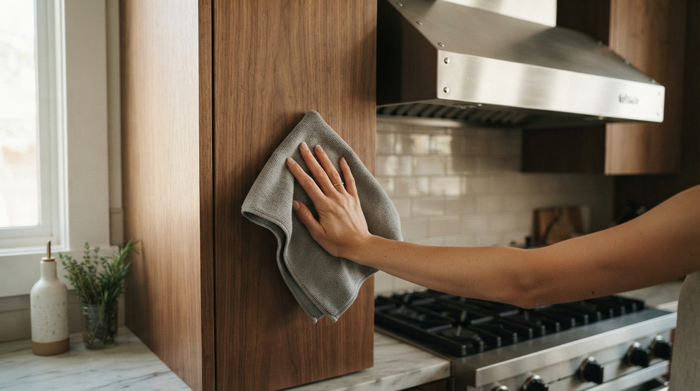
Fresh grease wipes off easily with warm water and a little dish soap, because soap breaks up oil. Old, sticky grease takes longer, since it thickens and bonds to the surface over time. Several light passes work better than hard scrubbing.
- Test first. Try any cleaner in a hidden spot, since finishes vary, and wood, laminate, painted, and stone surfaces react differently.
- Start gentle. Wipe with a soft cloth dampened in warm water with a few drops of dish soap. For stubborn spots, let the soapy cloth rest on the area for a minute or two.
- Rinse and dry. Wipe again with a clean damp cloth, then dry with a towel. Don’t leave wood soaking wet.
- Escalate carefully. A commercial degreaser can help on tough buildup if the label says it’s safe for your surface. A paste of baking soda and water may work on sturdy surfaces, but avoid abrasive scrubbers on finishes that scratch.
- Don’t mix cleaners. Combining products, especially anything containing bleach with ammonia or vinegar, can create harmful gases. Use one product at a time and ventilate.
Don’t forget the places grease collects: the tops of cabinets, the hood’s outer surface, the backsplash, handles, and the wall behind the stove.
A simple routine
| When | What to do |
|---|---|
| After frying | Wipe the stovetop, backsplash, and nearby wall while the splatter is still fresh. |
| Weekly | Wipe cabinet fronts and handles near the stove, and the hood’s exterior. |
| Monthly | Wash metal filters, and wipe the tops of nearby cabinets. |
| Every few months | Check charcoal filters, clear dust from the hood, and look for new grease in unexpected places. |
Troubleshooting
- The film returns within days: You may be frying often at high heat. Lower the heat, use a splatter screen, and wipe after cooking.
- The hood seems weak: Clean the filters, then check whether it’s ducted, whether the duct is blocked, and whether the hood is wide enough for your burners.
- The cabinet finish looks cloudy after cleaning: A cleaner may have been too strong. Stop using it and check with the manufacturer.
- The grease is sticky and stubborn: It’s probably old. Repeat gentle cleaning rather than switching to something harsher.
FAQ
Is it normal for cabinets to get greasy with a range hood?
Yes. Even a good hood cannot capture all the airborne grease, so you’ll still need to clean the surfaces nearby from time to time.
Does a higher-powered hood fix it?
It can help, but capture area, ducting, filter condition, and how you cook matter as much as raw power.
Is a recirculating hood useless?
No, but it’s generally less effective for grease and moisture than a ducted one, because it returns air to the room. Clean or replace its filters regularly.
Can I just use dish soap?
For most routine buildup, yes. Test it first, use warm water, and dry the surface afterward.
Conclusion
A greasy film around the stove is a normal side effect of cooking with oil, not necessarily a sign that the hood has failed. You can reduce it by drying food, managing the heat, using a splatter screen, and starting the fan early. Then keep it under control with a quick wipe after frying, clean filters, and gentle cleaning that suits your cabinet finish. Small habits keep the kitchen easier to cook in, and that makes cooking more enjoyable.