By Harry Cruse | TasteSavory
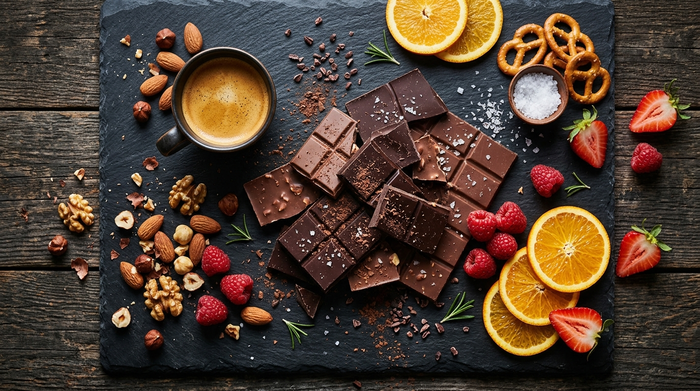
Ask a group what goes best with chocolate and you’ll get a long list: coffee, strawberries, peanut butter, almonds, red wine, sea salt, pretzels, even a different kind of chocolate. Almost all of them work for a reason. Chocolate is rich, bitter, and sweet at once, so it welcomes partners that contrast with it, such as acid, salt, and crunch, or echo it, such as nuts, coffee, and caramel. This guide explains the three principles behind good pairings, matches partners to dark, milk, and white chocolate, covers drinks, fruit, nuts, and salty snacks, and shows how to set up a simple chocolate tasting at home.
The short answer
- Match intensity: strong dark chocolate with bold partners, and creamy milk or white chocolate with lighter ones.
- Use contrast (acid, salt, bitterness, crunch) or harmony (nuts, caramel, coffee) to make each bite more interesting.
- Coffee, berries, almonds, peanut butter, and sea salt are the most dependable partners.
- Serve chocolate at room temperature, and taste it on its own first.
Three pairing principles
- Match the intensity. A delicate partner disappears next to a dark, intense chocolate, while a strong one overwhelms a gentle milk or white chocolate.
- Contrast what’s rich. Chocolate’s richness and sweetness are balanced by acid (berries, citrus), salt, and bitterness. This is the same idea behind our guides to sweet and salty and flavor and color in cooking.
- Echo what’s already there. Dark chocolate often has roasted, nutty, or fruity notes, so nuts, coffee, and dried fruit can mirror them.
Pair by type of chocolate
| Chocolate | Character | Good partners |
|---|---|---|
| Dark (about 70% cocoa or more) | Bitter, intense, less sweet | Coffee, almonds, raspberries, dried cherries, sea salt, Port or other sweet or fortified wine, aged whisky |
| Milk | Creamy, sweet, caramel notes | Peanut butter, hazelnuts, pretzels, bananas, black tea, lattes, lighter red or off-dry wines |
| White | Buttery, sweet, vanilla | Tart fruit such as raspberries and citrus, sparkling wine, green or black tea |
Drinks
- Coffee: The classic. Roasty bitterness suits dark chocolate, and a milky coffee suits milk chocolate. For a quick version, stir a little unsweetened cocoa into the bottom of a cup before pouring in hot coffee (recipe below).
- Tea: Black tea works with most chocolates. Light, floral teas suit white chocolate.
- Milk and water: Cold milk softens intense chocolate, and plain water resets your palate between pieces.
- Wine: The most repeated rule is that the wine should be at least as sweet as the chocolate. For dark chocolate, that points to Port, tawny, or sweet dessert wines. Many guides warn that tannic dry reds can taste harsh or bitter with high-cocoa chocolate, though some sources recommend bold reds, so taste before you commit. Sparkling or sweet white wines suit white chocolate.
- Spirits: Whisky, brandy, and aged rum are often paired with dark chocolate, served neat in small amounts.
Alcohol is for adults, and moderation matters.
Fruit
Fruit works when it brings brightness or concentrated sweetness. Strawberries and raspberries are the favorites because their juiciness and acidity cut through richness. Bananas add creamy sweetness, orange and other citrus add a bright, bitter edge, and dried cherries or figs add chew. Serve fruit dry and at room temperature, since cold or wet fruit can make chocolate seize or turn waxy. For a banana-and-chocolate baked treat, see our banana bread.
Nuts and nut butters
Almonds, hazelnuts, pistachios, peanuts, and cashews give chocolate crunch and savory depth, and toasting them first deepens the flavor. Peanut butter is a favorite, since its salt and fat meet chocolate’s sweetness. A small spoonful alongside a square of chocolate is plenty. Nuts are common allergens, so label them if you’re serving others.
Salty and crunchy partners
Salt makes chocolate taste more chocolatey, which is why sea salt on dark chocolate is so popular. Pretzels, popcorn, and salted caramel are classic partners, and a pinch of flaky salt on a brownie or square does a lot. Some people enjoy chocolate with salt-and-vinegar chips, which combine salt and acid in one bite. If you’re curious, test it with a small piece before building a whole plate around it.
Dairy, cheese, and more chocolate
- Ice cream and cheesecake: Cold, creamy foods soften chocolate’s intensity.
- Aged cheese: Hard, aged cheeses are sometimes paired with dark chocolate for a savory contrast.
- Different chocolates: A tasting of several kinds shows how much cocoa percentage and origin change the flavor.
Build a simple chocolate tasting
- Choose three chocolates. One milk, one dark around 70%, and one distinctive piece, such as a single-origin bar or a filled chocolate.
- Serve at room temperature. Chocolate straight from the refrigerator tastes muted and waxy, and room temperature (about 68–72°F / 20–22°C) brings out flavor.
- Taste the chocolate alone first. Let a small piece melt on your tongue and note what you notice.
- Add one partner at a time. Taste the partner alone, then together.
- Go from light to dark. Start with milk chocolate and finish with the strongest.
- Cleanse between rounds with water or a plain cracker.
- Keep it small. Three or four pairings are plenty before the flavors blur.
| Chocolate | Pairing 1 | Pairing 2 | Drink |
|---|---|---|---|
| Milk | Salted pretzels | Sliced banana | Black tea or latte |
| Dark, about 70% | Almonds | Raspberries | Coffee, or Port for adults |
| Special piece | Flaky sea salt | Dried cherries | Water, to taste it on its own |
A board like this also works for guests; see our party appetizer planning tips for quantities.
Recipe: Velvety cocoa coffee
Time: 5 minutes | Serves: 1
- 1 to 2 teaspoons unsweetened cocoa powder, such as Dutch-process
- 1 to 2 teaspoons sugar, optional
- 2 tablespoons hot water
- ¾ to 1 cup hot, strong brewed coffee
- A splash of milk, optional
- Make a paste. Stir the cocoa and sugar with the hot water in the bottom of a mug until smooth. This keeps lumps away.
- Add the coffee. Pour in the hot coffee slowly, stirring.
- Finish. Add milk if you like, and taste. Add more cocoa or sugar to adjust.
Notes and safety
- Keep chocolate away from dogs. It’s toxic to them, and dark chocolate is the most dangerous.
- Dark chocolate and cocoa contain caffeine, so keep that in mind if you’re sensitive or serving it late.
- Allergens: Nuts, peanuts, and milk are common allergens. Label what’s on the board.
- Storage: Keep chocolate in a cool, dry place away from strong odors. Refrigeration can cause condensation and bloom. See our kitchen storage guide.
Troubleshooting
- The pairing tastes too bitter: Add something sweeter, such as ripe fruit, or switch to a milder chocolate.
- It tastes cloying: Add acid or salt, such as berries, citrus, or a pinch of flaky salt.
- The wine tastes sour or harsh: Choose a sweeter wine or a milder chocolate.
- The chocolate tastes waxy: It’s probably too cold. Let it come to room temperature.
- Everything tastes the same: You’ve tried too many pairings. Rinse with water and stop at three or four.
FAQ
What goes best with dark chocolate?
Coffee, almonds, raspberries, dried cherries, sea salt, and for adults, Port or aged spirits.
Does red wine go with chocolate?
It can, but tannic dry reds often clash with high-cocoa chocolate. Sweeter or fortified wines are a safer match, and milk chocolate is more forgiving.
Why does salt go so well with chocolate?
Salt reduces bitterness and sharpens sweetness, so chocolate tastes fuller.
What fruit goes best with chocolate?
Strawberries and raspberries are the most popular, followed by bananas, oranges, and cherries.
Conclusion
The best chocolate pairing is the one that makes you want another bite. Match the strength of the chocolate to its partner, add something bright, salty, or crunchy to balance the richness, and serve it at room temperature. Start with coffee and almonds, try strawberries or sea salt next, and explore from there. Keep chocolate away from pets, label nuts, and enjoy alcohol responsibly.