By Harry Cruse | TasteSavory
You’re serving lasagna, or a roast, or a big pot of stew. Guests will arrive an hour early, and you want something to put out while they talk. But the dinner is rich and filling, the oven is busy, and the last thing you want is a starter that spoils everyone’s appetite. The right appetizer for a heavy meal is the opposite of the main dish: small, fresh, cool, and a little acidic, so it wakes up the appetite without filling the stomach. This guide explains what makes a good starter before a rich dinner, offers twelve no-oven ideas, gives three full recipes (prosciutto-wrapped melon, endive boats, and citrus-herb olives), and covers quantities, timing, and food safety.
The short answer
- Keep it light: plan about 2–4 small bites per person, since the main meal is rich.
- Choose fresh, cool, and acidic foods, such as melon, cucumber, olives, citrus, and vinaigrette-dressed greens.
- Avoid doubling up on the main dish. If dinner is heavy on cheese, tomato, and pasta, skip starters that are too similar.
- Pick foods that need no oven and can be made ahead.
- Serve them while the main dish rests, and keep the whole pre-dinner stretch short.
What makes a good starter for a heavy meal
A few principles guide the choices.
- Small portions. Bite-sized pieces keep appetites intact. Dips and boards should look generous without being filling.
- Fresh and acidic. Citrus, vinegar, pickles, and fresh fruit stimulate the appetite and balance rich food later. The same idea is behind the vinaigrette-dressed salads often served alongside heavy mains, and our guide to flavor and color in cooking explains why acid makes rich food taste lighter.
- Contrast with the main course. Rich, cheesy, starchy, and baked dinners pair best with raw vegetables, fruit, cured meats, and seafood. Avoid fried foods, creamy dips, and bread-heavy starters.
- No oven. If the oven is busy, choose foods that are assembled cold. A toaster, a stovetop, or a microwave can handle small jobs.
- Easy to eat standing up. People will be mingling, holding a drink, and talking. Skip foods that need a knife and fork.
Twelve no-oven ideas
| Idea | Why it works | Make-ahead |
|---|---|---|
| Antipasto platter | Olives, cured meats, cheese, marinated vegetables, and breadsticks. Light, familiar, and made from store-bought items | Assemble a few hours ahead |
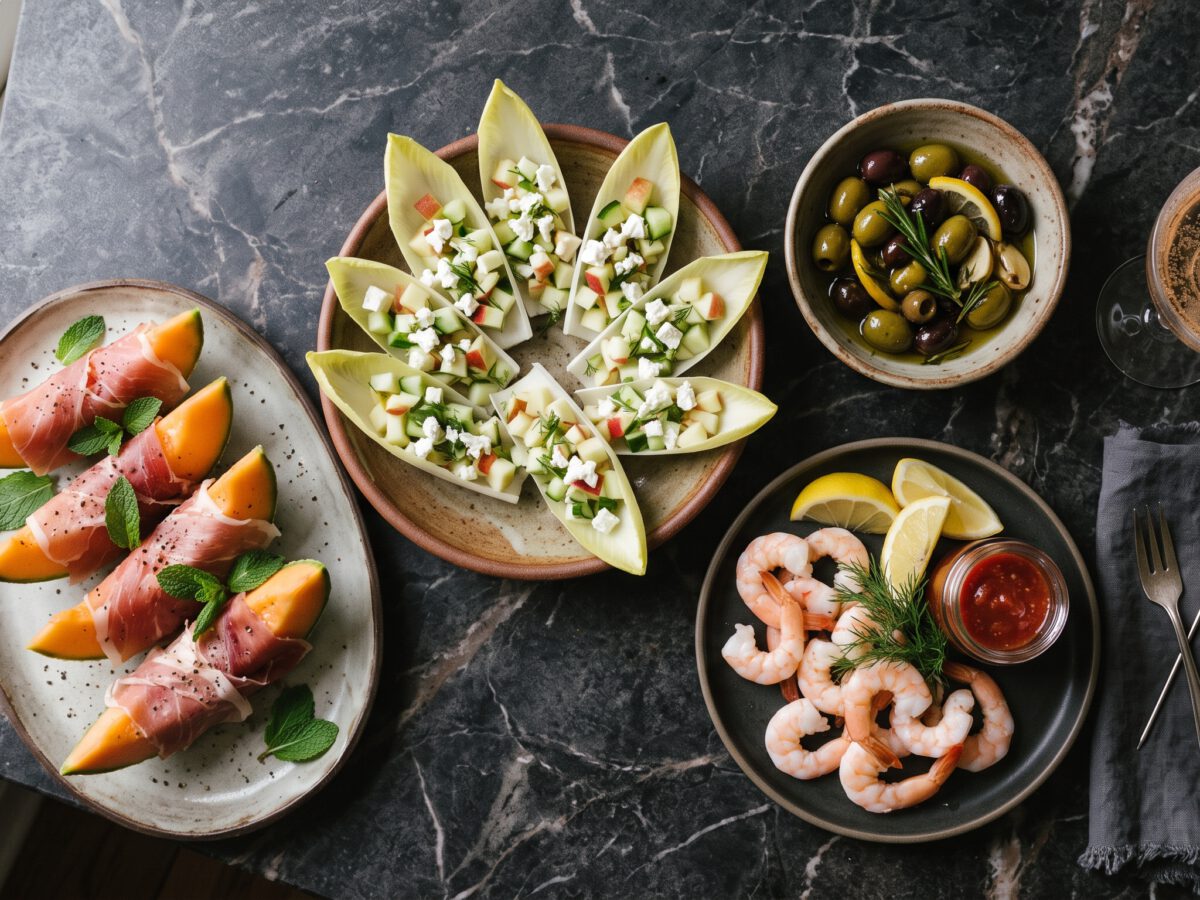
| Prosciutto-wrapped melon | Sweet, salty, and cool, with no cooking | Wrap a few hours ahead |
| Endive boats with salad filling | A bite-sized salad that’s crisp and slightly bitter | Prepare the filling ahead, and fill just before serving |
| Mini caprese skewers | Fresh and light. See our party appetizer guide for the recipe | Assemble a few hours ahead |
| Citrus-herb marinated olives | Salty, bright, and nothing to cook | Marinate a day or more ahead |
| Shrimp cocktail | Cold, lean, and tangy | Poach and chill the shrimp a day ahead |
| Crudités with hummus | Crisp and filling without being heavy | Cut the vegetables a day ahead |
| Cucumber rounds with a topping | Cool and refreshing, such as with herbed cream cheese or hummus | Slice ahead, and top just before serving |
| Pear, watercress, and prosciutto bites | Peppery, sweet, and salty | Assemble shortly before serving |
| Figs or dates with ricotta or goat cheese | Sweet and creamy in a small bite | Fill an hour or two ahead |
| Watermelon, feta, and mint | Juicy, salty, and cooling | Cube ahead, and combine at the last minute |
| Marinated artichoke hearts | Tangy, and available ready-made in jars | Open and drain a day ahead |
If you’re serving a rich dish with lots of cheese and tomato, such as lasagna, you might choose something other than caprese or bruschetta, which repeat the same flavors. Melon with prosciutto, endive boats, olives, and shrimp cocktail all offer contrast.
Recipe 1: Prosciutto-wrapped melon
Prep time: 15 minutes | Makes: about 24 pieces
Ingredients
- 1 ripe cantaloupe or honeydew melon (about 2 pounds / 900 g)
- About 4 ounces (115 g) thinly sliced prosciutto
- Black pepper, to taste
- Fresh mint or basil leaves (optional)
- A drizzle of olive oil or a squeeze of lime (optional)
Instructions
- Scrub the outside of the melon under running water with a clean brush, and dry it, before you cut it. Bacteria on the rind can transfer to the flesh on the knife.
- Cut the melon in half, scoop out the seeds, and slice it into 24 thin wedges, then cut away the rind. Alternatively, use a melon baller.
- Cut the prosciutto slices into strips about 1 inch wide, and wrap one strip around each wedge.
- Arrange them on a platter, and top with cracked pepper, a small mint leaf, and a few drops of olive oil or lime if you like.
Notes: These can be assembled a few hours ahead and chilled, covered. Take them out of the refrigerator about 30 minutes before serving so the prosciutto isn’t stiff and cold. Ripe melon makes a big difference, so choose one that smells sweet at the stem end and feels heavy. People who are pregnant or have weakened immune systems are often advised to avoid cold cured deli meats unless they’ve been heated, so offer an alternative.
Recipe 2: Endive boats with cucumber, apple, and feta
Prep time: 20 minutes | Makes: about 24 boats
Ingredients
- 4 heads Belgian endive
- ½ cup (about 70 g) finely diced cucumber
- ½ cup (about 70 g) finely diced tart apple
- ¼ cup (about 35 g) crumbled feta or gorgonzola
- 2 tablespoons chopped fresh mint or parsley
- 1 tablespoon lemon juice
- 1 tablespoon olive oil
- Pinch of salt, and black pepper to taste
- 2 tablespoons chopped toasted nuts, such as pistachios (optional, and skip if anyone has a nut allergy)
Instructions
- Cut off the bottom of each endive, and separate the leaves. Choose about 24 of the best, boat-shaped ones, and chill them.
- In a bowl, gently combine the cucumber, apple, cheese, and herbs. Stir in the lemon juice, olive oil, salt, and pepper.
- Spoon about 1 tablespoon of filling into each leaf, and add nuts if using.
- Arrange on a platter and serve right away.
Notes: Prepare the filling up to a few hours ahead, but fill the leaves just before serving, since the filling makes them soggy. Dry the diced apple and cucumber well. Other fillings include chopped chickpea salad, a Greek-style mix of cucumber, tomato, and olives, or a tabbouleh-style herb salad.
Recipe 3: Citrus-herb marinated olives
Prep time: 5 minutes, plus marinating | Makes: about 1½ cups
Ingredients
- 1½ cups (about 225 g) mixed olives, drained
- 2 tablespoons olive oil
- Zest of 1 orange, plus 1 tablespoon juice
- 1 sprig fresh rosemary or thyme
- Pinch of red pepper flakes (optional)
Instructions
- Combine all the ingredients in a bowl or jar.
- Cover and refrigerate for at least 1 hour, and up to several days, stirring occasionally.
- Let them sit at room temperature for 20 minutes before serving, so the oil loosens.
Notes: Keep them refrigerated, and use them within about 4 days. This recipe leaves out fresh garlic on purpose, because garlic stored in oil should be refrigerated and used promptly. Put out a small dish for the pits.
Shrimp cocktail, the classic
Shrimp is lean, cold, and tangy, which makes it a good match for a rich main course. Poach 1 pound of large (21/25) shrimp for 2–3 minutes, until opaque, as in our shrimp guide, then chill them in ice water. For a quick cocktail sauce, stir together ½ cup ketchup, 2 tablespoons prepared horseradish, 1 tablespoon lemon juice, 1 teaspoon Worcestershire sauce, and a dash of hot sauce. Serve the shrimp on a bed of ice, with lemon wedges. Keep them chilled, and don’t leave them out for more than 2 hours, or 1 hour if it’s above 90°F (32°C).
Build a simple antipasto platter
An antipasto platter, with cured meats, cheese, olives, and marinated vegetables, is easy to assemble from store-bought items and fits an Italian main course. For a platter that serves about 8 people as a light starter, you might include:
- 3–4 ounces of thinly sliced salami or prosciutto
- 4 ounces of cheese, such as provolone or Parmesan, cut into small chunks
- 1 cup of mixed olives
- 1 cup of marinated artichoke hearts or roasted red peppers, drained
- A handful of pepperoncini or pickled vegetables
- Cherry tomatoes, cucumber slices, or melon for freshness
- Breadsticks or a few slices of baguette, kept to a minimum
Arrange them in groups, with small bowls for wet items, and provide toothpicks and small napkins. A drizzle of good olive oil and a small dish of vinegar can finish it. Our holiday meal ideas include more starter suggestions.
Drinks and timing
A chilled sparkling drink, such as prosecco, or a light, citrusy cocktail or mocktail, can serve as an appetizer on its own, and it takes no cooking. Offer sparkling water with lemon and a non-alcoholic option too. As for timing, plan for guests to eat the starters for 30–45 minutes, and schedule the main course to finish soon after they arrive. Lasagna and other baked pasta dishes need about 15–20 minutes of rest after leaving the oven so they slice cleanly, which is the ideal time to serve the appetizers or to open the wine. If the main dish is especially heavy, you can also skip appetizers entirely and tell guests dinner will be ready soon.
How much to make
- Before a heavy dinner: About 2–4 small bites per person in total.
- Number of items: Two or three for most groups, such as one platter, one cold bite, and one small bowl.
- Dips: About 2 tablespoons per person, with plenty of raw vegetables.
For a larger group or a longer cocktail hour, use the quantity guidance in our guide to crowd-pleasing party appetizers.
Think about the whole menu
When the main course is rich, the sides can do some of the balancing work. Consider a crisp green salad with a sharp vinaigrette, such as the lemon-Dijon version in our six essential sauces, instead of another cooked vegetable. A lighter dessert, such as fruit or sorbet, also helps the meal end well.
Food safety
- Keep cold food at 40°F (4°C) or below until serving, and don’t leave it out for more than 2 hours, or 1 hour if it’s above 90°F (32°C).
- Wash melon rinds before cutting, and refrigerate cut melon.
- Use separate boards and utensils for raw and ready-to-eat foods.
- Label dishes that contain nuts, dairy, shellfish, or other common allergens.
- Refrigerate leftovers within 2 hours and use them within 3–4 days. See our guide to storing food in the kitchen.
Troubleshooting
- Guests fill up before dinner: The starters were too heavy or too plentiful. Cut the portions and choose fresh, light foods.
- Endive boats get soggy: They were filled too early. Fill them just before serving.
- Prosciutto is stiff: It was served cold. Let it sit out for 30 minutes before serving.
- Melon is bland: It wasn’t ripe. Add a squeeze of lime, a pinch of salt, or fresh mint.
- The platter looks bare: Add color with fruit, tomatoes, or herbs, and use smaller dishes.
- You run out of time: Choose store-bought items, such as olives, marinated artichokes, and cured meats, and assemble them in minutes.
FAQ
Do I need an appetizer at all?
Not always. If the main meal is heavy and guests arrive close to serving time, a drink and a small bowl of olives may be enough.
What’s a good appetizer that doesn’t need the oven?
Antipasto platters, prosciutto-wrapped melon, endive boats, shrimp cocktail, and crudités all need no oven.
What should I avoid before lasagna?
Heavy, cheesy, or bread-based starters, since they duplicate the main course and fill people up.
Can I make these ahead?
Yes. Most can be prepared a few hours or a day in advance, and assembled or filled just before serving.
Conclusion
A good starter before a heavy dinner is light, cool, and fresh, and it takes pressure off the host. Pick two or three items from the list above, keep the portions small, make them ahead, and serve them while the main course rests. Try the prosciutto-wrapped melon or the endive boats first, and put out a bowl of olives for guests to snack on while they talk.