
By Harry Cruse | TasteSavory
Every cook ends up with a pot that’s too thin at some point. The beans are tender but the broth is watery, the stew tastes right but looks like soup, the gravy won’t coat a spoon. The fix is almost always some form of starch, and there are far more options than flour and cornstarch. A handful of instant potato flakes, a spoonful of masa harina, or a ladle of blended beans can rescue a pot in minutes. This guide covers ten ways to thicken soups, stews, chili, beans, and sauces, explains how each one works, and tells you which suits which dish. It includes a comparison table with starting amounts, gluten-free options, a simple white bean soup that thickens itself, and troubleshooting.
The short answer
- The easiest option is to simmer the pot uncovered, which reduces the liquid and concentrates flavor.
- For beans, lentils, and vegetable soups, mash or blend a portion and stir it back in.
- For a fast fix, add a little instant potato flakes, masa harina, or a cornstarch slurry, a bit at a time.
- Add thickeners gradually and wait a minute or two, because most take time to work.
- Thicken near the end, then taste and adjust the seasoning, since thickening changes how salty the dish tastes.
How thickening works
Most thickeners are starch. When starch granules are heated in liquid, they absorb water and swell, which turns thin liquid into something thicker and silkier. That’s why a soup keeps thickening as it simmers and thickens further as it cools. The other main route is simply removing water, by reducing the liquid, or by adding already-soft solids, such as mashed beans, that give the liquid body. Different thickeners behave differently. Some need to cook for several minutes to lose a raw taste, some clump if added dry to hot liquid, and some break down with long boiling. Knowing which is which makes each method more reliable.
Ten ways to thicken a pot
1. Simmer it down
The simplest method is to remove the lid and let the liquid evaporate. Keep the pot at a gentle simmer, stirring occasionally, until it reaches the thickness you want. This also concentrates flavor, so it works best when the dish isn’t already well seasoned, because salt becomes more noticeable as water leaves. Add salt at the end, as the guidance in flavor and color in cooking suggests.
2. Mash or blend part of the pot
For beans, lentils, split peas, and vegetable soups, take out about a quarter to a third of the solids with some liquid, mash or blend them until smooth, and stir them back in. For beans, you can also press some against the side of the pot with a spoon. An immersion blender used in a few quick pulses does the same job without transferring anything. This adds no new ingredients and no extra flavor, which makes it a good first choice. Our roasted butternut squash soup and lentil and vegetable soup both work well with this method.
3. Instant potato flakes
Instant mashed potato flakes are made of dried, cooked potato, so they dissolve into broth and add starch without needing cooking time. Sprinkle in 1 tablespoon at a time while stirring, wait a minute or two while the flakes absorb liquid, then decide whether to add more. They suit bean dishes, chili, stews, potato soup, and chowders. Use plain, unflavored flakes, since flavored versions can contain salt, butter, or milk powder. Add them gradually, because too many will make the dish pasty. Backpackers have long used the same trick to thicken rehydrated meals.
4. Masa harina or cornmeal
Masa harina, the corn flour used for tortillas, thickens chili and stews and adds a toasty corn flavor. Stir 1–2 tablespoons with a few tablespoons of cold water or broth into a smooth paste, add it to the simmering pot, and cook for 5–10 minutes so it loses its raw taste. Regular cornmeal is coarser and can feel gritty, so it needs longer cooking, about 10–15 minutes. Crushed tortilla chips work in a similar way, but they’re salted, so season the dish carefully.
5. Cornstarch slurry
A slurry is starch mixed with cold liquid, which keeps it from clumping when it hits hot liquid. Stir 2 teaspoons to 1 tablespoon of cornstarch into 2 tablespoons of cold water for every cup of liquid you want to thicken. Pour it in while stirring, bring the pot to a simmer, and cook for about a minute until it turns glossy and clear. Cornstarch has no flavor and is gluten-free, which is why it’s so common in stir-fry sauces. Don’t boil it hard for a long time, since extended heat and acid can weaken it, and it can turn spongy after freezing.
6. Flour: roux, beurre manié, or slurry
Flour thickens with a more rounded, cooked flavor. Roughly twice as much flour as cornstarch is needed. For a roux, cook equal amounts of fat and flour together for a minute or two before adding liquid, as in the béchamel in our six essential sauces. For a last-minute fix, knead equal parts soft butter and flour into a paste (a beurre manié), and whisk in small pieces, as described in our cooking habits guide. Flour must simmer for at least 5 minutes, or the dish tastes raw and floury.
7. Arrowroot
Arrowroot is a starch that behaves like cornstarch but gives a clear, glossy finish and thickens at a lower temperature. Use it the same way, as a slurry, and add it at the very end. Don’t boil it for long, because heat can break it down, and it can turn slimy with dairy.
8. Bread, crackers, or rice
Soft bread, crushed crackers, or a small amount of cooked rice break down in liquid and add body, which is how many tomato soups, gazpachos, and rustic stews are thickened. Add a small handful at a time and simmer until it dissolves, then blend if you want it smooth. Small amounts of rice, barley, or pasta cooked directly in a soup also release starch.
9. Pureed vegetables
Roasted sweet potato, winter squash, carrots, cauliflower, and chickpeas can all be pureed and stirred in. They thicken without flour, which suits gluten-free cooking, and they add their own flavor. Use them where that flavor fits, such as sweet potato in gumbo or chickpeas in a tomato-based soup.
10. Gelatin, cream, or egg yolks
These add body or richness more than true thickening. Unflavored gelatin, bloomed in a little cold water and dissolved into hot liquid, gives a silkier texture, though it isn’t vegetarian and will make a soup set when chilled. Cream adds richness and mild body, but it doesn’t thicken a thin soup dramatically. Egg yolks beaten with a little cream thicken sauces and soups when heated gently, but they scramble if the liquid boils, so they require careful tempering. Use these only when you’re comfortable with them.
Which method for which dish
| Method | Best for | Starting amount per 4 cups (1 liter) of liquid | Flavor effect | Gluten-free? |
|---|---|---|---|---|
| Reduce | Almost any soup or sauce | No additions | Concentrates flavor and salt | Yes |
| Mash or blend solids | Beans, lentils, vegetable soups | 1–2 cups of the pot’s contents | None | Yes |
| Instant potato flakes | Beans, chili, stews, chowders | 1 tablespoon at a time, usually 2–4 total | Mild potato | Usually, but check the label |
| Masa harina | Chili, stews, tomato-based dishes | 1–2 tablespoons, made into a paste | Toasty corn | Yes, but check the label |
| Cornstarch slurry | Stir-fry sauces, gravies, fruit sauces | 2–4 teaspoons plus cold water | Neutral | Yes |
| Flour, roux, or beurre manié | Gravies, creamy soups, stews | About 2 tablespoons per cup for a medium sauce, so adjust to taste | Rounded, cooked flavor | No |
| Arrowroot slurry | Clear, glossy sauces | Like cornstarch | Neutral | Yes |
| Bread or crackers | Tomato soups, rustic stews | A small handful at a time | Mild, toasty | No, unless gluten-free bread is used |
| Pureed vegetables | Gumbo, soups, mac and cheese sauce | 1–2 cups of puree | Their own flavor | Yes |
These amounts are starting points. Always add a little less than you think you need, wait a minute or two, and then adjust.
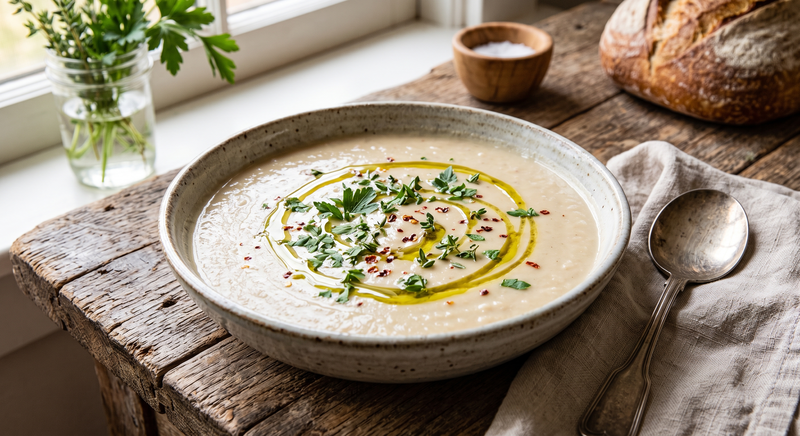
Recipe: Creamy white bean soup, thickened with its own beans
Prep time: 10 minutes | Cook time: 25 minutes | Serves: 4
Ingredients
- 2 tablespoons olive oil
- 1 medium onion, diced
- 3 cloves garlic, minced
- 2 cans (15 oz / 425 g each) white beans, drained and rinsed
- 3 cups (720 ml) low-sodium vegetable or chicken broth
- 1 teaspoon dried thyme
- 1–2 teaspoons lemon juice
- Salt and black pepper, to taste
Instructions
- Heat the oil in a pot over medium heat. Cook the onion for 5–6 minutes, until soft. Add the garlic and cook for 30 seconds.
- Add the beans, broth, and thyme. Bring to a simmer and cook for 15 minutes, partially covered.
- Scoop out about 1½ cups of the beans and liquid and blend until smooth, or use an immersion blender in the pot with a few short pulses. If you’re using a countertop blender, fill it no more than halfway and vent the lid.
- Stir the puree back into the pot and simmer for 5 more minutes. The soup should be creamy and thick enough to coat a spoon.
- Add the lemon juice, then season with salt and pepper.
Note: If it’s too thick, stir in warm broth a few tablespoons at a time. It thickens as it stands.
Troubleshooting
- Still too thin: Add the thickener in a small second dose, wait a minute or two, and simmer longer. Starch needs time to work.
- Too thick or pasty: Stir in warm broth or water a few tablespoons at a time. Next time, add less.
- Lumps: The starch went in dry or too fast. Whisk the pot vigorously, strain it, or use an immersion blender. Next time, make a slurry first.
- Raw or floury taste: Flour or masa wasn’t cooked long enough. Simmer for another 5–10 minutes.
- Gluey texture: Too many potato flakes, or the starch was boiled too hard. Dilute with more broth.
- Too salty after reducing: Reducing concentrates salt. Add unsalted broth or water, and a squeeze of lemon, and add salt only at the end next time.
- The soup thinned out after thickening: Some starches break down with long boiling or acid. Add thickeners at the end and don’t boil them hard.
Storing thickened soups safely
Thick soups hold heat for a long time, so they cool slowly in a deep pot. Divide them into shallow containers, refrigerate within 2 hours, and use them within 3–4 days. Reheat to 165°F (74°C) and thin them with a splash of broth, since starches keep thickening as they sit. A cornstarch-thickened dish can turn spongy after freezing, so freeze soups before thickening, if you can, and thicken when you reheat. See our guide to storing food in the kitchen for more.
FAQ
What’s the quickest way to thicken a soup?
Instant potato flakes or a cornstarch slurry act within a minute or two. Mashing some of the solids also takes only a few minutes.
How do I thicken chili?
Simmer it uncovered, mash some of the beans, or stir in a paste of masa harina and water, then simmer for 5–10 minutes. Our easy beef chili also thickens as it simmers.
Can I thicken soup without flour or cornstarch?
Yes. Reduce it, blend some of the solids, or add potato flakes, pureed vegetables, or a little cooked rice.
Do instant potato flakes make soup taste like potatoes?
Slightly, but the flavor is mild in a well-seasoned pot, especially with beans and stews. Use plain flakes.
Can I fix a soup that’s too thick?
Yes. Stir in warm broth or water gradually and re-season.
Conclusion
A thin pot is easy to fix once you know your options. Simmer it down, mash some of the solids, or add a small amount of starch, and add it gradually and at the end. Keep a few options in the pantry, such as instant potato flakes, cornstarch, and masa harina, so you’re ready the next time the beans turn out watery. Try the white bean soup above to see how well a pot can thicken itself.