
By Harry Cruse | TasteSavory
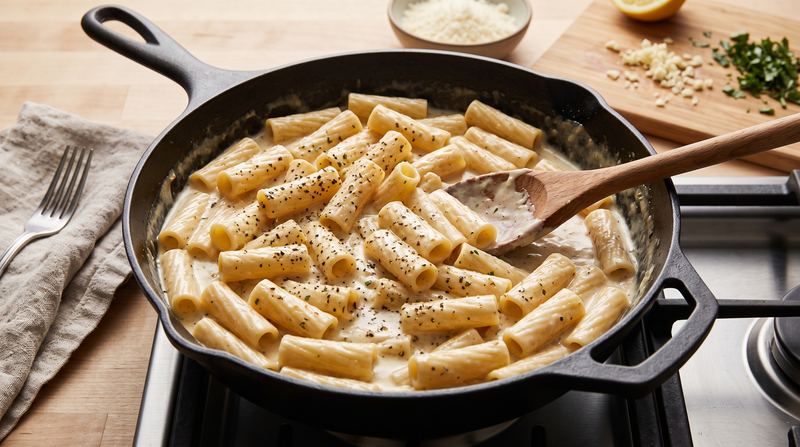
Some weeknights call for a dinner that feels a little indulgent without leaving a sink full of dishes. This garlic Parmesan pasta cooks in a single skillet. The pasta simmers directly in broth and cream, and its own starch thickens the liquid into a glossy sauce as it cooks. There’s no separate pot of boiling water and no roux to manage. The trade-off is that one-pot pasta is sensitive to liquid and heat, so below you’ll find the reasoning behind each step, how to tell when it’s ready, and how to fix a sauce that’s too thin or too tight.
Why this one-pot method works
Cooking pasta in a small amount of liquid keeps its starch in the pan instead of pouring it down the drain, and that starch is what thickens the broth and cream into a sauce that clings. Two things follow. The amount of liquid matters more than in a regular pasta recipe. Regular stirring matters too, because it releases starch and keeps the pasta off the bottom of the pan. The Parmesan goes in last, off the heat. Cheese added to a hard-boiling sauce is more likely to turn stringy or grainy, while gentle residual heat generally melts it smoothly.
Ingredients
Serves 4
- 12 ounces (340 g) short pasta, such as penne, rigatoni, or fusilli
- 2 tablespoons unsalted butter
- 5 cloves garlic, minced
- 3 cups (720 ml) low-sodium chicken or vegetable broth
- 1 cup (240 ml) heavy cream
- 1 teaspoon Italian seasoning
- ½ teaspoon black pepper
- 1 cup (about 3 ounces / 85 g) finely grated Parmesan
- Salt, to taste
- Chopped parsley and lemon wedges, to serve (optional)
Ingredient notes
- Pasta: Ridged or hollow shapes hold sauce and cook evenly. Skip very thin, quick-cooking shapes like angel hair, which can go soft before the sauce thickens.
- Broth: Use low-sodium. The liquid reduces as it cooks and Parmesan is salty, so it’s safer to season at the end.
- Cream: Heavy cream is the most forgiving choice because its higher fat content makes it less likely to separate at a simmer.
- Parmesan: Grate it yourself on the fine holes of a box grater. Pre-shredded cheese often contains anti-caking agents and can make the sauce slightly grainy.
How to make it, and what to look for
- Pick the right pan. Use a deep 12-inch skillet or a wide, heavy pot of about 4 quarts. A wide surface lets the liquid reduce and the pasta cook evenly.
- Soften the garlic. Melt the butter over medium heat, add the garlic, and cook for 30–60 seconds until fragrant. It should stay pale gold, since garlic that turns dark brown tastes bitter.
- Add the liquids. Pour in the broth and cream, then add the Italian seasoning and pepper. Bring to a gentle boil, with small bubbles across the surface. Hold the salt until the end.
- Add the pasta. Stir it in so most of it is submerged, then lower the heat to a steady simmer. You want lively bubbling, not a rolling boil.
- Simmer and stir. Cook uncovered, stirring every minute or two, for roughly 10–12 minutes. Start checking at the low end, since brands and shapes vary. It’s ready when the pasta is tender but still slightly firm and the sauce coats a spoon. It should look a little looser than you want, because it thickens as it rests.
- Finish off the heat. Remove the pan from the heat and stir in the Parmesan a handful at a time until smooth. Rest 2–3 minutes, then taste and add salt. If it’s tighter than you like, loosen it with a splash of hot broth or water.
Troubleshooting
- Sauce too thin: It usually needs a little more time. Return to a gentle simmer for a minute or two, stirring, then rest it off the heat.
- Sauce too thick or pasta sticking: The liquid evaporated faster than expected, often from a wide pan or high heat. Stir in warm broth or water, a couple of tablespoons at a time.
- Grainy or clumpy cheese: The sauce was probably too hot, or the cheese went in all at once. Take the pan off the heat, add the cheese gradually, and loosen with warm liquid.
- Gummy, overcooked pasta: Next time, start checking earlier and stop when the pasta still has a slight bite.
- Pasta still firm but the liquid is gone: Add a little warm broth and keep simmering.
Variations and substitutions
These are suggestions rather than tested guarantees. Add cooked chicken or shrimp at the end. If you cook chicken, it should reach 165°F (74°C) internally. Stir in spinach during the last minute until wilted, or brown mushrooms in the butter before adding the garlic. Lemon zest and juice at the end brighten the cream, and red pepper flakes add heat.
| Original | Possible substitute | What changes |
|---|---|---|
| Heavy cream | Half-and-half | Lighter, thinner sauce; keep to a gentle simmer |
| Parmesan | Pecorino Romano | Sharper and saltier; go easy on added salt |
| Chicken broth | Vegetable broth | Suitable for a meat-free version |
Serving, storage, and reheating
Because the sauce is rich, pair it with something crisp or bright: a green salad with lemon vinaigrette, roasted broccoli, or steamed green beans, plus crusty bread for the pan.
Refrigerate leftovers in an airtight container within two hours of cooking and eat them within 3 days. The pasta keeps absorbing sauce as it sits, so reheat gently with a splash of milk or broth, stirring. Freezing isn’t recommended, because cream sauces can separate and the pasta softens.
Recipe card
Creamy One-Pot Garlic Parmesan Pasta
Prep time: 10 minutes | Cook time: 20 minutes | Total time: 30 minutes | Servings: 4
Ingredients
- 12 oz (340 g) short pasta
- 2 tbsp unsalted butter
- 5 garlic cloves, minced
- 3 cups (720 ml) low-sodium broth
- 1 cup (240 ml) heavy cream
- 1 tsp Italian seasoning
- ½ tsp black pepper
- 1 cup (about 3 oz / 85 g) finely grated Parmesan
- Salt to taste
Instructions
- Melt butter in a deep 12-inch skillet over medium heat. Cook garlic 30–60 seconds until fragrant, not brown.
- Add broth, cream, Italian seasoning, and pepper. Bring to a gentle boil.
- Stir in pasta. Reduce heat to a steady simmer.
- Cook uncovered, stirring every 1–2 minutes, 10–12 minutes, until the pasta is tender with a slight bite and the sauce coats a spoon.
- Remove from heat. Stir in Parmesan gradually. Rest 2–3 minutes.
- Season with salt. Loosen with hot broth or water if needed. Serve immediately.
Notes
Pasta cooking times vary by shape and brand. Check early rather than late.
FAQ
Can I make it ahead?
It’s best served right away, since the sauce tightens as it cools. You can mince the garlic and grate the cheese in advance.
Can I make it without cream?
Half-and-half works for a lighter result. The sauce will be thinner and less stable, so keep it at a gentle simmer and add the cheese off the heat.
Can I double it?
Use a very wide pot or cook two batches. The liquid-to-pasta ratio may need adjusting because evaporation changes with pan size.
Conclusion
This pasta rewards attention to a few details: a wide pan, a steady simmer rather than a hard boil, and cheese added off the heat. Get those right and the pasta’s own starch does the work of building the sauce. Cook it once as written, note how your pan and pasta shape behave, then adjust the liquid or add-ins to suit your kitchen. A green salad or roasted vegetables turns it into a complete weeknight dinner.