
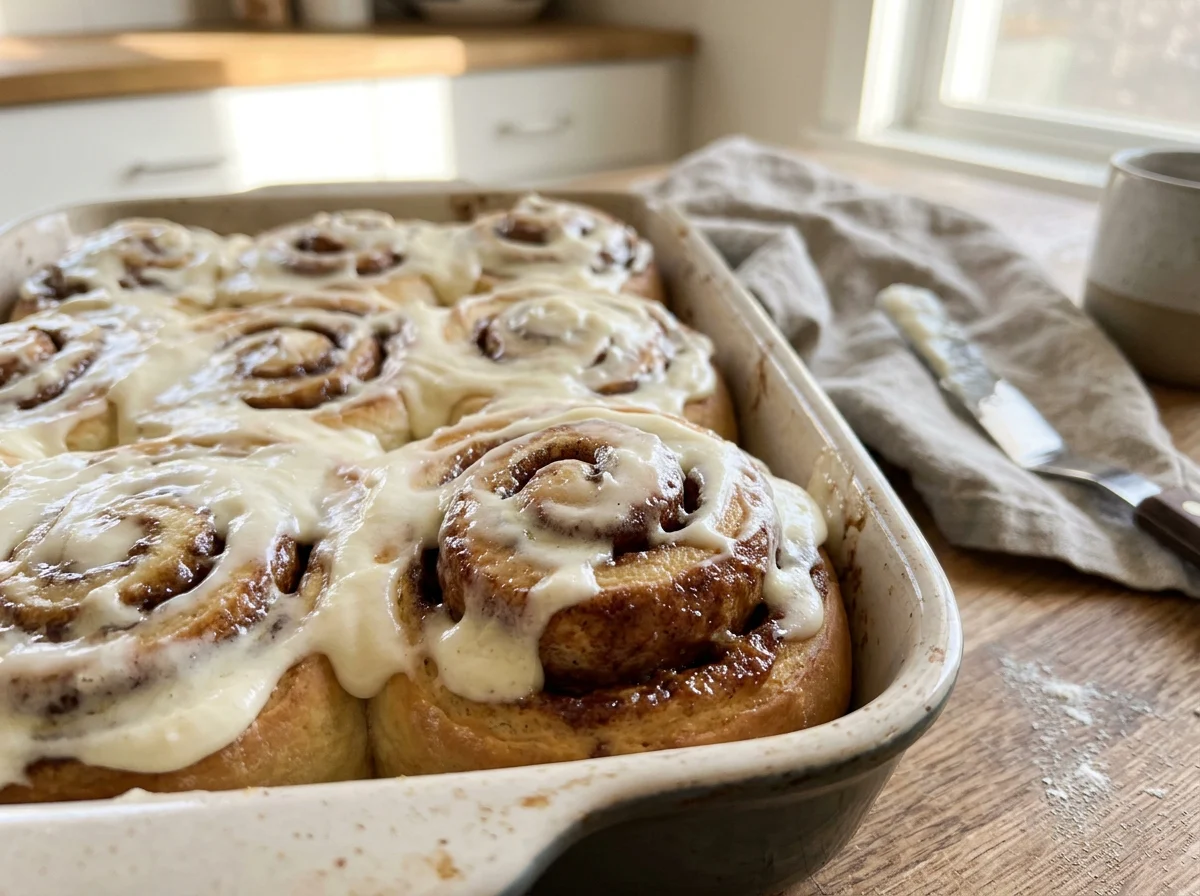
Baking a batch of homemade overnight cinnamon rolls from scratch is one of the most rewarding kitchen projects you can take on. By utilizing the overnight refrigeration method, you set yourself up for fresh, bakery-quality rolls first thing in the morning without waking up at dawn. Follow along as we break down the dough science, rolling techniques, and icing perfection for the ultimate breakfast treat.
Why You'll Love This Recipe
- Prepared the night before so you can bake fresh rolls with zero morning rush
- Incredible soft, pillow-like yeast dough texture that stays tender for days
- Packed with a thick, gooey brown sugar and cinnamon filling in every single swirl
- Topped with a tangy, ultra-smooth homemade cream cheese icing
- Clear guidance on yeast activation and dough handling for absolute success
Ingredients You'll Need (and Why)
warm whole milk: Keeping the milk around 43°C (110°F) is critical. Too cold and the yeast won't activate; too hot and it will kill the yeast entirely.
active dry or instant yeast: This is the leavening agent that creates the lift and airy crumb structure in your rolls. Watching it bubble during the initial step proves it is alive and ready to work.
unsalted butter: Softened butter incorporates smoothly into the dough to enrich the crumb, and ultra-soft butter acts as the adhesive layer holding the cinnamon-sugar filling in place.
bread flour: Higher protein content helps build a strong gluten network, ensuring your rolls hold their shape and have a wonderful chew.
full-fat cream cheese: Provides the rich, slightly tangy foundation for the icing, cutting through the sweetness of the sugar and complementing the warm spice.
How to Make It
Developing the Dough
Great cinnamon rolls start with a properly developed yeast dough. By proofing the yeast in warm milk first, you guarantee microbial activity. As you add flour and knead, gluten strands form a stretchy elastic network that traps expanding gas bubbles, creating that iconic soft and fluffy texture.
The Roll and Fill Technique
Spread your softened butter all the way to the edges to seal in moisture and prevent the dough from drying out. Evenly distributing the cinnamon brown sugar mix ensures every bite of your baked swirl has a balanced, spiced sweetness.
The Overnight Strategy
Placing assembled rolls into the refrigerator overnight slows down yeast activity significantly. This cold fermentation not only makes mornings effortless, but it also develops deeper, richer flavor profiles in the dough over time.
Success Tips
- Do not overheat your milk; keep it around 43°C (110°F) to protect the live yeast cultures.
- Ensure your butter for the filling is genuinely room temperature and spreadable so it doesn't tear your rolled dough.
- If baking straight from the fridge the next day, let the pan sit at room temperature for about 30 to 45 minutes to take the chill off before baking.
- Check for doneness by ensuring the center rolls spring back slightly and read an internal temperature of around 88°C (190°F).
Variations
- Add a half cup of finely chopped pecans or walnuts into the brown sugar cinnamon layer for an extra nutty crunch.
Storage & Make-Ahead
Room temperature: Store baked, iced rolls in an airtight container at room temperature for up to 2 days.
Fridge: Keep covered in the refrigerator for up to 5 days. Warm gently in the microwave before serving.
Freezer: Freeze un-iced baked rolls wrapped tightly for up to 2 months. Thaw and reheat before icing.
FAQ
Can I use active dry yeast instead of instant yeast?
Yes, both work wonderfully in this recipe. Just make sure to complete the initial frothing step with warm milk and sugar regardless of which one you use.
How do I cut the cinnamon roll log evenly without squishing them?
A sharp chef's knife works well if you use a swift, gentle sawing motion. Alternatively, you can slide a clean piece of unflavored dental floss or kitchen twine underneath the log, cross the ends over the top, and pull tight to slice cleanly.
What if my dough is too sticky while kneading?
A slightly tacky dough is desirable because it leads to softer rolls, but if it is too wet to handle, add flour one tablespoon at a time during the kneading phase until it clears the sides of the bowl.
Special Tools
Affiliate linksThe equipment that makes this recipe easier. Optional, but it helps.
As an Amazon Associate we earn from qualifying purchases. Links below are affiliate links, at no extra cost to you.