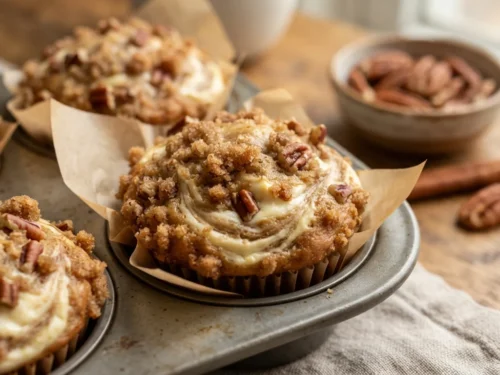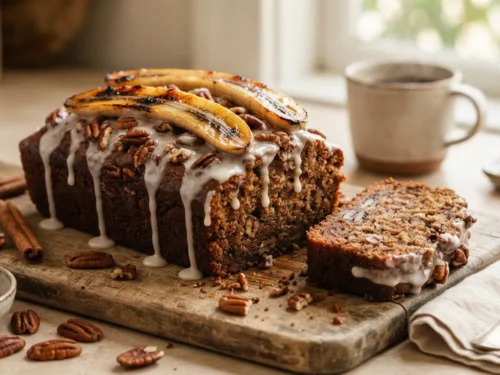

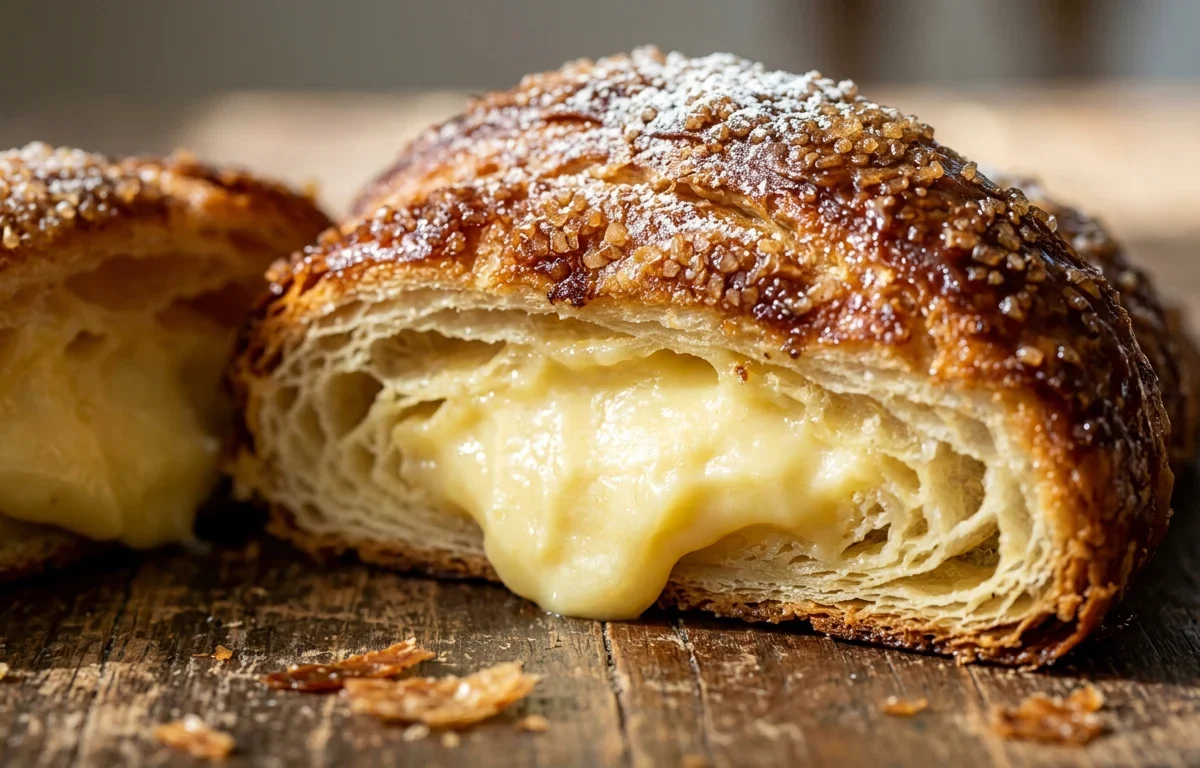
Bring the ultimate bakery experience into your own kitchen with these scratch-made laminated butter croissants. Featuring hundreds of flaky, buttery layers and wrapped around a velvety, bright lemon cream filling, this recipe takes inspiration from viral bakery favorites and elevates it with homemade craftsmanship.
Why You'll Love This Recipe
- Achieve true professional-style lamination with hundreds of visible, flaky butter layers.
- Features a dual-component filling combining rich cream cheese with bright, homemade lemon curd.
- Finished with a sugary, caramelized crust that adds an irresistible crunch to every bite.
- Far more rewarding than store-bought, giving you absolute control over quality ingredients.
Ingredients You'll Need (and Why)
bread flour: Higher protein content than all-purpose flour provides the necessary gluten structure to support all those heavy butter layers without tearing.
high-fat European-style butter: Contains less water and more fat than standard butter, resulting in a more pliable butter block and a much flakier, richer honeycomb interior.
cold whole milk: Using cold liquid keeps the dough temperature low during mixing, ensuring the internal butter doesn't melt prematurely.
How to Make It
Mastering the Dough and Butter Block
The foundation of any great croissant is temperature control. By keeping your detrempe (dough) and butter block at similar, cool consistencies during lamination, you prevent the butter from breaking into chunks or melting into the dough, ensuring clean, distinct layers.
Executing the Turns
The letter folds (turns) build your pastry's structure exponentially. Letting the dough rest and chill between each turn relaxes the gluten and re-solidifies the butter, making subsequent rolling smooth and tear-free.
Crafting the Filling and Caramelizing
Balancing the bright, tart punch of homemade lemon curd with a rich cream cheese and whipped cream base creates a luxurious filling. The final skillet caramelization step adds a brilliant crunch that takes these homemade pastries to a professional level.
Success Tips
- Keep your butter pliable—if it cracks like glass, it's too cold; if it smears, it's too warm.
- Do not rush the final room-temperature proofing stage; under-proofed croissants will be dense instead of airy.
- Strain your lemon curd to guarantee an ultra-silky texture free of any cooked egg bits.
- Watch the skillet closely during caramelization so the sugar turns golden without burning.
Storage & Make-Ahead
Room temperature: Best enjoyed fresh on the day they are made and filled.
Fridge: Store unfilled baked croissants in an airtight container for up to 2 days, or keep the finished filled pastries in the refrigerator for up to 24 hours.
Freezer: Unbaked, shaped croissants can be frozen after proofing for up to 1 month. Thaw and bake as directed.
FAQ
Can I use all-purpose flour instead of bread flour?
Bread flour is strongly recommended because its higher protein content gives the dough the necessary strength to hold up against the heavy butter layers.
Why did my butter melt out of the dough?
This usually happens if the butter block was too warm initially or if the kitchen environment is too hot. Always return the dough to the fridge if it starts feeling too soft.
Can I make the lemon curd ahead of time?
Yes! The lemon curd can be made up to 3 days in advance and kept tightly covered in the refrigerator until you are ready to whip up the cream filling.
Special Tools
Affiliate linksThe equipment that makes this recipe easier. Optional, but it helps.
As an Amazon Associate we earn from qualifying purchases. Links below are affiliate links, at no extra cost to you.