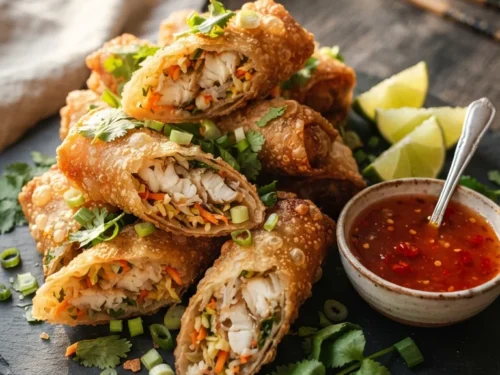

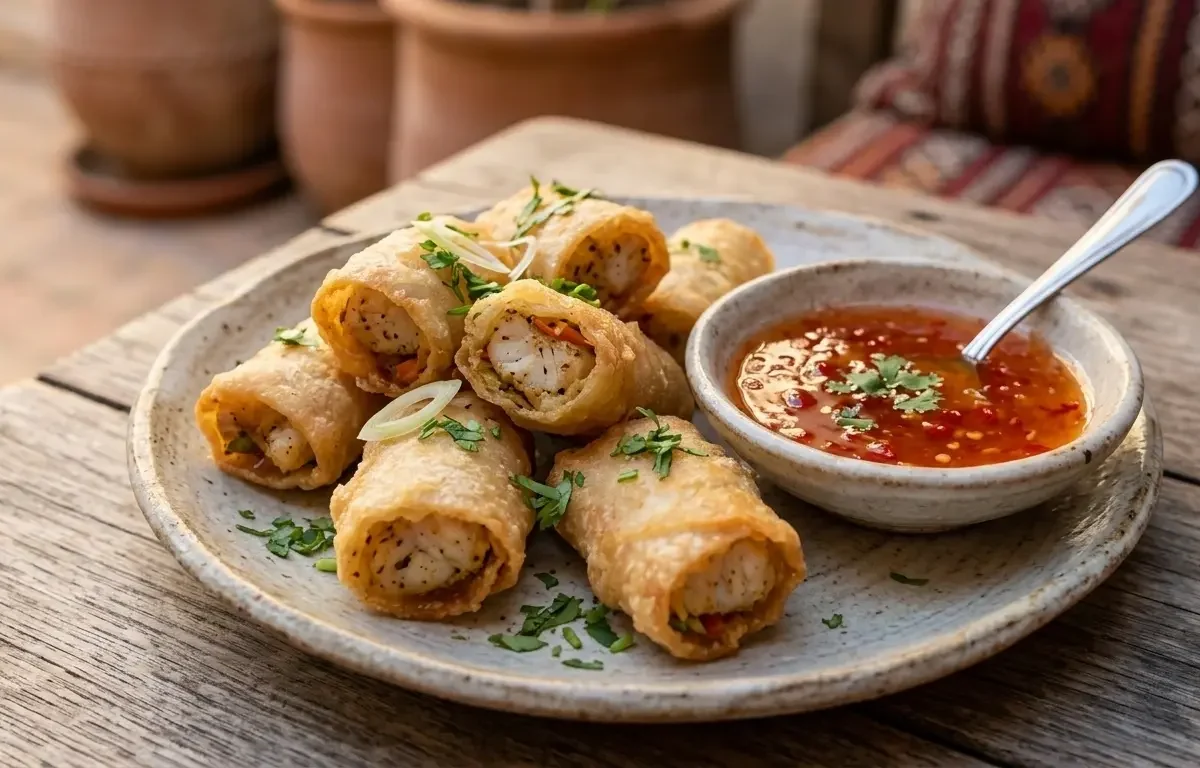
If you love appetizers that offer an addictive contrast between a shatteringly crispy exterior and a tender, savory interior, these fish rolls are made for you. Wrapping seasoned white fish inside spring roll wrappers creates a light, delicate crunch that beats heavy breading every single time. Don't worry if you have never folded a spring roll before—the technique is quick to master, and I will guide you through every step.
Why You'll Love This Recipe
- Shatteringly crisp outer wrapper achieved without heavy batter or thick flour coatings.
- Mild white fish stays juicy inside thanks to a starch binder that traps moisture.
- A subtle blend of ginger, garlic, and scallions eliminates fishiness and adds fresh aroma.
- Perfect for preparing ahead: roll them hours in advance and fry right before serving.
Ingredients You'll Need (and Why)
Firm White Fish: Cod, tilapia, or swai hold up well without turning mushy; mincing by hand gives the filling better structural body than pureeing in a food processor.
Cornstarch: Acts as a hydraulic binder, absorbing excess moisture released by the fish during cooking so the wrappers stay dry and crispy from within.
Spring Roll Wrappers: Made from wheat flour and water, these cook into paper-thin, blistered layers that freeze moisture into immediate crispness when fried.
Egg White: Provides a clean protein-based glue that sets instantly upon hitting hot oil, preventing the rolls from opening during cooking.
How to Make It
Preparing the Fish Filling
Drying your fish before mincing is crucial because liquid is the enemy of crispiness. Knife-mincing rather than blitzing in a blender leaves small protein chunks that create a pleasant chew. Stirring the mixture vigorously in one direction develops the protein strands, helping the filling bind together into a cohesive sausage-like center rather than crumbling apart inside the roll.
Rolling and Sealing
Think of rolling a spring roll like tucking in bed sheets—snug prevents oil from leaking inside, but pulling too tight can tear the delicate wrapper as heat expands the filling. Keeping your unused wrappers under a damp paper towel keeps them pliable. A light dab of egg white forms a firm glue that sets quickly when exposed to hot frying oil.
Frying to Perfection
Maintaining an oil temperature of 350°F ensures the outer wrapper bubbles and turns golden while the interior fish cooks through safely without drying out. Never overcrowd your pot; adding too many cold rolls at once drops the oil temperature, leading to greasy, soft wrappers instead of light, shattered crusts.
Success Tips
- Maintain oil temperature between 345°F and 355°F using a clip-on thermometer for consistent frying results.
- Keep raw wrappers covered with a damp cloth throughout assembly so they do not dry out or split during folding.
- Rest rolls seam-side down on your baking tray prior to frying so the egg white seal sets firm.
- If air frying instead of deep frying, brush each roll generously with oil and cook at 390°F for 10-12 minutes, flipping halfway.
Variations
- Shrimp and Fish Combo: Replace half of the white fish with peeled, deveined, minced raw shrimp for extra sweetness and bounce.
- Herb-Packed Asian Herb Rolls: Add 2 tablespoons of finely chopped cilantro and mint into the fish mixture for a fresh summer aroma.
Storage & Make-Ahead
Fridge: Store leftover fried rolls in an airtight container for up to 2 days. Reheat in a 375°F oven or air fryer for 4-5 minutes to restore crunch.
Freezer: Freeze assembled, unfried rolls in a single layer on a parchment-lined tray until solid, then transfer to a freezer bag for up to 2 months. Fry directly from frozen at 340°F for 6-7 minutes.
FAQ
Can I bake these fish rolls instead of frying?
Yes. Brush assembled rolls thoroughly with cooking oil, place on a parchment-lined baking sheet, and bake at 400°F (200°C) for 15-18 minutes until golden and crisp, turning halfway.
Why are my fish rolls bursting in the oil?
Bursting usually happens if air pockets are trapped inside during rolling or if the oil is too hot, causing steam to expand faster than the wrapper can flex. Roll snuggly without air pockets and monitor oil heat.
Which white fish works best for this recipe?
Cod, haddock, swai, or tilapia work wonderfully. Choose fresh or thoroughly thawed fish, and always squeeze out excess moisture with paper towels.