By Harry Cruse | TasteSavory
Most people start cooking with spices the simple way: shake them into the pot, stir, and hope. The food is fine, but it often tastes a little dusty or flat, especially compared with the same dish in a restaurant. The difference is frequently one small step. Heating spices before they meet the rest of the dish, either dry in a pan or in hot oil, wakes up their aroma and spreads it through the food. This guide explains how toasting and blooming work, which method suits which spice, when to add spices at the start or the end, and how to avoid the most common mistake, which is burning them. It finishes with a simple toasted spice blend you can keep in a jar.
The short answer
- Toast whole spices in a dry pan over low to medium heat for 1–3 minutes, until fragrant, then grind them.
- Bloom ground spices in hot oil or butter for 15–30 seconds, stirring constantly, before adding liquid.
- Don’t dry-toast ground spices. Their fine particles scorch quickly and lose aroma to the air.
- Stop as soon as you smell the spices. Dark, bitter-smelling spices have burned, and it’s better to start over.
- Fresh spices matter as much as technique, so replace old jars.
Why heating spices changes the flavor
The aroma of a spice comes from compounds held inside the seed, bark, or powder. Gentle heat helps release them and, with some spices, creates new savory, nutty notes, which is why toasted cumin smells different from raw cumin. Many of these aroma compounds dissolve well in fat, while others dissolve in water or alcohol, and some in more than one. That’s why oil is such a useful carrier: it picks up flavor from the spices and then coats the onions, meat, or lentils in the pot, so the taste is spread through the dish instead of sitting in a few gritty spoonfuls. Spices added to a pot that’s already full of liquid get little of this effect, because the liquid is mostly water and the temperature never gets much above boiling. The difference is most noticeable in dishes where spices are the main flavor, such as chili, curry, dal, and spiced stews, and much less in dishes where they’re a background note.
Method 1: Toast whole spices, then grind
This is the best option for spices you can buy whole, such as cumin, coriander, fennel, mustard seeds, black peppercorns, and cardamom.
- Heat a dry skillet over low to medium heat. Use stainless steel or cast iron, not a nonstick pan. Heating an empty nonstick pan can damage the coating, and manufacturers generally advise against it.
- Add the whole spices in a single layer, with enough room to move around.
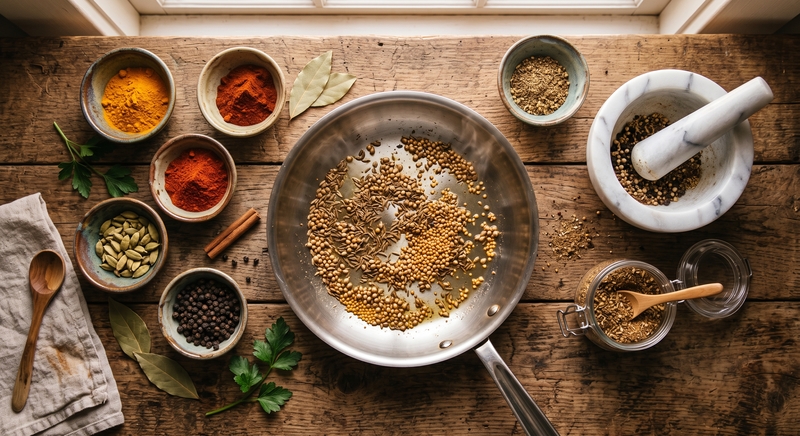
- Shake or stir the pan constantly for 1–3 minutes. Watch for a change in smell, from sharp or dusty to warm and nutty, and a slight darkening in color. Seeds like mustard may start to pop.
- Pour the spices onto a plate right away, since the hot pan will keep cooking them. Let them cool for a few minutes.
- Grind them in a dedicated spice grinder, a clean coffee grinder, or a mortar and pestle.
Grinding after toasting gives the strongest aroma, because ground spices begin to lose flavor as soon as they’re cut open. If you don’t own a grinder, you can also add toasted whole seeds to the pot as they are.
Method 2: Bloom ground spices in fat
Blooming is the right method for pre-ground spices such as chili powder, paprika, turmeric, ground cumin, and ground coriander.
- Cook your aromatics first. Soften the onion, garlic, or ginger in oil over medium heat, so there’s a layer of hot fat in the pan. Or, for a simpler version, heat a tablespoon or two of oil by itself.
- Lower the heat to medium-low, add the ground spices, and stir constantly.
- Cook for 15–30 seconds, until the smell rises and the spices darken slightly and look glossy. Paprika and chili powder burn fastest, so give them 10–15 seconds.
- Immediately add liquid, such as broth, tomatoes, or coconut milk. This stops the cooking and spreads the flavor.
If the pan is dry and the spices clump, add a splash more oil. If you smell anything acrid, or the spices turn dark brown or black, stop and start over, because burnt spices make the whole dish bitter. Our easy beef chili uses this technique when it cooks the garlic, tomato paste, and spices for a minute or two before adding the liquid, and our lentil and vegetable soup does the same with cumin and turmeric.
Method 3: Tempering at the end (tadka)
In Indian cooking, spices are often cooked in hot ghee or oil in a small pan and then poured over a finished dish. The technique has several names, including tadka, tarka, and chhonk. Heat the fat, add whole seeds such as mustard or cumin, and cook until they sizzle or pop. Then add other flavorings, such as dried chiles, garlic, or curry leaves, for a few more seconds. Pour the mixture, with the oil, over cooked lentils, soups, or vegetables. This works especially well in watery dishes like dal, where spices added early would be diluted. Use a lid or a splatter screen, because mustard seeds can jump out of the pan, and ventilate the kitchen well.
Which method for which spice
| Spice | Best method | Time (approximate) | Notes |
|---|---|---|---|
| Cumin, coriander, or fennel seeds | Dry toast, then grind, or bloom whole in oil | 1–3 minutes dry, 30–60 seconds in oil | Watch for color and smell |
| Mustard seeds | Hot oil, covered | Until they pop | Can scatter, so use a lid |
| Black peppercorns, cardamom, cloves, star anise | Dry toast, then crush or grind | 1–2 minutes | Cool before grinding |
| Ground cumin, coriander, turmeric | Bloom in oil | 20–30 seconds | Add after the onions soften |
| Chili powder and paprika | Bloom in oil, briefly | 10–15 seconds | Burn quickly, so use low heat |
| Garam masala and other finishing blends | Add near the end | A minute or less | Often added late to keep the aroma fresh |
| Dried herbs such as oregano and thyme | Crush between your fingers, and add after the onions soften | 30–60 seconds | Fresh herbs go in at the end |
| Tomato paste | Cook in the pan until darker | 1–2 minutes | Same idea, with less acidity and more depth |
Early or late?
Heat changes spices in two ways: it adds deeper, toastier notes, and it reduces some of the bright, top-note aromas. Many cooks use both stages in one dish, blooming part of the spices at the start for depth and adding a little more near the end for freshness. It’s most useful in long-cooked dishes such as curries, where the first bloom builds a base and a final pinch of ground spice or a squeeze of lime lifts the finish. For short-cooked or water-based dishes, a tadka at the end often works better than spices added at the start. As with everything in cooking, taste and adjust, following the approach in our flavor and color guide.
Recipe: Toasted cumin-coriander spice blend
Prep time: 5 minutes | Cook time: 3 minutes | Makes: about ¼ cup
Ingredients
- 2 tablespoons whole cumin seeds
- 2 tablespoons whole coriander seeds
- 1 teaspoon whole black peppercorns
- ½ teaspoon fennel seeds (optional)
- 1 teaspoon ground turmeric (optional)
Instructions
- Heat a small dry stainless steel or cast iron skillet over medium-low heat.
- Add the cumin, coriander, peppercorns, and fennel. Shake the pan constantly for 2–3 minutes, until the spices smell warm and nutty and the cumin darkens a shade.
- Tip the spices onto a plate and let them cool for 5 minutes.
- Grind them to a fine powder in a spice grinder, in short pulses. Stir in the turmeric if using.
- Store the blend in a small airtight jar, away from heat and light.
How to use it: Start with about 1 tablespoon for a pot of soup, lentils, or chili serving 4, and bloom it in oil for 15–20 seconds before adding liquid. It also seasons roasted vegetables and yogurt-based sauces such as the garlic-yogurt sauce in our six essential sauces. Ground blends are most aromatic within a few weeks, so make small batches.
Buying and storing spices
Technique can’t fix stale spices. Ground spices gradually lose flavor, and many cooks replace them about once a year. Whole spices keep their flavor longer, which is a good reason to buy the ones you use most, such as cumin, coriander, and peppercorns, whole. Store all spices in airtight containers, away from the stove, sunlight, and humidity, as described in our guide to storing food in the kitchen. To check a jar, rub a pinch between your fingers and smell it. If the aroma is faint, it’s time for a new one.
Troubleshooting
- Bitter or acrid taste: The spices burned. Lower the heat, shorten the time, and add liquid as soon as the aroma rises. Start over with fresh spices if they turned black.
- No noticeable difference: The spices may be old, or the heat was too low. Smell them first, and look for a visible change in color and aroma.
- Raw, gritty, or chalky taste: Spices went into the pot cold and weren’t cooked. Bloom them in oil for 15–30 seconds first.
- Spices clump or stick: There’s too little fat in the pan. Add a splash more oil, or a spoonful of liquid.
- Smoky or coughing kitchen: Hot chili powder can irritate eyes and throat. Turn on the exhaust fan, open a window, and use low heat.
- Oil spatters: Wet ingredients or whole seeds hit very hot oil. Lower the heat, and use a lid for mustard seeds.
A simple taste test
To see the difference for yourself, divide a pot of plain cooked lentils or rice into two bowls. Stir ½ teaspoon of ground cumin straight into one bowl. In a small pan, bloom ½ teaspoon of ground cumin in a teaspoon of oil for 20 seconds, and stir that into the other bowl. Taste them side by side. The second should smell and taste rounder and more complete, though the effect varies with the freshness of your spices.
FAQ
Can I toast ground spices in a dry pan?
It’s best not to. Ground spices have a large surface area and scorch quickly, so blooming them briefly in oil is more reliable.
Do I need to toast every spice?
No. The technique matters most for dishes where spices are the star. For a pinch of seasoning in a quick dish, you can add them with the other ingredients.
Can I use butter instead of oil?
Yes. Butter adds flavor but browns quickly, so use lower heat. Ghee, which is clarified butter, tolerates heat better.
Do the same methods work for nuts and seeds?
Largely, yes. Sesame seeds, pine nuts, and other nuts also taste better lightly toasted in a dry pan over medium-low heat. They brown quickly, so stay at the stove.
What about dry rubs for meat?
Toasting whole spices before grinding adds depth to a rub. Don’t bloom a rub in oil first, and don’t cook sugary rubs at very high heat, which burns them.
Conclusion
Heating spices before they join the dish is one of the simplest ways to improve everyday cooking. Toast whole spices dry, bloom ground spices in oil, add a tadka when a dish needs a fresh finish, and stop the moment they smell fragrant. Start with one pot of chili, soup, or lentils this week, make the spice blend above, and taste the difference against a pot made the old way.