By Harry Cruse | TasteSavory
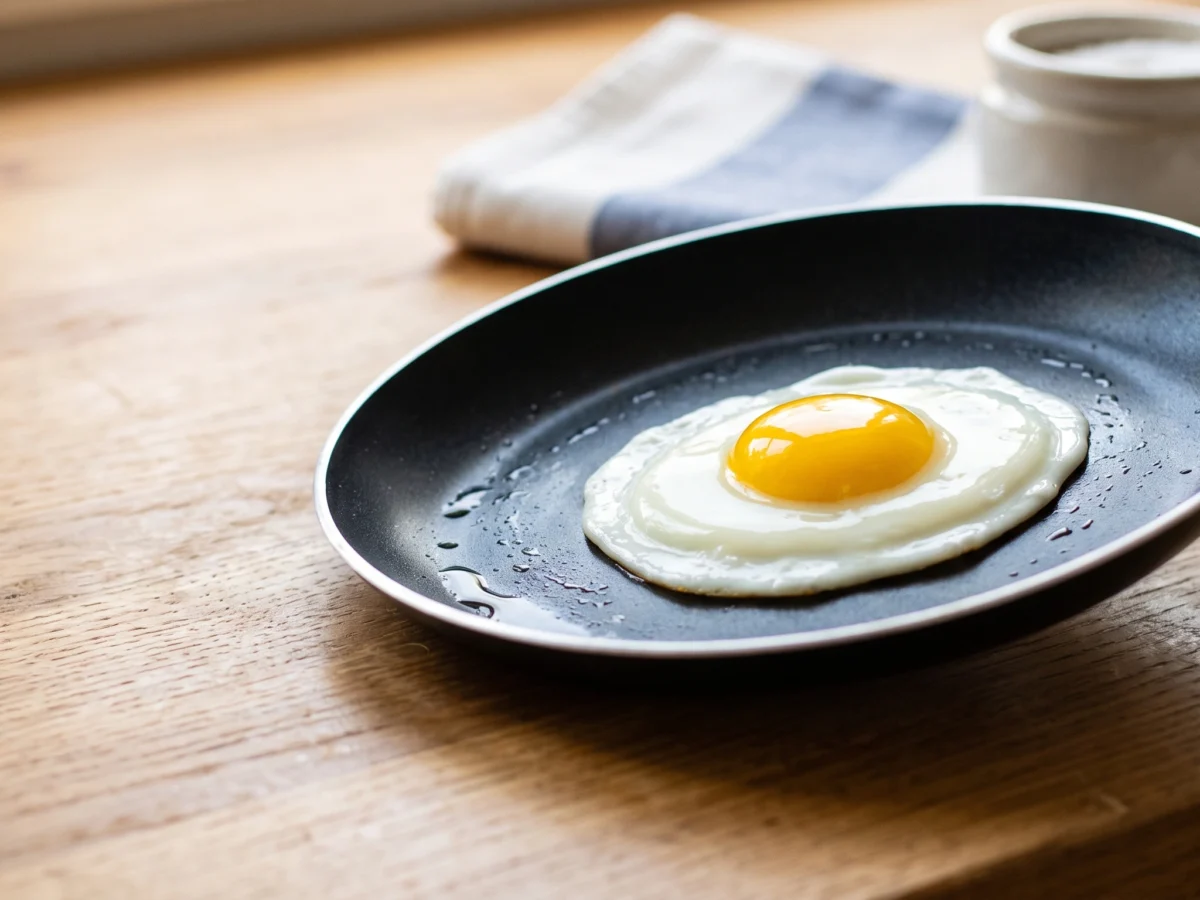
Few kitchen frustrations are as familiar as a beautiful omelet fused to the bottom of the pan. Home cooks blame the pan, the oil, or themselves, and often follow advice that makes things worse. The real reasons eggs stick are simpler than most videos suggest: the pan is too hot, there isn’t enough fat, or the eggs get moved before they’ve set. This guide explains why eggs stick, how to cook them in four types of pan, and when a nonstick pan is simply the better tool. It includes three base recipes (fried, soft scrambled, and a simple omelet), troubleshooting, and the food-safety basics for eggs.
The short answer
- Cook eggs over medium-low heat. Searing temperatures are much too hot for them.
- Preheat the pan briefly, then add enough fat to form a thin, even film, and add the eggs once the butter’s foam settles or the oil shimmers.
- Leave the eggs alone until the whites have set, and lower the heat after they go in.
- A nonstick pan is the easiest option, and there’s no shame in using one for eggs.
- Cook eggs until the whites and yolks are firm if you’re serving anyone in a higher-risk group.
Why eggs stick
As an egg heats, its proteins unfold and bond with each other and with whatever they touch, including bare metal. If the pan is very hot, the proteins set almost instantly and grip the surface before a layer of fat can protect them. If there’s too little fat, the egg is in direct contact with metal. And if you move it too soon, you tear the part that has set but hasn’t yet released. Most sticking comes from one of these three causes: too much heat, too little fat, or too much fiddling. It’s rarely the pan’s fault alone.
The water-droplet trick, and why it misleads for eggs
You may have seen the advice to heat a stainless steel pan until water droplets form a bead and glide across the surface. This is the Leidenfrost effect, and it happens when the pan is well above the temperature most egg dishes need. It can be useful when you’re searing meat, as in our guide to ways to cook meat, but it isn’t the right test for eggs. For eggs, the droplets should sizzle and evaporate quickly instead of dancing, which indicates moderate heat. A good habit is to bring the pan up to temperature, then turn the burner down before adding the fat and eggs, so the pan doesn’t keep climbing in temperature while the eggs cook.
Which pan for eggs?
| Pan | How eggs behave | Heat and fat | Care |
|---|---|---|---|
| Nonstick | The easiest. Eggs release with little fat | Low to medium heat, a little butter or oil | Don’t heat it empty on high, avoid metal tools, and replace it when the coating wears |
| Stainless steel | Works, but less forgiving, so it needs patience | Medium-low heat, generous butter or oil | Soak stuck-on egg, don’t scrape harshly |
| Cast iron | Good once well seasoned, and it holds heat evenly | Slow preheat over medium-low, enough fat | Keep the seasoning intact, dry thoroughly, and oil lightly |
| Carbon steel | Similar to cast iron but lighter, and good for omelets once seasoned | Medium-low heat, enough fat | Season it, and avoid soaking |
For many cooks, the practical answer is a small nonstick pan reserved for eggs, with stainless steel or cast iron for everything else. It isn’t cheating. A nonstick pan lets you cook eggs with less fat and less stress, and it makes good sense as one of the tools in our essential kitchen tools list. Because the coating wears out, treat it as a replaceable item. Keep the heat low to medium, never preheat it empty on high, and ventilate the kitchen, since overheated nonstick coatings can release fumes. If you’d rather avoid nonstick coatings, a well-seasoned carbon steel or cast iron pan is a long-lasting alternative that takes some practice.
The method that works in any pan
- Preheat gently. Warm the pan over medium-low heat. A stainless pan usually needs 2–3 minutes. Cast iron and carbon steel often need 5 minutes or more to heat evenly.
- Add enough fat. Use about 1 teaspoon of butter or oil for 1–2 eggs in an 8–10 inch pan, and more for larger batches, enough to form a thin film over the whole cooking area. Butter adds flavor but browns quickly, so many cooks mix it with a little oil.
- Wait for the signal. With butter, wait until the foam subsides. With oil, wait until it shimmers. Don’t let either smoke.
- Add the eggs and lower the heat. You want a gentle sizzle, not a loud crackle.
- Don’t touch them yet. Wait until the whites turn opaque and the edges release. Shake the pan gently. If the egg slides, it’s ready to move.
- Use a thin spatula. A flexible fish or turner spatula slips under the egg without tearing it.
If an egg is sticking, don’t force it. Lower the heat, wait another 20–30 seconds, and try again. Set times aside and go by how the egg looks and moves, which is the same principle as in our cooking habits guide: let food sit until it releases.
Recipe 1: Fried eggs
Prep time: 2 minutes | Cook time: 3–5 minutes | Serves: 1–2
- 2 large eggs
- 1 teaspoon butter or oil, plus a little more if the pan is large
- Pinch of salt and black pepper
- 1 teaspoon water (optional, for steaming)
- Warm an 8-inch pan over medium-low heat, then add the butter and let the foam settle.
- Crack the eggs gently into the pan, one at a time. Season.
- Cook for 2–3 minutes, without moving them, until the whites are mostly opaque.
- For sunny-side up, add the teaspoon of water, cover with a lid, and steam for 30–60 seconds, until the whites are fully set. For over easy, slip a spatula under the egg, flip it, and cook for 15–30 seconds. For a firmer yolk, cook longer.
- Slide onto a plate and serve right away.
Recipe 2: Soft scrambled eggs
Prep time: 3 minutes | Cook time: 3–5 minutes | Serves: 1–2
- 3 large eggs
- ¼ teaspoon fine salt
- 1 tablespoon butter
- 1 tablespoon milk or cream (optional)
- Whisk the eggs with the salt and milk, if using, until no streaks of white remain.
- Melt the butter in a nonstick or well-seasoned pan over medium-low heat.
- Pour in the eggs. Let them sit for 10–15 seconds, then gently push the set edges toward the center with a spatula, tilting the pan so the liquid egg flows into the gaps.
- Repeat for 3–5 minutes, with brief pauses, until the eggs are mostly set but still look soft and glossy.
- Remove the pan from the heat and move the eggs to a plate right away. They’ll keep cooking from their own heat.
Low heat is the key: high heat makes scrambled eggs rubbery and dry. If you need the eggs fully cooked, keep them on the heat until no visible liquid remains.
Recipe 3: Simple omelet
Prep time: 5 minutes | Cook time: 3–4 minutes | Serves: 1
- 3 large eggs
- ⅛ teaspoon fine salt
- 1 tablespoon butter
- ¼ cup (about 25 g) grated cheese, cooked vegetables, or chopped herbs
- Whisk the eggs and salt together until smooth.
- Melt the butter in an 8-inch nonstick pan over medium-low heat, swirling to coat. Pour in the eggs.
- Stir gently with a spatula for about 30 seconds, until curds begin to form, then stop and let the omelet set for 1–2 minutes, tilting the pan to let liquid egg run underneath.
- When the top is mostly set but still slightly glossy, scatter the filling over one half. Fold the other half over it.
- Slide it onto a plate. The residual heat finishes the center.
When eggs have already stuck
- Stop scrubbing. Add a little hot water to the warm pan, and let it sit for 10–15 minutes so the egg softens.
- Loosen with heat and water. Simmer water in the pan for a few minutes, scraping gently with a wooden or silicone spatula. This works well for cast iron and carbon steel, where you want to protect the seasoning.
- Use gentle abrasion on stainless steel. A paste of baking soda and water on a soft sponge removes stubborn residue.
- Re-oil seasoned pans. After cleaning cast iron or carbon steel, dry it thoroughly and rub on a very thin coat of oil.
Troubleshooting
- The eggs stick: The pan was too hot, there wasn’t enough fat, or the egg was moved too soon. Lower the heat, add a little more fat, and wait until it releases.
- Crispy brown edges and rubbery whites: The heat was too high. Cook on medium-low, and add a lid for the last minute if the top needs to set.
- Runny whites around the yolk: The eggs need a little longer, or a lid and a teaspoon of water to steam the top.
- Dry, crumbly scrambled eggs: They were overcooked or the heat was too high. Take the pan off the heat while the eggs still look slightly wet.
- Torn omelet: It was folded before it set. Wait until the surface is mostly set, and use a thin spatula.
- Food sticks to a new cast iron or carbon steel pan: The seasoning isn’t built up yet. Cook foods with plenty of fat for a while, or use another pan for eggs until the surface improves.
Egg safety
Eggs can carry bacteria such as Salmonella. In the US, keep eggs in the refrigerator, and cook them until the whites are firm and the yolks begin to thicken. For people in higher-risk groups, including young children, pregnant women, older adults, and anyone with a weakened immune system, the USDA advises cooking eggs until both the white and yolk are firm. Egg dishes such as casseroles and quiches should reach 160°F (71°C), which an instant-read thermometer confirms. Wash your hands and tools after handling raw eggs, and don’t leave cooked eggs out for more than 2 hours. See our guide to storing food in the kitchen for egg storage tips. Scrambled eggs are a common first food for children, and our kids meals guide has more breakfast ideas.
FAQ
Do I need a nonstick pan for eggs?
No, but it’s the easiest option. Many cooks keep a small nonstick pan for eggs and use other pans for searing and roasting.
Is the Leidenfrost test useful for eggs?
Not really. It’s a hot-pan test that suits searing. For eggs, use medium-low heat and look for a gentle sizzle.
Should I use butter or oil?
Either works. Butter tastes better but browns faster, so use lower heat or mix in a little oil. Oil has a higher smoke point and is more forgiving.
How much fat is enough?
Enough to form a thin, even film so the eggs sit on fat instead of on bare metal. If they stick, add a little more.
Is nonstick cookware safe?
Used as directed, it’s widely used, but overheating can damage the coating and release fumes. Keep the heat low to medium, don’t preheat it empty on high, avoid metal utensils, and replace the pan when the surface is scratched or worn.
Conclusion
Eggs stick when the pan is too hot, the fat is too thin, or the egg is moved too soon. Turn the heat down, use enough fat, wait until the egg releases, and choose the pan that makes the job easy for you. A nonstick pan is an honest tool for eggs, and stainless steel, cast iron, and carbon steel all work with a little practice. Start with the fried egg recipe at medium-low heat, and adjust from there.