By Harry Cruse | TasteSavory
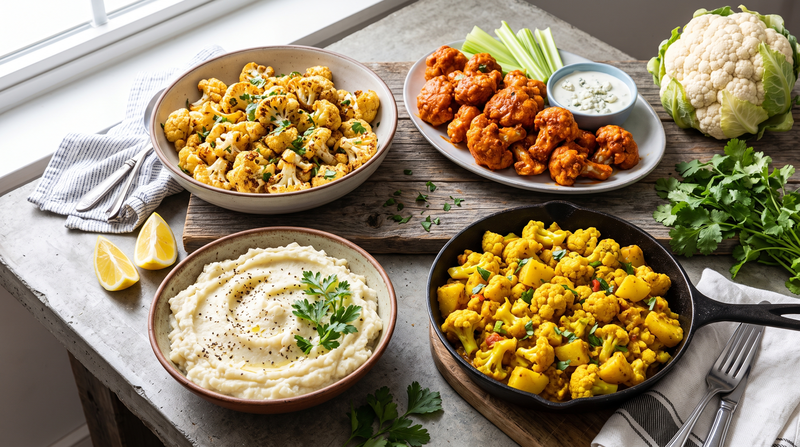
Plain steamed cauliflower has a reputation for being bland, and it’s easy to see why. Cooked in water with nothing added, it’s mild and a little sulfurous. But cauliflower is one of the most versatile vegetables in the kitchen. Roasted until browned, it turns sweet and nutty. Blended into soup, it becomes creamy. Tossed in hot sauce, it stands in for wings, and cooked with spices, it’s the center of a classic curry. This guide shows how to prepare and cook cauliflower ten ways, with four full recipes (roasted, buffalo, mashed, and a curried cauliflower-and-potato skillet), plus storage, freezing, and troubleshooting.
The short answer
- Roasting at high heat, around 425°F (220°C), is the most reliable way to get flavor, because browning adds sweetness and depth.
- Dry the cauliflower, don’t crowd the pan, and cook until the edges are deeply golden.
- Don’t overcook cauliflower in water. It turns mushy and develops a strong smell.
- Season generously, and add acid, such as lemon juice or vinegar, at the end.
- For a creamy dish, steam or roast first, then blend or mash with butter, cream, or cheese.
Choosing and preparing cauliflower
Look for a firm, heavy head with tightly packed, creamy-white florets and fresh green leaves. Avoid heads with brown spots, loose florets, or a strong smell. To prepare it, pull off the outer leaves, cut out the core, and break or cut the head into florets of about the same size, so they cook evenly. Cut through the stem rather than the floret tops to avoid crumbling. The core and the small leaves are edible too: chop the core and roast it with the florets, and roast the tender leaves until crisp. Wash the florets, and dry them thoroughly if you plan to roast or fry, since water prevents browning, as we explain in flavor and color in cooking. One medium head, about 2 pounds (900 g), yields roughly 4–6 cups of florets.
Ten ways to cook cauliflower
| Method | Heat and time (approximate) | Best for |
|---|---|---|
| Roasting florets | 425°F (220°C), 25–30 minutes | A side dish, grain bowls, or a base for soup |
| Roasting whole | 400°F (200°C), about 60–75 minutes | A dramatic centerpiece with a seasoned butter or sauce |
| Cauliflower steaks | 425°F, 20–25 minutes, flipping once | A vegetarian main course |
| Air frying | About 400°F (200°C), 10–12 minutes, shaking halfway | Small batches, with crisp edges |
| Steaming | 5–7 minutes for florets | Mashing, purees, or a quick side with butter |
| Sautéing | Medium-high heat, 8–10 minutes | Curries, stir-fries, and skillet dishes |
| Grilling | Medium heat, thick slices, about 5–6 minutes per side | Smoky steaks and kebabs |
| Blending into soup | Simmer until very tender, then blend | Creamy soups without much cream |
| Mashing or pureeing | Steam or boil for 10–12 minutes, until very tender | A lighter alternative to mashed potatoes |
| Raw or pickled | No cooking | Crudités, salads, and refrigerator pickles |
Times depend on the size of the pieces, your oven, and your pan, so go by color and tenderness, and check early.
Recipe 1: Basic roasted cauliflower
Prep time: 10 minutes | Cook time: 25–30 minutes | Serves: 4
Ingredients
- 1 large head cauliflower (about 2 pounds / 900 g), cut into bite-sized florets
- 3 tablespoons olive oil
- ¾ teaspoon fine salt
- ¼ teaspoon black pepper
- Lemon wedge, to serve
Instructions
- Heat the oven to 425°F (220°C). Place a large rimmed sheet pan in the oven while it heats, if you like, for extra browning.
- Dry the florets well. Toss them in a bowl with the oil, salt, and pepper until evenly coated.
- Spread them on the pan in a single layer, with space between pieces. Use two pans if needed, since crowding steams them instead of browning.
- Roast for 25–30 minutes, tossing once halfway through, until the edges are deeply golden brown and the thickest stems are tender when pierced with a fork.
- Squeeze lemon juice over the top and serve hot.
Variations:
- Garlic and Parmesan: Toss with 3 minced garlic cloves for the last 10 minutes of roasting, and ¼ cup grated Parmesan for the last 5 minutes.
- Curry: Add 1½ teaspoons curry powder to the oil, and serve with a yogurt sauce, as in our six essential sauces.
- Smoky: Add 1 teaspoon smoked paprika and a pinch of cayenne.
- Tahini and lemon: Drizzle with a mix of tahini, lemon juice, garlic, and water.
- Chimichurri: Spoon the herb sauce from our sauces guide over the top.
Recipe 2: Oven-roasted buffalo cauliflower
Prep time: 10 minutes | Cook time: 25–30 minutes | Serves: 4 as an appetizer
Ingredients
- 1 large head cauliflower, cut into bite-sized florets
- 2 tablespoons olive oil
- ½ teaspoon fine salt
- ⅓ cup (80 ml) hot sauce, such as a Louisiana-style one
- 2 tablespoons melted butter
- Ranch or blue cheese dressing, and celery sticks, to serve
Instructions
- Heat the oven to 425°F (220°C). Toss the florets with the oil and salt, and spread them on a sheet pan.
- Roast for 15 minutes, until starting to brown.
- Whisk the hot sauce and melted butter together in a large bowl. Add the hot florets and toss to coat.
- Return them to the pan and roast for 10–15 minutes more, until the edges are crisp and the sauce clings.
- Serve right away with the dressing and celery.
Notes: This is a lighter, simpler version that doesn’t need frying. For a crisper coating, dip the florets in a thin batter of flour and milk, then roll them in panko before roasting. They’re a good addition to a party spread, as in our crowd-pleasing party appetizers.
Recipe 3: Creamy mashed cauliflower
Prep time: 10 minutes | Cook time: 15 minutes | Serves: 4
Ingredients
- 1 large head cauliflower (about 2 pounds / 900 g), cut into florets
- 2 tablespoons butter
- ¼ cup (60 ml) heavy cream, sour cream, or cream cheese
- 1 small garlic clove, grated (optional)
- ½ teaspoon fine salt, plus more to taste
- Black pepper, to taste
- ¼ cup grated Parmesan (optional)
Instructions
- Steam the florets for 10–12 minutes, or boil them in salted water for the same time, until very tender when pierced with a fork.
- Drain them well. Spread them on a clean kitchen towel, or return them to the hot pot for a minute, so the excess moisture steams off. Wet cauliflower makes a watery mash.
- Blend in a food processor, or mash with a potato masher, with the butter, cream, garlic, salt, and pepper until smooth. Stir in the Parmesan.
- Taste, and adjust the seasoning.
Notes: The mash is softer and milder than mashed potatoes, so treat it as its own dish instead of an exact substitute. It goes well with gravy, steak, or braised meat. If you use a blender for hot cauliflower, fill it no more than halfway and vent the lid, as with hot soup. Roasting the cauliflower first, instead of steaming, gives a deeper, nuttier flavor.
Recipe 4: Curried cauliflower and potato skillet (aloo gobi style)
Prep time: 20 minutes | Cook time: 30 minutes | Serves: 4
Ingredients
- 3 tablespoons neutral oil
- 1 teaspoon cumin seeds
- 1 medium onion, sliced
- 3 cloves garlic, minced
- 1 tablespoon grated fresh ginger
- 1 medium tomato, chopped, or ½ cup canned diced tomatoes
- 1 teaspoon ground turmeric
- 1 teaspoon ground coriander
- ½ teaspoon ground cumin
- ¼–½ teaspoon cayenne or chili powder (optional)
- 2 medium potatoes (about 12 ounces / 340 g), cut into ¾-inch cubes
- 1 medium head cauliflower, cut into florets
- 1 teaspoon fine salt
- ½ cup (120 ml) water
- Lemon juice and chopped cilantro, to finish
Instructions
- Heat the oil in a large, deep skillet or Dutch oven over medium heat. Add the cumin seeds and cook for 30 seconds, until they sizzle and smell fragrant.
- Add the onion and cook for 5–6 minutes, until soft and golden. Add the garlic and ginger and cook for 1 minute.
- Add the tomato and ground spices. Cook for 2–3 minutes, stirring, until the tomato breaks down and the spices smell toasty. This step follows the same logic as in our guide to toasting and blooming spices.
- Add the potatoes, cauliflower, salt, and water. Stir to coat.
- Cover and cook over medium-low heat for 15–20 minutes, stirring occasionally, until the potatoes and cauliflower are tender. Uncover and cook for a few more minutes if there’s too much liquid.
- Finish with lemon juice and cilantro. Serve with rice or flatbread.
Notes: Cut the potatoes and cauliflower to similar sizes so they finish together. Add a little more water if the pan looks dry.
More ways to use a head of cauliflower
- Cauliflower steaks: Slice the head into 1-inch slabs through the core, brush with oil, season, and roast at 425°F (220°C) for 20–25 minutes, flipping once. Add a drizzle of herb sauce. The outer pieces that fall off can be roasted along with them.
- Whole roasted: Trim the head so it sits flat, rub it all over with butter or oil and seasonings, and roast at 400°F (200°C) for about 60–75 minutes, until deeply browned and tender in the center.
- Cauliflower soup: Roast or simmer 1 head of florets with 1 onion in 4 cups of broth until very tender, then blend until smooth. Finish with a splash of cream, lemon, and thyme. The method matches our roasted butternut squash soup, and if it’s too thin, see our guide to thickening soup.
- Cauliflower cheese or gratin: Blanch the florets for 4–5 minutes, drain well, arrange in a baking dish, and cover with a cheese sauce made from the béchamel in our sauces guide with a cup of shredded cheddar stirred in. Bake at 375°F (190°C) for about 25 minutes, until bubbling and golden.
- Cauliflower rice: Pulse florets in a food processor until they look like rice, then sauté in a little oil for 5–8 minutes, until just tender. Use it in stir-fries and bowls. Squeeze out extra moisture if it’s wet.
- Raw: Serve small florets with a dip, or chop finely into salads for a mild, peppery crunch.
- Quick pickles: Pack florets in a jar with sliced onion and a warm brine of vinegar, water, sugar, and salt. Refrigerate for at least a day, and use within a couple of weeks.
Storing and freezing cauliflower
Keep an uncut head in the refrigerator, loosely wrapped, for about a week. Cut florets keep for 3–4 days in a container. Cooked cauliflower keeps 3–4 days, and it should be refrigerated within 2 hours of cooking. To freeze raw cauliflower, blanch the florets in boiling water for about 3 minutes, cool them in ice water, drain and dry them well, and freeze them in a single layer before bagging. They keep for roughly 3–6 months, and they’re best used in cooked dishes, since the texture softens. Riced raw cauliflower can be frozen flat in bags. See our guide to storing food in the kitchen for more details.
Troubleshooting
- Soggy or mushy: It was overcooked, or the pan was crowded. Roast hot, use two pans, and check early.
- Bland: It needs more salt, a seasoning blend, and acid. Roast until browned, then finish with lemon juice, vinegar, or a sauce.
- Strong smell: Boiling or steaming too long releases sulfur compounds. Cook it only until tender, or roast instead.
- Burnt tips but raw centers: The pieces were uneven or the heat was too high. Cut pieces to the same size, and lower the heat slightly.
- Watery mash or puree: The cauliflower held too much water. Drain it well, steam off the moisture, and squeeze in a towel.
- Buffalo sauce makes it soggy: Toss it in the sauce while it’s hot, and roast again briefly so the sauce sets.
- Won’t crisp in the air fryer: The basket was overfilled. Cook in batches, and shake halfway.
FAQ
What’s the best way to cook cauliflower?
Roasting at high heat is the most reliable method for flavor and texture, but mashing, soup, and curry are all excellent.
Can you eat cauliflower raw?
Yes. Raw cauliflower is mild and crunchy, and works well with dips and in salads.
Can I eat the leaves and the core?
Yes. The tender leaves roast well, and the core can be chopped and cooked with the florets or used in soup.
Is mashed cauliflower the same as mashed potatoes?
No. It’s lighter and milder, so it tastes best with plenty of butter, seasoning, and a sauce or gravy.
How do I stop cauliflower from smelling?
Don’t overcook it. Roasting and quick sautéing produce less odor than long boiling.
Can I roast frozen cauliflower?
Yes, but it releases more water. Roast at a high temperature, spread out well, and don’t thaw first.
Conclusion
Cauliflower is only boring if it’s cooked without a plan. Roast it hot until it browns, mash or blend it for something creamy, spice it for a curry, or toss it in hot sauce for a snack. Start with the basic roasted recipe, then try the variations. With two heads on hand, you can roast one and turn the other into soup or the skillet curry, and you’ll never think of cauliflower as a bland vegetable again.