By Harry Cruse | TasteSavory
A good kids’ dessert should be easy enough to make with small helpers, gentle in flavor, and soft enough for young eaters. These apple oat cookies fit that description. Grated apple keeps them tender and lightly sweet, oats give them a chewy bite, and cinnamon adds warmth without heat. The dough comes together in one bowl with a whisk and a spatula, and there are plenty of jobs for children to do. Below you’ll find the reasoning behind each step, how to tell when the cookies are done, ways to fix common problems, and safety notes for serving young children.
Why this recipe works
Three choices shape the texture. Grated apple adds moisture, so the cookies stay soft for days instead of turning crisp, but it has to be squeezed dry first, or the dough turns sloppy and puffy. Rolled oats provide structure and chew, so the cookies don’t fall apart the way an all-flour cookie can when it’s very soft. Brown sugar contributes moisture and a mild caramel flavor, so the recipe needs less sugar overall than many cookies do. The dough is mixed gently after the flour goes in, following the same principle we explain in our baking tips for beginners: less mixing keeps the crumb tender.
Ingredients
Makes about 18 cookies
- 1 medium apple (about 6 ounces / 170 g), peeled and finely grated
- ½ cup (115 g) unsalted butter, softened
- ½ cup (100 g) packed light brown sugar
- ¼ cup (50 g) granulated sugar
- 1 large egg
- 1 teaspoon vanilla extract
- 1 cup (125 g) all-purpose flour
- 1½ cups (135 g) old-fashioned rolled oats
- 1 teaspoon ground cinnamon
- ½ teaspoon baking soda
- ¼ teaspoon fine salt
Ingredient notes
- Apple: Any firm, sweet-tart apple works, such as Honeycrisp, Gala, or Fuji. After grating, wrap the apple in a clean kitchen towel and squeeze out the liquid. You should end up with about ⅔ cup of fairly dry apple.
- Butter: It should be cool room temperature, soft enough to dent when pressed but not greasy. Butter that’s too warm makes cookies spread.
- Oats: Old-fashioned oats give the best chew. Quick oats also work and make a softer, more uniform cookie. Steel-cut oats don’t soften enough, so don’t use them here.
- Flour: Spoon it into the measuring cup and level it off, or weigh it. Too much flour is the most common reason cookies turn out dry.
How to make it
- Get ready. Heat the oven to 350°F (175°C) and line two baking sheets with parchment. Grate the apple and squeeze it dry, and let the butter soften on the counter.
- Cream the butter and sugars. In a large bowl, beat the butter with both sugars for 1–2 minutes with a whisk or hand mixer, until it looks pale and a little fluffy. Beat in the egg and vanilla until smooth.
- Mix the dry ingredients. In a separate bowl, stir together the flour, oats, cinnamon, baking soda, and salt, so the baking soda is evenly spread.
- Combine. Add the dry mixture to the butter mixture and stir with a spatula just until there are no dry streaks. Fold in the apple. The dough should be thick and scoopable, and a little sticky.
- Chill if it’s soft. If the dough feels loose or greasy, refrigerate it for 20–30 minutes. Cold dough spreads less.
- Shape. Scoop rounded 2-tablespoon mounds onto the sheets, about 2 inches apart. These cookies don’t spread much, so press each one down gently to about ½ inch thick with damp fingers or the back of a spoon.
- Bake. Bake one sheet at a time on the center rack for 12–14 minutes, until the edges are set and lightly golden and the centers look slightly soft. Cool on the sheet for 5 minutes, then move them to a rack.
How to know they’re done
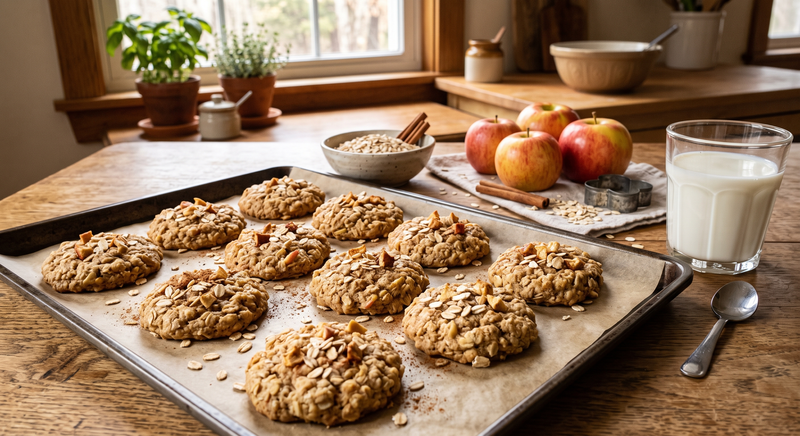
The edges should be firm and pale golden, and the tops should look matte instead of wet. The centers can still look a little soft, because the cookies continue to set as they cool on the hot sheet. If the whole surface has turned deep brown, they’re overbaked and will be dry once cool. When you’re unsure, take the first sheet out at 12 minutes and adjust the time for the next batch.
Where children can help
Baking together works best when each job matches the child’s age and skill. Adults should handle the oven, the hot sheets, and the box grater, which is sharp.
- Younger children: Stir the dry ingredients, help level the flour, scoop dough onto the sheet, and press the cookies flat.
- Older children: Measure ingredients, crack the egg into a separate bowl first so any shell is easy to fish out, and mix the dough.
Everyone should wash their hands before starting. The dough contains raw egg and raw flour, so it’s best not to taste it, as with our banana bread batter. Bake one cookie first as a “taste test” instead.
Troubleshooting
- Cookies spread too thin: The butter was too warm, the dough wasn’t chilled, or the baking sheet was hot from an earlier batch. Chill the dough and use a cool sheet for each batch.
- Puffy and cake-like: There was too much moisture from the apple, or too much flour. Squeeze the grated apple thoroughly and measure the flour carefully.
- Dry or crumbly: They were overbaked, or there was too much flour. Bake until the edges are just golden, and spoon and level the flour.
- Bland: Check that the salt was added and that the cinnamon is fresh. Old ground spices lose their flavor over time.
- Sticking or dark bottoms: Use parchment, and avoid very dark pans, which brown the bottoms faster.
Variations and substitutions
These are suggestions rather than tested guarantees.
| Change | How to do it | What changes |
|---|---|---|
| Pear instead of apple | Use a ripe but firm pear, grated and squeezed | Softer, milder sweetness |
| Half whole wheat flour | Replace ½ cup of the all-purpose flour with whole wheat | Nuttier flavor and a denser cookie |
| Dairy-free | Use plant-based baking sticks in place of butter | Texture varies by brand |
| Chocolate chips | Fold in ⅓ cup mini chocolate chips | Sweeter and a bit richer; best for children old enough to chew well |
| Granulated sugar only | Replace the brown sugar with more granulated sugar | Paler, crisper, and less moist |
Leave out nuts and raisins for children under 4, since both are choking hazards, and skip nuts entirely if there are any allergies in the household.
Serving suggestions
Serve the cookies slightly warm with a glass of milk, alongside sliced fruit, or with a spoonful of plain yogurt for dipping. A small cookie also makes a good dessert at the end of a meal. Many feeding specialists suggest offering a modest dessert as a normal part of dinner, rather than a prize for finishing vegetables, as we discuss in our kids meals guide. For lunchboxes, let the cookies cool completely before packing them in an airtight container.
Serving safely to young children
For children under 4, break cookies into small pieces, and stay with them while they eat. Children should sit while eating instead of running or playing with food in their mouths. These cookies are soft and made without whole nuts, but every child is different, so follow your pediatrician’s guidance on textures and allergens. See the safety section of our kids meals guide for more.
Storage and freezing
Store the cooled cookies in an airtight container at room temperature for up to 2 days, or in the refrigerator for up to 5 days. Because the apple keeps them moist, the refrigerator is the safer choice for longer storage. To freeze, wrap the baked cookies in a tightly sealed bag or container for up to about 3 months, and thaw at room temperature. You can also freeze scooped, unbaked dough balls on a tray, transfer them to a bag, and bake from frozen at 350°F (175°C), adding a couple of minutes. See our meal prep guide for more on freezing basics.
Recipe card
Soft Apple Oat Cookies for Kids
Prep time: 20 minutes | Cook time: 28 minutes (two batches) | Total time: about 50 minutes | Makes: about 18 cookies
Ingredients
- 1 medium apple (about 6 oz / 170 g), peeled, finely grated, and squeezed dry
- ½ cup (115 g) unsalted butter, softened
- ½ cup (100 g) packed light brown sugar
- ¼ cup (50 g) granulated sugar
- 1 large egg
- 1 tsp vanilla extract
- 1 cup (125 g) all-purpose flour
- 1½ cups (135 g) old-fashioned rolled oats
- 1 tsp ground cinnamon
- ½ tsp baking soda
- ¼ tsp fine salt
Instructions
- Heat the oven to 350°F (175°C). Line two baking sheets with parchment.
- Beat the butter and both sugars for 1–2 minutes, until pale. Beat in the egg and vanilla.
- Stir the flour, oats, cinnamon, baking soda, and salt together. Add to the butter mixture and stir until no dry streaks remain.
- Fold in the apple. Chill the dough for 20–30 minutes if it feels soft.
- Scoop 2-tablespoon mounds about 2 inches apart and press each to about ½ inch thick.
- Bake one sheet at a time for 12–14 minutes, until the edges are set and lightly golden. Cool 5 minutes on the sheet, then transfer to a rack.
Notes
Squeeze the grated apple thoroughly. Don’t taste the raw dough. Leave out nuts and raisins for children under 4. Baking times vary by oven and pan.
FAQ
Can toddlers eat these cookies?
They’re soft, but children under 4 should have them broken into small pieces and be supervised while eating. Check with your pediatrician if your child has allergies or feeding concerns.
Can I reduce the sugar?
You can try a small reduction, but sugar affects both spread and texture, so the cookies may turn out cakier and paler. Change it gradually, and expect the result to differ.
Can I make the dough ahead?
Yes. Cover it and refrigerate for up to 2 days, or freeze scooped dough balls. Let refrigerated dough sit for a few minutes before scooping.
Can I use applesauce instead of grated apple?
It’s possible, but the dough will be wetter and the texture softer. If you try it, use unsweetened applesauce, in a smaller amount, and watch the baking time closely.
Conclusion
These cookies work because the details are simple: squeeze the apple dry, measure the flour carefully, mix gently, and take them out while the centers still look slightly soft. They’re gentle on flavor, easy for children to help with, and freeze well for busy weeks. Make a batch together this weekend, and change one thing next time, whether it’s the fruit, the flour, or the mix-ins.