
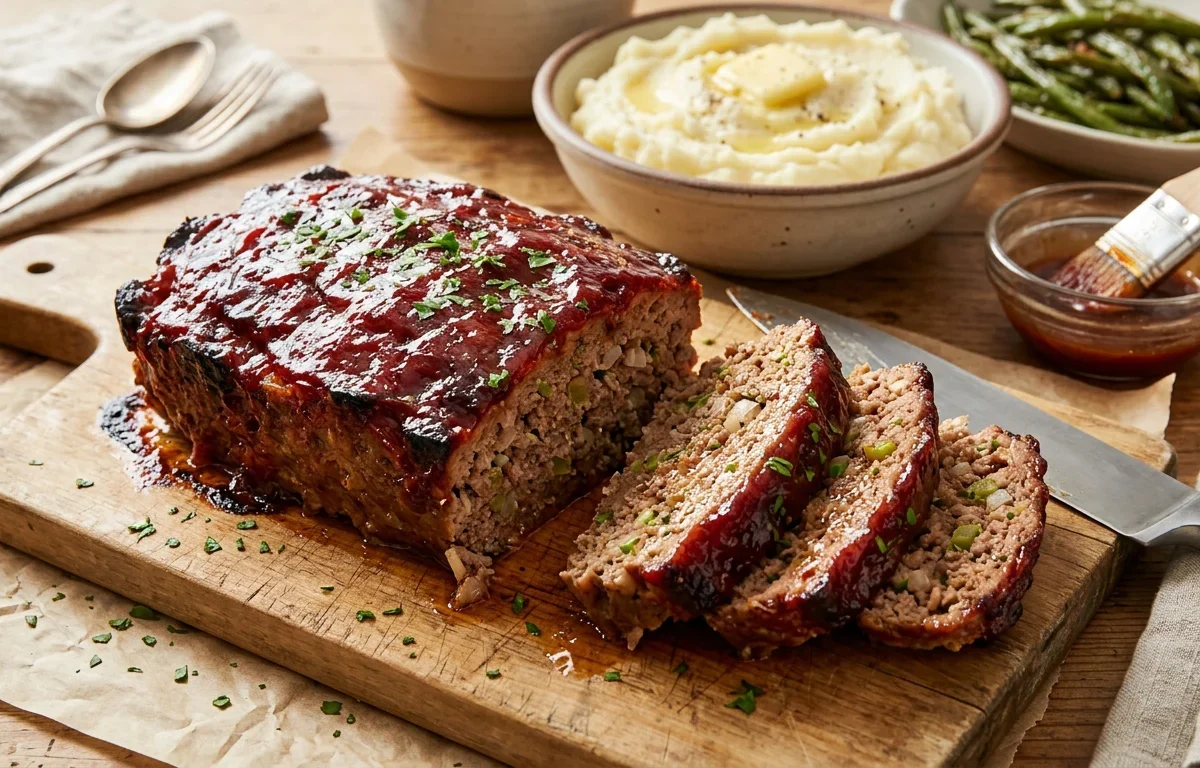
If you have ever dealt with a dry, crumbly meatloaf, this viral recipe is about to change your dinner routine completely. By combining a secret milk-soaked cracker panade with a beef-and-lamb blend, every single slice stays remarkably juicy and tender. Topped with a sticky, tangy brown sugar ketchup glaze, this is the ultimate comforting home-style meal.
Why You'll Love This Recipe
- Uses a milk-and-cracker panade technique that locks in moisture so the meatloaf never dries out.
- Combines ground beef and lamb for a rich, deeply savory depth of flavor.
- Features a sticky, glossy ketchup and brown sugar glaze that caramelizes under the broiler.
- Simple prep with everyday pantry ingredients and a free-form shape that yields a fantastic crust-to-interior ratio.
Ingredients You'll Need (and Why)
Ground Beef and Lamb: Using an 80% or 85% lean beef provides enough natural fat to keep things juicy, while the addition of ground lamb introduces extra richness and tenderness that beef alone lacks.
Crackers and Milk (Panade): Soaking crushed crackers in milk creates a panade, which traps moisture inside the protein matrix so the meat cooks up exceptionally tender rather than dense.
Onion, Celery, and Garlic: Sautéing these aromatics first softens their texture and mellows their raw bite, building a sweet, savory flavor foundation throughout the loaf.
Worcestershire Sauce and Mustard: These umami and acid-rich ingredients boost the savory backbone of the meat mixture, balancing the richness of the lamb and beef.
How to Make It
Building the Flavor Base
Sautéing your onions, celery, and garlic in butter before adding them to the meat mixture is a crucial step. It removes the harsh raw bite of the vegetables and softens them so they disappear seamlessly into the texture of the meatloaf while releasing sweet, savory aromatics.
The Panade Technique
Instead of adding dry breadcrumbs straight to the meat, soaking crushed crackers in whole milk creates what chefs call a panade. This wet mixture holds onto moisture as the meat cooks, preventing proteins from tightening up too much and ensuring a sliceable, melt-in-your-mouth interior.
Shaping, Glazing, and Roasting
Shaping the meat mixture freely on a rimmed baking sheet—rather than cramming it into a loaf pan—allows the heat to circulate all around the loaf, creating delicious caramelized edges. Applying the sweet and tangy glaze in stages builds a sticky, glossy crust without burning the sugars.
Success Tips
- Do not overmix the meat when combining ingredients. Handle it gently just until incorporated to keep the texture tender instead of sausage-like.
- Let the onion and celery cool down slightly before mixing them into the raw eggs and meat to prevent cooking the eggs prematurely.
- Use an instant-read meat thermometer inserted into the thickest part of the center. Pull it out when it hits 160°F (71°C) to ensure it is fully cooked without drying out.
- Do not skip the 10 to 15-minute resting period after baking. Cutting into hot meatloaf immediately will cause all the delicious juices to run out onto the board.
Variations
- Substitute ground turkey for the ground lamb for a lighter loaf, adding an extra pinch of garlic and dried herbs to boost the seasoning.
- Swap Saltine crackers for Ritz crackers if you prefer a slightly buttery, richer crumb profile.
Storage & Make-Ahead
Fridge: Store leftover sliced meatloaf in an airtight container in the refrigerator for up to 3 to 4 days.
Freezer: Freeze baked slices or the whole leftover loaf wrapped tightly in plastic wrap and aluminum foil for up to 2 months. Thaw overnight in the fridge before reheating.
FAQ
Why did my meatloaf fall apart?
Meatloaf usually falls apart if there aren't enough binders (like eggs and cracker crumbs) or if it hasn't had time to rest after baking. Letting it sit for 10–15 minutes allows the proteins and fats to firm up so clean slices hold their shape.
Can I bake this in a loaf pan?
Yes, you can press the mixture into a standard 9×5-inch loaf pan. However, baking it free-form on a rimmed baking sheet allows excess fat to drain away and gives you more surface area for that delicious sticky glaze.
What can I use instead of whole milk for the panade?
You can use low-fat milk, half-and-half, or even plain unsweetened almond milk in a pinch. The goal is just to hydrate the cracker crumbs so they retain moisture during baking.
Special Tools
Affiliate linksThe equipment that makes this recipe easier. Optional, but it helps.
As an Amazon Associate we earn from qualifying purchases. Links below are affiliate links, at no extra cost to you.