

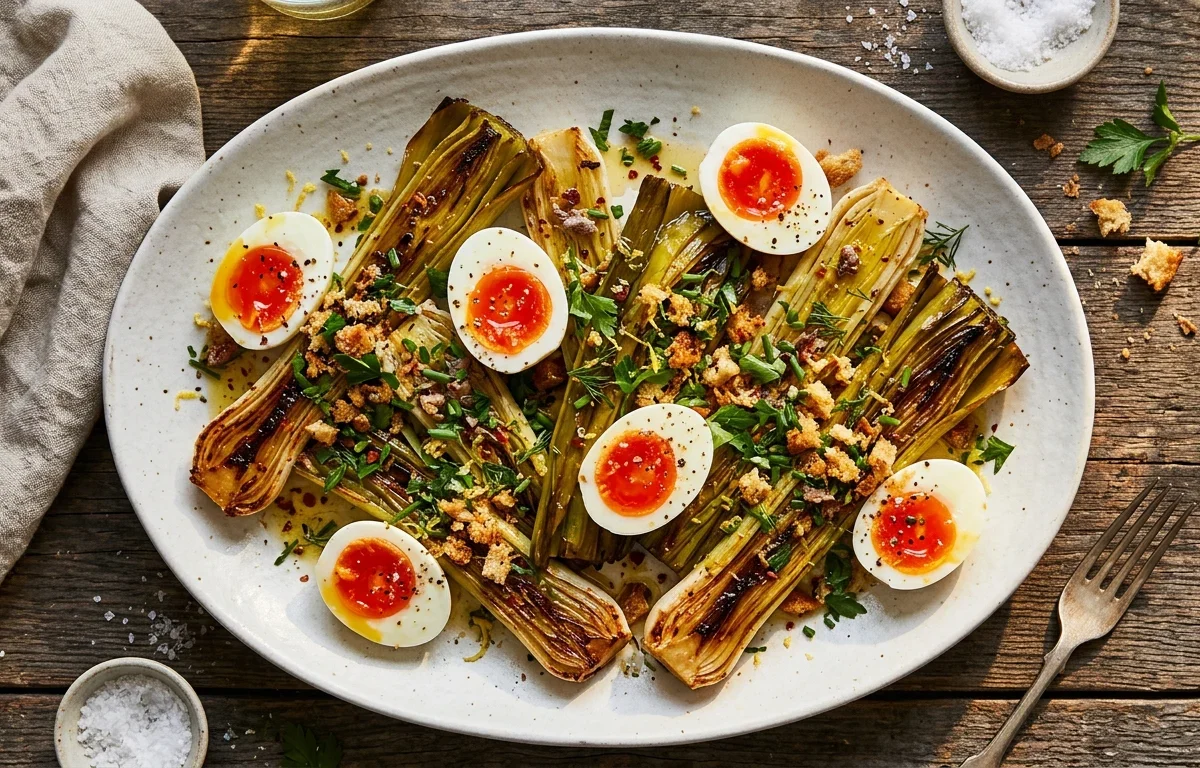
If you usually only use leeks as a quiet background flavor in soups, this recipe will change how you see them. Roasting leeks at a high temperature caramelizes their natural sugars, turning them meltingly tender with deeply savory, charred edges. Paired with jammy soft-boiled eggs and a bright, punchy anchovy-lemon dressing, it is a surprisingly easy dish that feels like it belongs in a rustic bistro.
Why You'll Love This Recipe
- High-heat roasting transforms fibrous leeks into a melt-in-your-mouth texture with rich, caramelized edges.
- The umami-heavy anchovy dressing cuts right through the sweet, mellow richness of the leeks.
- Soft-boiled eggs with jammy yolks double as a creamy sauce when you break them open at the table.
- Uses simple everyday ingredients to create a sophisticated, restaurant-quality presentation.
- Flexible enough to serve as a warm vegetarian main or an impressive side dish for roasted meats.
Ingredients You'll Need (and Why)
Leeks: Leaving the root intact holds the layers together while roasting, ensuring the leeks char nicely without falling apart into a pile of ribbons.
Anchovy Fillets: When minced into a paste, anchovies don't taste fishy; instead, they melt into the oil and release a deep, savory umami backbone that elevates the lemon and olive oil.
Lemon: Both the zest and freshly squeezed juice provide a sharp, bright acidity that cuts right through the rich olive oil and naturally sweet, roasted alliums.
Soft-Boiled Eggs: The runny, jammy yolks act as a luxurious, rich sauce when pierced, balancing the sharp dressing and soft leeks.
How to Make It
Cleaning and Preparing the Leeks
Leeks grow in sandy soil, which frequently gets trapped tightly between their layered leaves. Halving them lengthwise while keeping the root intact lets you fan the layers open under cold running water to wash away all grit without destroying the structure of the vegetable. Drying them thoroughly before oiling is crucial so they actually roast and caramelize in the oven rather than steam.
Achieving Tender, Caramelized Roasting
Starting the leeks cut-side down on a hot baking sheet encourages direct contact browning. As they roast at 400°F, the natural sugars concentrate and caramelize, while the moisture inside steams the vegetable until it is meltingly tender from root to tip.
Emulsifying the Anchovy Dressing
Whisking the minced anchovies directly with lemon juice, garlic, and olive oil creates a bright, cohesive vinaigrette. The salt from the anchovies and the acid from the lemon juice pull double duty, seasoning the mild-mannered leeks and brightening up the richness of the eggs.
Success Tips
- Make sure your leeks are completely dry after washing; lingering surface water will cause them to steam in the oven instead of developing those coveted golden-brown, charred edges.
- Mince or mash your anchovies into a smooth paste using the flat side of a chef's knife so they seamlessly emulsify into the oil rather than leaving chunky pieces in the dressing.
- Keep a close eye on the bake time as leek thickness can vary greatly; use a fork to test the thickest part near the root to ensure they are completely tender before taking them out.
Variations
- Swap standard soft-boiled eggs for soy-marinated ramen-style eggs for an extra layer of savory depth.
- Use toasted chopped hazelnuts or pine nuts instead of breadcrumbs if you want a different type of crunch.
Storage & Make-Ahead
Fridge: Store leftover roasted leeks and dressing separately in airtight containers in the refrigerator for up to 2 days. Reheat the leeks gently in a skillet or low oven before assembling with fresh eggs.
FAQ
Can I make this recipe vegetarian?
To make it vegetarian, you can omit the anchovies and substitute a splash of soy sauce or capers for that savory, salty kick in the dressing, though the classic flavor profile relies heavily on the anchovy paste.
Why do I need to keep the root intact?
The root acts as an anchor that holds all the delicate layers of the leek together. Without it, the leeks will fall apart into loose ribbons when you wash, flip, and transfer them.
How do I know when the leeks are fully cooked?
You can test them by poking the thickest part of the leek near the root with a fork or knife tip. It should slide through effortlessly with no firm resistance, and the edges should be deeply golden and slightly charred.
Special Tools
Affiliate linksThe equipment that makes this recipe easier. Optional, but it helps.
As an Amazon Associate we earn from qualifying purchases. Links below are affiliate links, at no extra cost to you.