
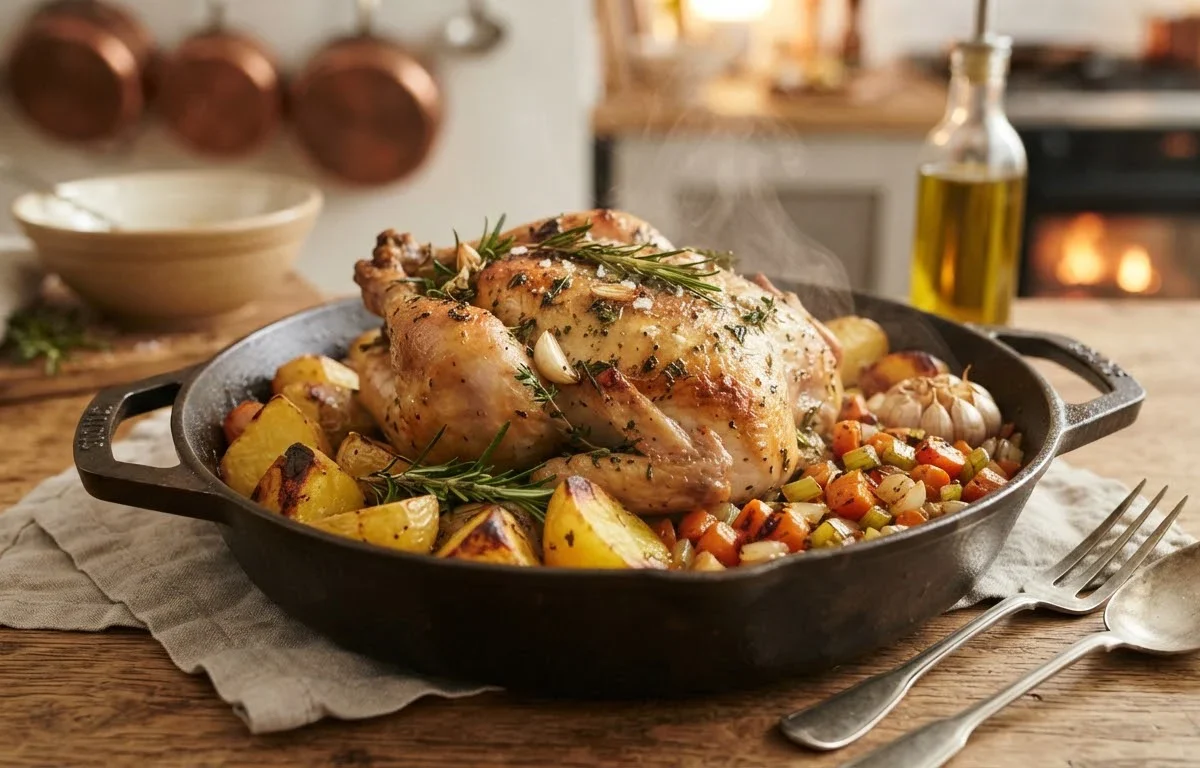
Roasting a whole chicken doesn't have to mean a mountain of dirty dishes or a complicated juggling act in the kitchen. By layering your vegetables and potatoes right in a large cast iron skillet with the bird, everything cooks together in harmony while the drippings build an effortless, deeply savory pan gravy. It is a patient, comforting process that rewards you with ultra-juicy meat and a complete dinner from a single pan.
Why You'll Love This Recipe
- Minimal cleanup thanks to a true single-skillet cooking method that handles the meat, veggies, and gravy base all at once.
- Built-in side dishes as the potatoes and mirepoix roast directly in the delicious chicken drippings.
- A two-stage roasting temperature that delivers crispy skin while keeping the breast meat exceptionally tender and juicy.
- An effortless homemade pan gravy created right in the skillet using the leftover roasted vegetables and lemony chicken broth.
Ingredients You'll Need (and Why)
Whole chicken (4 lb): Choosing a bird around four pounds ensures it roasts evenly within a reasonable window without the breast meat drying out before the thighs reach a safe temperature.
Mirepoix (Onions, carrots, celery): This classic aromatic trio acts as a natural roasting rack for the chicken while melting down to infuse the pan sauce with deep, savory sweetness.
Low-sodium chicken broth and lemon juice: A splash of acid cuts through the rich chicken fat, helps deglaze the browned bits from the bottom of the skillet, and builds a complex, balanced gravy.
Flour: Whisked into the warm pan drippings and broth, flour acts as a thickening agent that transforms the flavorful liquid into a glossy, clinging gravy.
How to Make It
Bed of Aromatics and Meat Prep
Starting with a hot oven is the secret to getting crispy skin and jumpstarting the cooking process. Spreading the diced onions, carrots, and celery across the bottom of your skillet creates a protective vegetable trivet that keeps the bottom of the chicken from burning while capturing every drop of rendered fat. Patting the chicken completely dry before oiling and seasoning ensures the skin crisps up instead of steaming.
The Two-Stage Roast
By beginning at a high temperature of 425°F, we lock in juices and crisp the exterior. Dropping the heat down to 350°F after fifteen minutes allows the interior of the chicken to cook through gently without scorching, while giving the potatoes tucked around the edges time to become tender on the inside and golden on the outside.
Building the Pan Gravy
The magic of this recipe happens after the chicken leaves the pan. By utilizing the roasted mirepoix and lemony broth together, you extract all those concentrated roasted flavors right into your liquid base. Whisking flour directly into the warm fats and strained broth creates a quick roux that thickens into a rich, velvety gravy without the need for complex stocks.
Success Tips
- Make sure to thoroughly pat the chicken skin dry with paper towels—any surface moisture will cause the skin to steam and soften rather than turn golden and crisp.
- Use an instant-read meat thermometer inserted into the thickest part of the thigh (without touching bone) to verify the 165°F (74°C) internal temperature rather than guessing based on time alone.
- If your gravy thickens up too quickly or becomes overly thick when you simmer it with the flour, don't panic—just whisk in a small splash of water or chicken stock to thin it out to your preferred consistency.
- Keep a close eye on the oven temperature drop; switching promptly from 425°F to 350°F prevents the exterior of the bird from over-browning while the interior finishes cooking.
Storage & Make-Ahead
Fridge: Store leftover carved chicken, potatoes, and vegetables in airtight containers in the refrigerator for up to 3 to 4 days. Keep the gravy in a separate sealed jar.
Freezer: You can freeze the cooked chicken meat (removed from the bone) for up to 2 months. We do not recommend freezing the roasted potatoes or gravy, as their textures change significantly upon thawing.
FAQ
Can I use a regular baking dish instead of a cast iron skillet?
A large cast iron skillet is ideal because it holds and distributes heat evenly and can transition directly from the oven to the stovetop for making the gravy. If you use a heavy roasting pan or baking dish, you will need to transfer the pan drippings and broth to a saucepan on the stove to make the gravy.
Can I use something besides chicken broth?
Vegetable broth works well too. Choose a low-sodium broth so the gravy does not turn out too salty, and add the lemon juice gradually to keep the acidity balanced.
How do I know when the potatoes are done?
The potato chunks should easily yield all the way to the center when pierced with the tip of a sharp knife or a fork. Because they roast in the chicken fat alongside the mirepoix, they will be wonderfully tender by the time the chicken reaches 165°F.
Special Tools
Affiliate linksThe equipment that makes this recipe easier. Optional, but it helps.
As an Amazon Associate we earn from qualifying purchases. Links below are affiliate links, at no extra cost to you.