
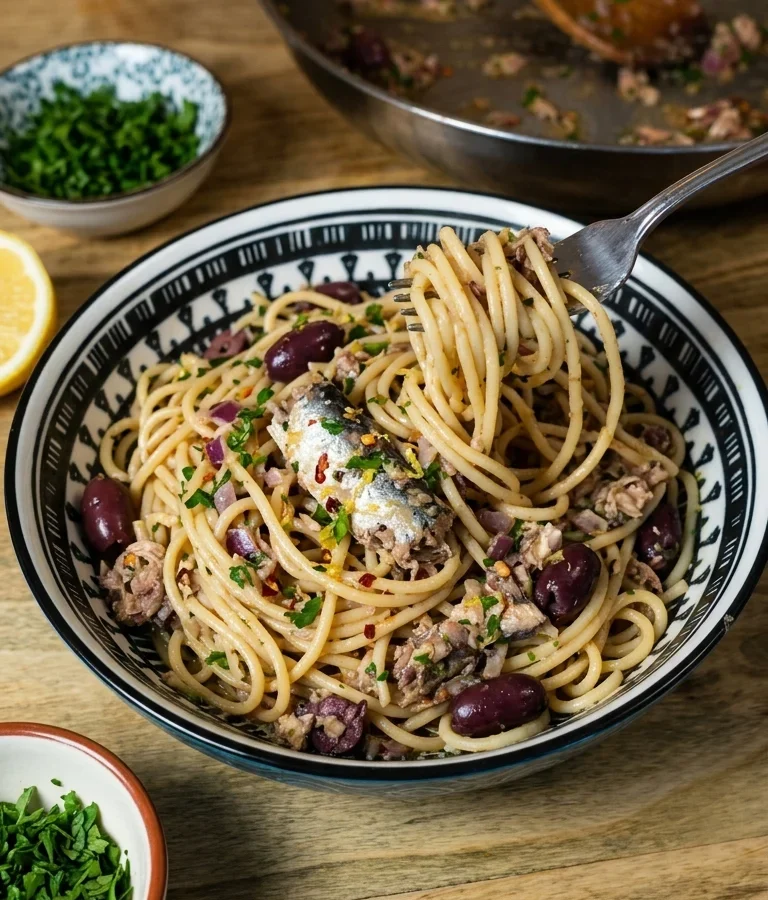
If you have a tin of sardines in your pantry and a box of pasta, you are halfway to an incredible weeknight dinner. This Mediterranean sardine pasta transforms simple pantry staples into a vibrant, glossy, and deeply satisfying dish packed with bright lemon, briny olives, and savory garlic. Don't worry if you're new to cooking with canned fish; breaking the sardines down right in the pan creates a rich, savory base that coats every single strand of noodles.
Why You'll Love This Recipe
- Uses affordable and shelf-stable canned sardines for a fuss-free weeknight meal.
- Comes together in just 20 minutes from start to finish.
- Creates its own glossy, cohesive sauce using starchy pasta water instead of heavy cream.
- Features a bright flavor profile from fresh lemon, garlic, parsley, and briny Kalamata olives.
- Requires only one skillet alongside your pasta pot for easy cleanup.
Ingredients You'll Need (and Why)
Canned sardines (in oil): The star protein and source of savory richness. Cooking them in their own oil builds an instant flavor base for the sauce.
Kalamata olives: Adds a punch of briny, salty depth that cuts through the rich fish and balances the bright citrus notes.
Fennel seeds: Provides a subtle, aromatic anise undertone that pairs exceptionally well with both seafood and lemon.
Pasta cooking water: The starches left in this water combine with the oil and lemon juice to emulsify into a glossy, clingy sauce.
How to Make It
Cooking the Pasta & Saving Water
Start by getting your pasta water generously salted so the noodles absorb flavor from the inside out. Crucially, remember to scoop out a half cup of that starchy water right before draining; it is the secret weapon that transforms oil, lemon, and aromatics into a silky, cohesive sauce.
Building the Aromatic Base
Tossing the sardines and their canning oil straight into the skillet with garlic, onion, and herbs lets everything gently infuse over medium heat. As you mash the sardines, they break down into small, savory morsels that melt into the background rather than dominating every bite.
Emulsifying and Coating
Pouring the reserved pasta water into the skillet creates an instant emulsion when combined with the oil and heat. Simmering this mixture briefly thickens it slightly, ensuring your spaghetti or linguine gets thoroughly coated in a glossy, vibrant sauce.
Success Tips
- Don't skip reserving your pasta water; plain tap water won't have the starches needed to tie the sauce together.
- Keep your heat at a gentle medium when sautéing the garlic and onions so they soften and become fragrant without burning.
- Toss the pasta vigorously with tongs right in the skillet so the noodles can absorb the sauce.
- Add the lemon zest near the end of cooking to preserve its bright, fresh aromatic oils.
Variations
- Swap out spaghetti or linguine for bucatini or penne if that is what you have in your pantry.
- Add a handful of fresh baby spinach at the same time as the pasta for an extra hit of greens.
Storage & Make-Ahead
Fridge: Store leftover pasta in an airtight container in the refrigerator for up to 2 days. Reheat gently on the stovetop with a splash of water to loosen the sauce.
FAQ
Will this pasta taste overly fishy?
Not at all! Mashing the sardines into the garlic, onion, lemon juice, and olive oil creates a savory, rich sauce where the fish flavor is mellow and balanced rather than overpowering.
Can I use sardines packed in water instead of oil?
You can, but you will want to add a tablespoon or two of extra virgin olive oil to the skillet to make up for the missing healthy fats needed to build the sauce.
What kind of pasta works best for this recipe?
Long strands of pasta like spaghetti, linguine, or bucatini work wonderfully because the glossy sauce clings easily to the noodles.