
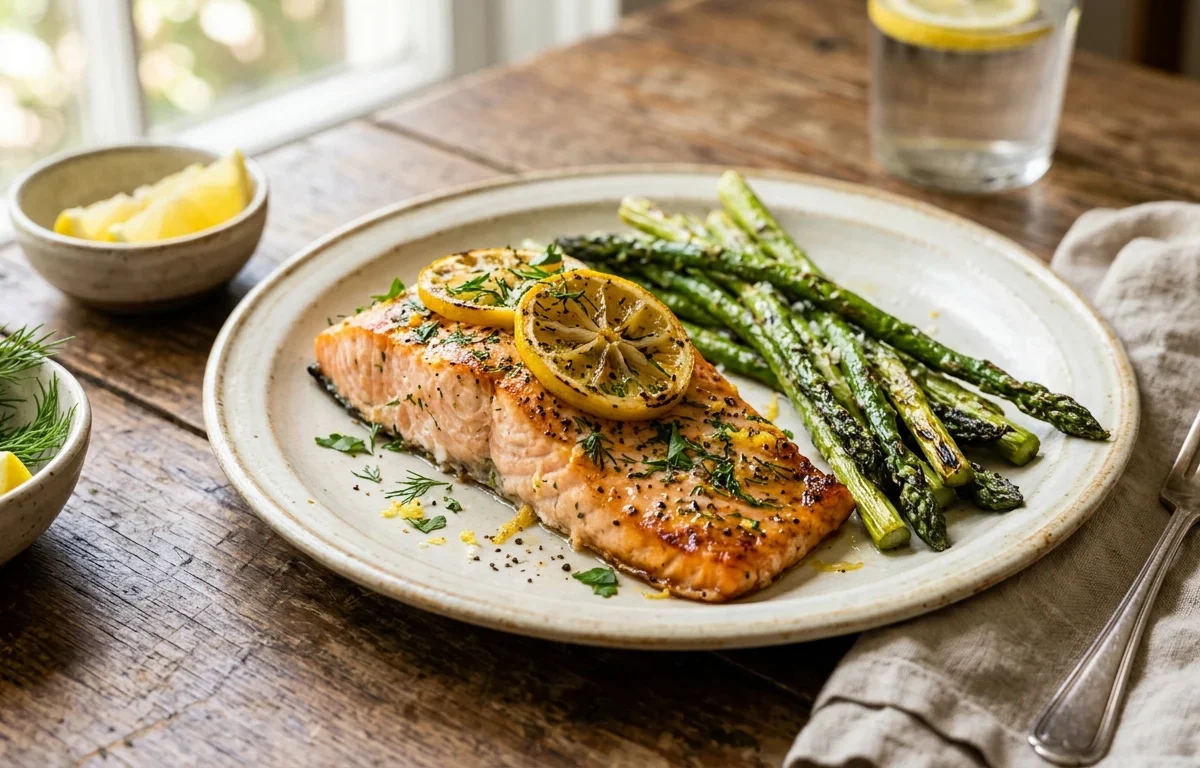
Getting a healthy, flavorful dinner on the table shouldn't require a mountain of dirty dishes. This Lemon Herb Sheet-Pan Salmon & Asparagus pairs flaky, tender fish with crisp-tender green spears, all roasted together on a single pan. With a bright punch of fresh lemon and garlic-herb oil, it comes together in just 25 minutes from start to finish.
Why You'll Love This Recipe
- Only one baking sheet to wash, making cleanup an absolute breeze.
- Ready in 25 minutes, perfect for busy weeknights when you are short on time.
- Naturally gluten-free, dairy-free, low-carb, and keto-friendly without sacrificing flavor.
- Bakes at a high temperature so the salmon stays juicy inside while developing a rich flavor.
- Simple enough for a Tuesday night, yet elegant enough to serve to weekend guests.
Ingredients You'll Need (and Why)
Salmon Fillets: Skin-on fillets act as a protective barrier against the hot pan, preventing the bottom from overcooking while keeping the meat incredibly moist.
Asparagus: Snap the woody ends rather than cutting them; the stalk naturally breaks right where the tender part begins.
Lemon Zest and Juice: Zest provides the aromatic essential oils for deep flavor, while the fresh juice adds the bright acidity that cuts through the rich salmon.
Extra-Virgin Olive Oil: Acts as the conductor for heat and flavor, helping the asparagus blister slightly and keeping the fish from sticking to the pan.
How to Make It
Prep and Temperature Control
A hot oven is your best friend here. Preheating to 400°F ensures that the salmon cooks quickly enough to stay juicy inside while giving the asparagus a chance to develop lovely, blistered edges without turning mushy.
The Garlic-Herb Oil Emulsion
Mixing the olive oil with lemon juice, zest, and garlic before applying it creates a cohesive glaze. This ensures the aromatics don't burn on the dry pan and instead gently infuse the fish and vegetables as they roast.
Arranging the Pan
Give everything space. Crowding the asparagus will trap steam and make it limp rather than tender-crisp, while keeping the salmon separate ensures even heat circulation around the fillets.
Success Tips
- Pat the salmon dry with a paper towel before adding oil and seasonings; surface moisture causes the fish to steam rather than roast.
- Do not crowd the asparagus on the pan; if the spears overlap too much, they will steam and lose their bright snap.
- Watch the thickness of your salmon fillets. Thinner tails cook much faster than thick center-cut pieces, so adjust your bake time accordingly.
- Let the pan rest for 2 minutes before serving to allow the juices inside the fish to redistribute so they don't flood the plate.
Variations
- Swap out the asparagus for tender green beans or broccoli florets during the cooler months.
- Add a pinch of red pepper flakes to the oil mixture if you prefer a subtle kick of heat.
Storage & Make-Ahead
Fridge: Store leftover salmon and asparagus in an airtight container for up to 2 days. Reheat gently in a 300°F oven until warmed through to avoid drying out the fish.
FAQ
Can I use frozen salmon for this recipe?
Yes, but you must thaw the salmon completely in the refrigerator overnight and pat it thoroughly dry with paper towels before seasoning and baking.
Should I remove the skin from the salmon?
It is best to leave the skin on for baking. It protects the delicate flesh from direct heat, and the salmon will easily lift away from the skin with a spatula when serving.
What if my asparagus is very thick?
If you have thick asparagus spears, you can either peel the bottom half with a vegetable peeler or cut them in half lengthwise so they roast in the same amount of time as the salmon.