
If you have ever ended up with dry, rubbery chicken, you are definitely not alone. Chicken breast is notoriously lean, which means it easily loses moisture if it hits the pan without a plan. Don't worry, though—with a quick meat mallet tap and a clever two-step cooking method, you will get golden, juicy chicken every single time.
Why You'll Love This Recipe
- Even thickness from pounding means the edges won't dry out while waiting for the thick center to cook.
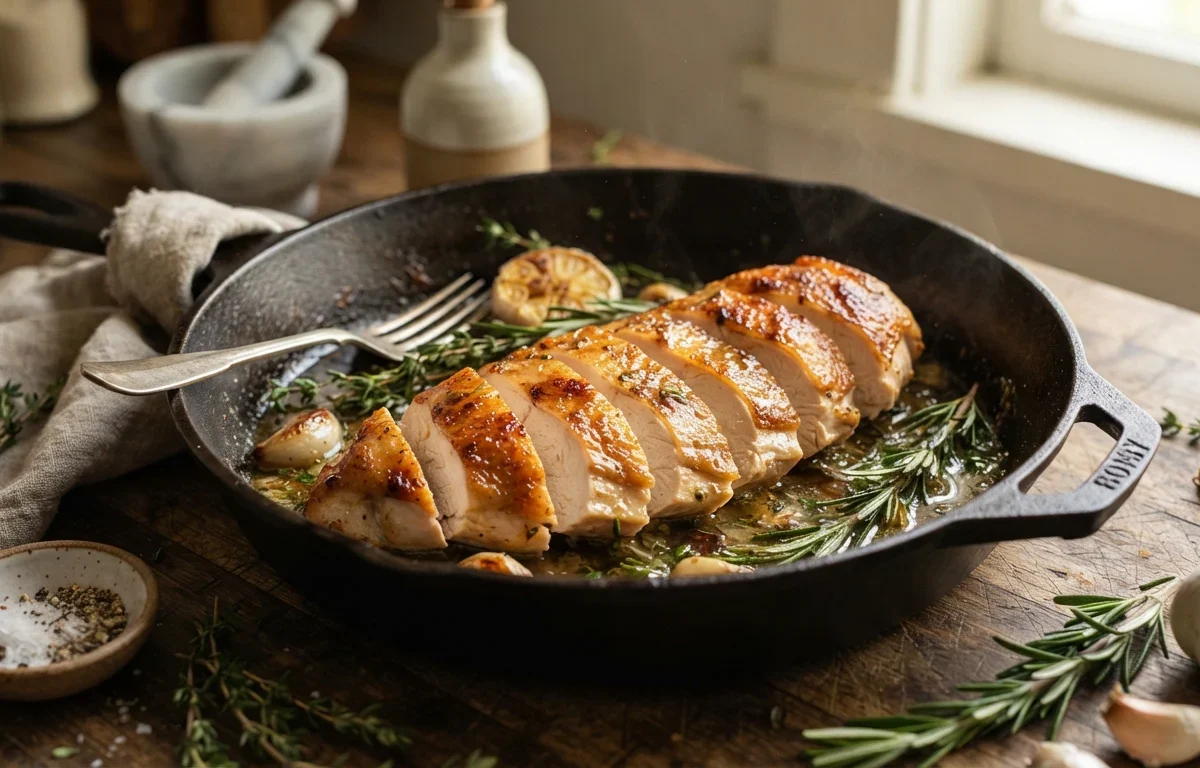
- A quick pan-sear creates a deeply savory, golden-brown crust without needing a breading.
- Comes together in just 25 minutes from fridge to table.
- Naturally low-carb, keto-friendly, and fits almost any dietary preference.
- Uses basic pantry spices you already have in your kitchen.
Ingredients You'll Need (and Why)
olive oil: Chosen for its high smoke point, allowing the pan to get hot enough for a good sear without burning instantly.
unsalted butter: Added toward the end of cooking to baste the chicken, adding rich flavor and helping the exterior turn golden brown.
smoked paprika: Provides a subtle campfire smokiness that elevates the simple spice rub without overpowering the poultry.
kosher salt: Draws out just enough moisture to create flavor contact while seasoning the meat all the way to the center.
How to Make It
The Prep & Pounding
Chicken breasts naturally taper from thick to thin. If you cook them as-is, the thin tail end will turn into leather by the time the thick part reaches a safe internal temperature. Pounding them to an even thickness solves this physics problem completely, guaranteeing uniform cooking time.
The Searing & Basting
A hot pan is your best friend here. Searing creates flavor compounds through caramelization. Adding butter near the end drops the pan temperature slightly while bathing the meat in rich, nutty fat to keep the exterior succulent.
The Rest
Cutting into hot meat right away causes all the delicious juices to run out onto your board. Letting it rest gives the muscle fibers time to relax and reabsorb that moisture so every bite stays juicy.
Success Tips
- Dry the surface of the meat thoroughly; moisture creates steam, which prevents that gorgeous golden-brown crust from forming.
- Use a digital meat thermometer inserted into the thickest part—pull the chicken off the heat the second it hits 165°F to avoid dryness.
- Do not move the chicken around in the pan during the first few minutes; let it form a natural crust so it releases easily on its own.
Variations
- Add a squeeze of fresh lemon juice and a handful of capers to the pan butter for a quick piccata spin.
- Swap the smoked paprika and thyme for Italian seasoning and top with fresh grated parmesan at the end.
Storage & Make-Ahead
Fridge: Store leftover cooked chicken in an airtight container for up to 3 to 4 days.
Freezer: Freeze cooked, sliced chicken in a freezer-safe bag for up to 2 months. Thaw overnight in the fridge before reheating gently.
FAQ
Why is my chicken breast always dry?
Dry chicken usually happens for two reasons: overcooking past 165°F, or cooking chicken straight from the fridge without evening out its thickness first.
Do I have to pound the chicken?
While technically optional, we strongly recommend it. Pounding ensures the entire piece cooks at the exact same rate, preventing dry edges.
Can I bake this instead of pan-searing?
Yes! You can sear the chicken in an oven-safe skillet for 2 minutes per side, then transfer the pan to a preheated 400°F oven for about 10-12 minutes.