
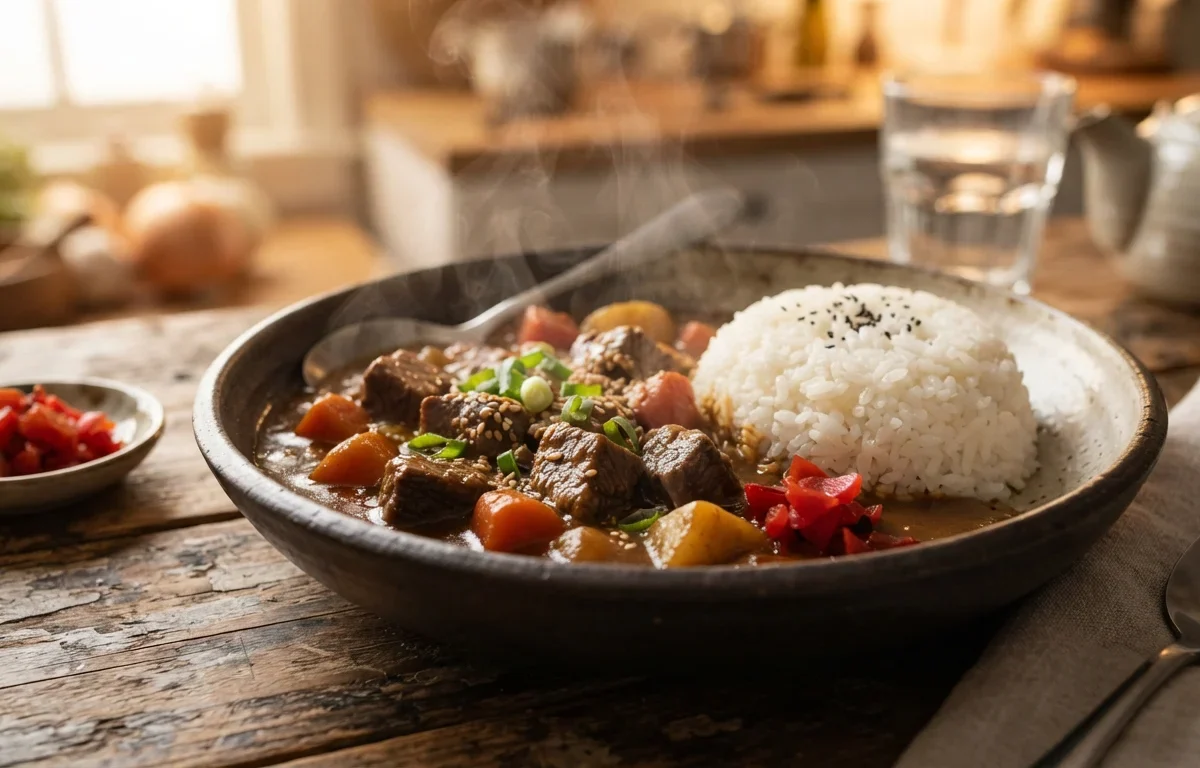
There is a reason Japanese curry is the ultimate comfort food. Unlike fiery Indian curries, this style leans savory, slightly sweet, and wonderfully rich, coating tender beef and vegetables in a thick, glossy gravy. Using boxed curry roux blocks makes it surprisingly simple to recreate that authentic restaurant flavor right in your own kitchen.
Why You'll Love This Recipe
- Features melt-in-your-mouth beef chuck roast simmered until perfectly tender.
- Uses convenient store-bought curry roux blocks for authentic flavor with zero guesswork.
- A true one-pot meal that requires minimal cleanup after dinner.
- Naturally thickens into a rich, glossy gravy without needing a separate cornstarch slurry.
- Pairs effortlessly with a simple bed of hot white rice for a complete, satisfying meal.
Ingredients You'll Need (and Why)
Beef chuck roast: Chuck roast has enough internal fat and connective tissue to break down during a long simmer, yielding ultra-tender meat instead of drying out.
Japanese curry roux blocks: These solid blocks contain a mix of curry powder, flour, and fats that instantly season and thicken your sauce all at once.
Potatoes: As potatoes simmer, some of their starches release into the liquid, helping to naturally body and thicken the final curry gravy.
Onion: Sautéing the onions until translucent draws out their natural sugars, forming a deeply savory flavor base for the entire dish.
How to Make It
Building the Flavor Base
Browning the beef creates essential deep, savory flavors through caramelization. Sautéing the onions right after picks up those browned bits left in the pan, laying down a rich aromatic foundation for the rest of the ingredients.
Simmering Until Tender
Giving the meat and root vegetables time to simmer in broth breaks down tough muscle fibers in the chuck roast and softens the potatoes and carrots. Don't rush this stage, as it ensures everything melts in your mouth.
Melting the Roux
Turning off the heat before adding the roux blocks prevents the flour-based fat from clumping or scorching on the bottom of a hot pot. Once the blocks dissolve smoothly off the heat, a gentle final simmer locks in a glossy, velvety consistency.
Success Tips
- Cut your potatoes and carrots into uniform, bite-sized pieces so they finish softening at the exact same rate as the beef.
- Don't skip browning the beef cubes; those caramelized surface bits add crucial depth to the finished sauce.
- Stir constantly during the final 5-minute simmer because the thickened gravy can easily stick and scorch on the bottom of the pot.
- If your gravy feels slightly too thick after adding the roux, stir in a splash of warm water or broth until it reaches your preferred consistency.
Storage & Make-Ahead
Fridge: Store leftover curry in an airtight container in the refrigerator for up to 3 to 4 days. The flavor often deepens and tastes even better the next day!
Freezer: Freeze the curry base (without potatoes, as they can turn mushy when thawed) in a freezer-safe container for up to 2 months. Thaw overnight in the fridge before reheating.
FAQ
Can I use chicken or lamb instead of beef?
Yes, boneless chicken thighs or lamb shoulder work wonderfully in Japanese curry and follow the exact same cooking instructions.
Why do I need to turn off the heat before adding the roux?
Turning off the heat prevents the oil and flour in the roux blocks from separating and clumping into hard lumps, ensuring a smooth and velvety sauce.
Is Japanese curry very spicy?
Standard Japanese curry roux blocks (like mild or medium S&B Golden Curry) are generally savory, slightly sweet, and mild rather than burning hot. You can buy 'hot' varieties if you prefer more kick.
Special Tools
Affiliate linksThe equipment that makes this recipe easier. Optional, but it helps.
As an Amazon Associate we earn from qualifying purchases. Links below are affiliate links, at no extra cost to you.