
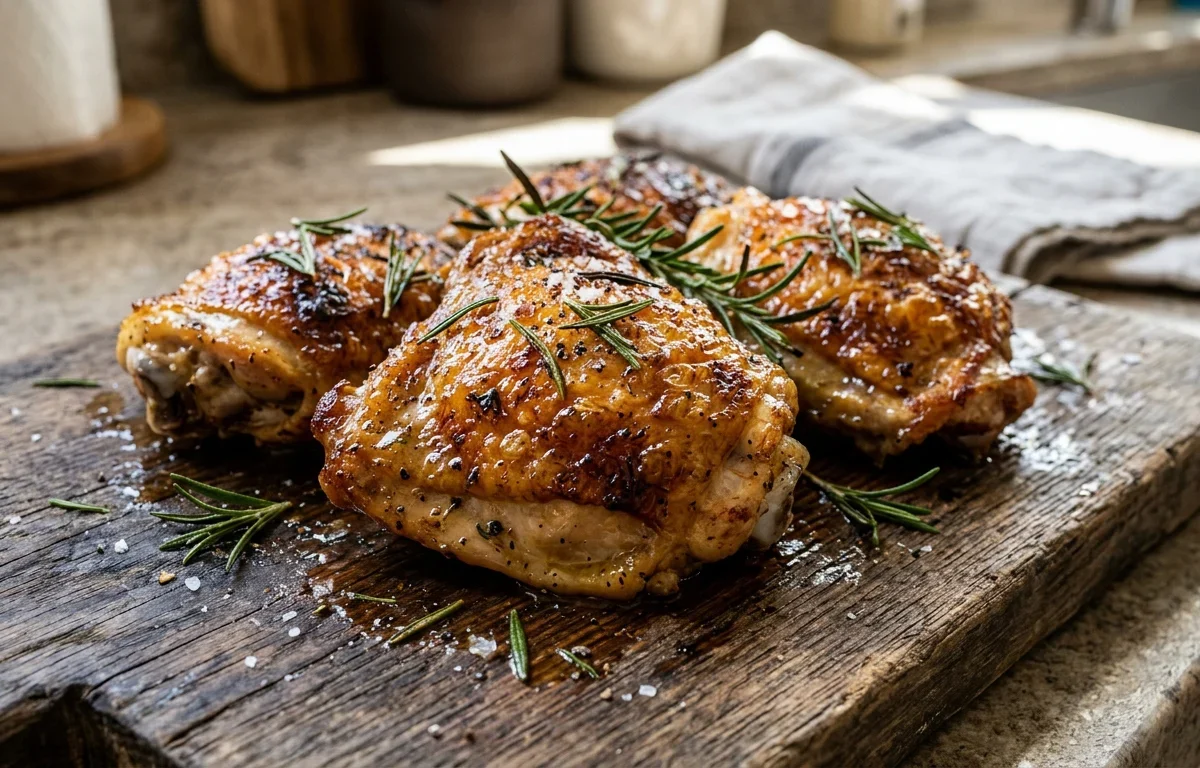
If you struggle with getting chicken skin truly crisp in the oven, this recipe is for you. By combining an elevated wire rack setup with thorough moisture removal, you get crackling, golden skin while keeping the meat juicy and tender. Don't worry if you've had soggy baked chicken in the past; this simple technique changes everything.
Why You'll Love This Recipe
- Utilizes a wire rack elevated over a baking sheet to circulate heat all around the chicken for 360-degree crispness.
- Relies on bone-in, skin-on chicken thighs which naturally stay juicy and flavorful while baking.
- Uses a pantry-friendly spice blend of garlic powder, onion powder, and smoked paprika for deep savory flavor.
- Naturally gluten-free, dairy-free, keto, and low-carb with zero hidden fillers or flour coatings.
Ingredients You'll Need (and Why)
bone-in, skin-on chicken thighs: Bone-in meat cooks more evenly and retains moisture far better than boneless cuts, while the skin provides the fat needed to achieve a crispy exterior.
olive oil or avocado oil: Acts as a conduit for heat, helping the surface of the skin brown evenly and allowing the dry spices to adhere securely to the meat.
smoked paprika: Imparts a subtle campfire smokiness and a rich, appealing reddish-gold color to the chicken skin as it renders and bakes.
sea salt: Enhances the natural savors of the poultry and helps draw out residual surface moisture for a better crunch.
How to Make It
The Setup & Moisture Control
Before seasoning, taking the time to pat the chicken completely dry with paper towels is the single most important step for texture. Any lingering moisture on the skin will steam rather than fry in the oven heat, preventing that crackling finish. Elevating the thighs on a wire rack ensures hot air circulates underneath, preventing the bottoms from getting soggy.
Seasoning & Baking
Rubbing a thin layer of oil over the chicken gives the spices something to grip and helps conduct heat directly to the skin. Baking at 400°F renders the fat slowly, allowing the skin to crisp up naturally without burning the spices. Giving each thigh breathing room on the rack ensures even heat distribution across the entire pan.
Success Tips
- Always use paper towels to get the skin as dry as humanly possible before adding oil.
- Do not crowd the wire rack; leave at least an inch of space between each chicken thigh so air can flow freely.
- Use an instant-read digital thermometer inserted into the thickest part of the meat (avoiding the bone) to verify the 74°C (165°F) internal temperature.
- If your oven tends to run cool, use the high broil function for the final 2-3 minutes, but watch it constantly so the spices do not scorch.
Storage & Make-Ahead
Fridge: Store leftover cooked chicken thighs in an airtight container in the refrigerator for up to 3 to 4 days.
Freezer: Freeze cooled chicken thighs in a heavy-duty freezer bag or airtight container for up to 2-3 months. Thaw overnight in the fridge before reheating in a 375°F oven to help re-crisp the skin.
FAQ
Can I use boneless skinless chicken thighs for this recipe?
You can, but you will not get the same crispy skin texture since boneless, skinless cuts lack the fat layer and skin required for crackling results. Adjust the cooking time down slightly as boneless thighs cook faster.
Why do I need a wire rack?
The wire rack elevates the chicken above the pooled rendered fat and baking sheet, allowing hot oven air to circulate underneath so the bottom and sides get just as crispy as the top.
Do I need to flip the chicken while it bakes?
No flipping is required! Keeping the chicken skin-side up the entire time allows the skin to render its fat and crisp up undisturbed.
Special Tools
Affiliate linksThe equipment that makes this recipe easier. Optional, but it helps.
As an Amazon Associate we earn from qualifying purchases. Links below are affiliate links, at no extra cost to you.