
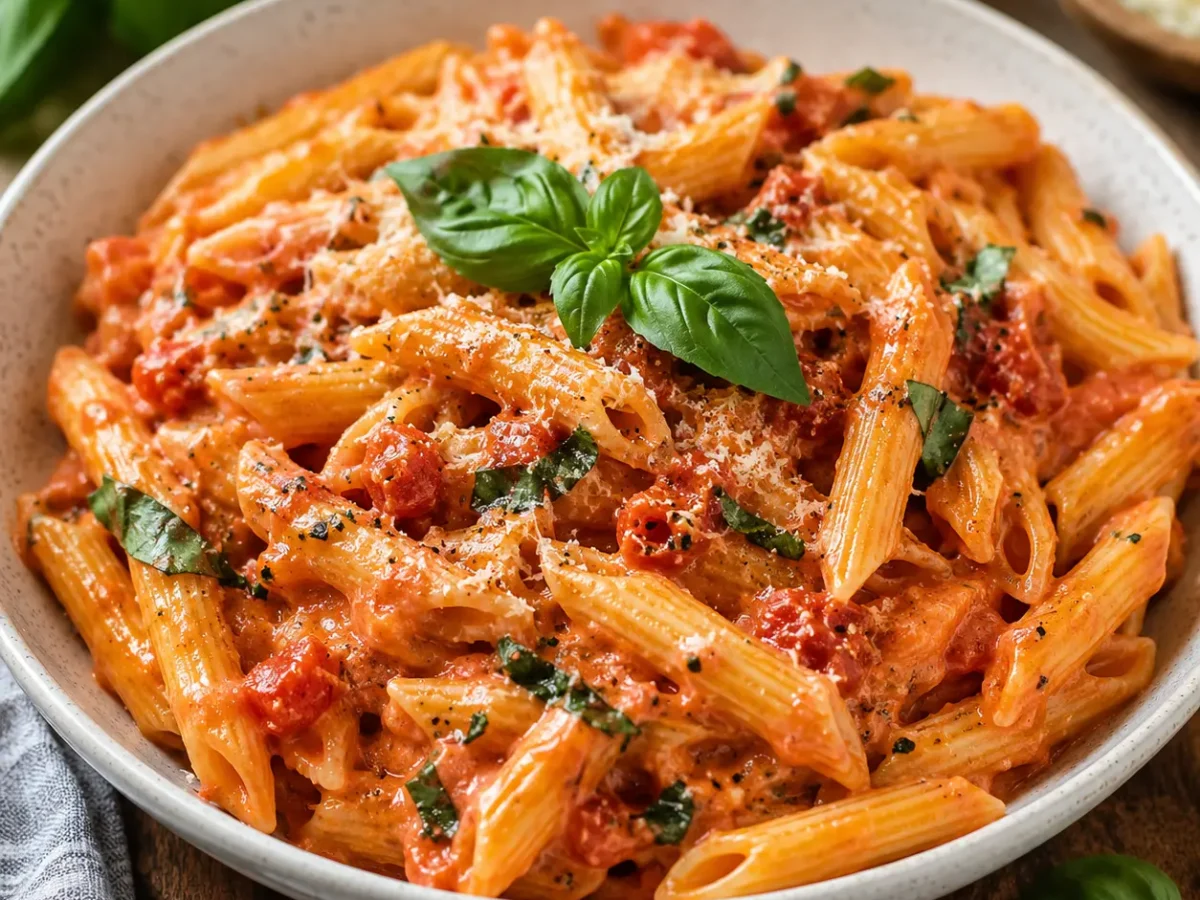
If you have ever had a tomato cream sauce split on you or end up watery at the bottom of your bowl, you are not alone. Making a restaurant-worthy pink sauce comes down to emulsifying your fat and acid using the starch from your pasta cooking water. In just 25 minutes, you can turn humble pantry staples into a silky, comforting dinner that tastes like it came from an Italian trattoria.
Why You'll Love This Recipe
- Uses starchy pasta water to bind oil and dairy into an ultra-silky, glossy sauce that coats every noodle.
- Balances bright acid from canned tomatoes with rich heavy cream and freshly torn sweet basil.
- Comes together in a single pan while your pasta boils, keeping total active time under 25 minutes.
- Easy to customize with added proteins like grilled chicken or crushed red pepper for extra kick.
Ingredients You'll Need (and Why)
Tomato Paste: Sautéing the tomato paste before adding liquids caramelizes its natural sugars, deepening the savory umami base of the sauce.
Crushed San Marzano Tomatoes: San Marzano tomatoes have fewer seeds and lower acidity than standard canned tomatoes, creating a naturally sweet sauce without needing added sugar.
Heavy Cream: The high fat content in heavy cream prevents curdling when mixed with acidic tomatoes; light milk or half-and-half lacks this stability.
Starchy Pasta Water: As pasta boils, it releases starches into the water; this liquid acts as a natural emulsifier, binding oil and dairy into a glossy, clingy sauce.
Fresh Basil: Tearing the basil by hand right before stirring it in prevents premature bruising and keeps its aromatic oils vibrant.
How to Make It
Build the Aromatic Tomato Base
Starting with soft onions and gently cooked garlic creates a sweet foundation. Cooking the concentrated tomato paste directly in the warm oil—a technique called blooming—deepens the color and removes raw tinny notes before crushed tomatoes simmer down into a thick base.
Emulsify Dairy and Starch
Pouring room-temperature cream into reduced tomato sauce over low heat prevents thermal shock. Adding hot starchy pasta water and finely grated Parmigiano-Reggiano off the high heat allows the fats and starch to bind seamlessly, ensuring your sauce clings to every ridge of the pasta instead of pooling at the bottom.
Finish with Fresh Herbs
Fresh basil is sensitive to prolonged heat. Folding torn leaves into the sauce right after taking the pan off the burner preserves their bright anise flavor and prevents the herbs from turning dark and bitter.
Success Tips
- Grate your Parmigiano-Reggiano off a block using a microplane; pre-shredded packaged cheeses contain anti-caking agents that make sauces gritty.
- Keep heavy cream at room temperature for 15 minutes before adding, or warm it slightly in the microwave so it blends without breaking.
- Don't worry if the sauce looks a little watery when you first pour in the pasta water; vigorous tossing over low heat for 60 seconds will cause it to thicken into a silky glaze.
Variations
- Spicy Pink Sauce: Increase red pepper flakes to 3/4 tsp and add a pinch of smoked paprika for a subtle smoky heat.
- Protein-Packed: Top with sliced pan-seared chicken breast, grilled shrimp, or browned Italian sausage.
- Gluten-Free: Swap standard rigatoni for your favorite GF alternative, taking care to save the cooking water just the same.
Storage & Make-Ahead
Fridge: Store leftovers in an airtight container in the refrigerator for up to 4 days. Reheat gently on the stovetop over low heat with a splash of milk or water to restore creamy texture.
Freezer: Freezing is not recommended because dairy-based cream sauces tend to separate and turn grainy upon thawing.
FAQ
Why did my sauce separate or look greasy?
Sauces split when dairy is subjected to sudden high heat or high acidity. Lower your heat before adding cream, use heavy cream instead of low-fat dairy, and rely on starchy pasta water to hold the emulsion together.
Can I use dried basil instead of fresh?
Dried basil works in a pinch, but add 1 teaspoon along with the crushed tomatoes so it rehydrates. Fresh basil added at the end provides a much brighter aroma that complements the rich cream.
What is the best pasta shape for creamy tomato sauce?
Tubular shapes like rigatoni, penne, or rigatoni-style mezze penne are ideal because the thick cream sauce coats both the exterior ridges and the hollow interior.