
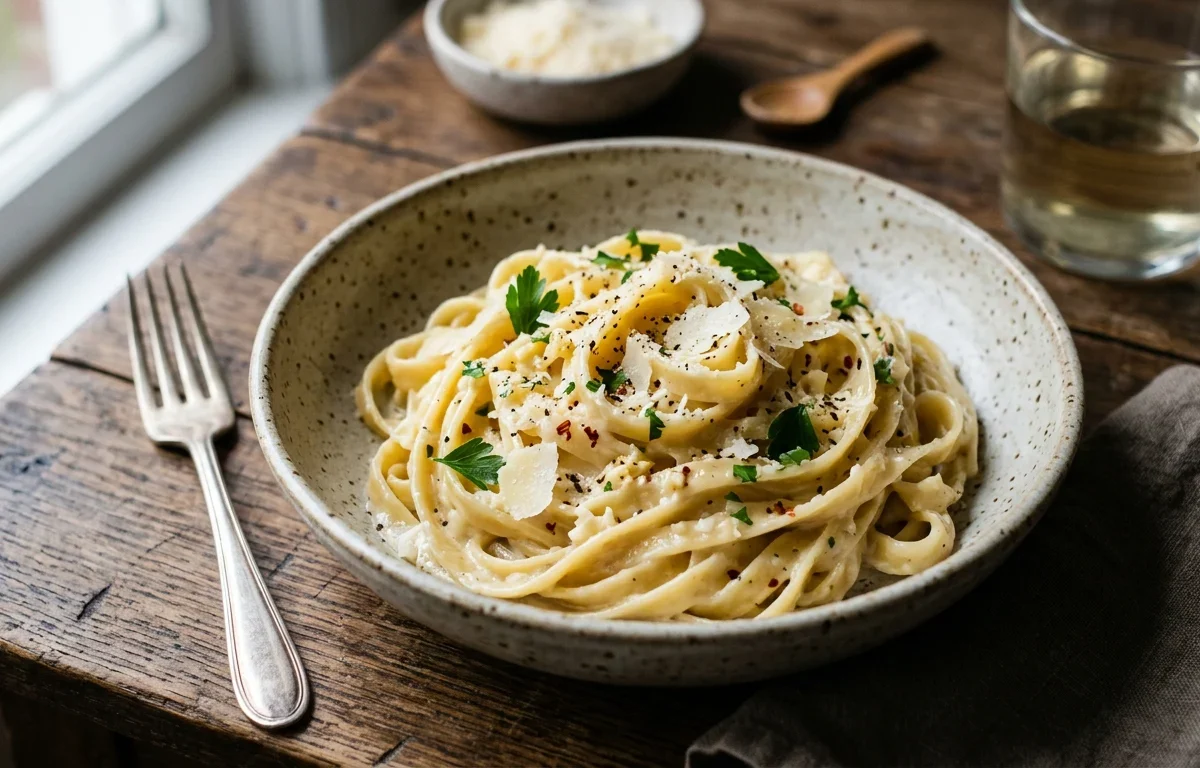
If you love creamy pasta but hate washing a mountain of dishes afterward, this one-pot garlic parmesan pasta is about to become your new weeknight favorite. By cooking the dry pasta directly in the broth and cream, the starches release right into the liquid, creating a velvety sauce without a single roux or extra pot.
Why You'll Love This Recipe
- Cooks entirely in a single pot, meaning cleanup takes less than two minutes.
- Requires zero draining; the pasta starches thicken the sauce naturally.
- Uses everyday pantry staples you likely already have in your kitchen.
- Ready from scratch in just 20 minutes, perfect for busy weeknights.
Ingredients You'll Need (and Why)
garlic, minced: Sautéing the garlic briefly in olive oil builds a savory foundation, but don't let it brown too much or it will turn bitter.
chicken or vegetable broth: Acts as the primary cooking liquid that infuses deep, savory flavor directly into the pasta as it absorbs the moisture.
whole milk: Provides the creamy dairy base without being overly heavy like pure heavy cream, balancing the rich parmesan.
grated parmesan cheese: Melts into the starchy cooking liquid at the very end to create a glossy, thick cheese sauce. Use freshly grated for the best texture.
unsalted butter: Stirred in right at the end to add a glossy sheen and a rich, velvety mouthfeel to the finished sauce.
How to Make It
Building the Flavor Base
Starting with a quick sizzle of garlic in olive oil wakes up the aromatics. Because this is a one-pot meal, building this initial layer of flavor right in the pan is crucial since we aren't layering flavors from multiple cooked components later.
Simmering and Starch Release
As the pasta cooks directly in the broth and milk, it sheds its surface starches right into the pan. Stirring frequently during this stage ensures the pasta cooks evenly and prevents the starches from settling and scorching on the bottom of the pot.
Emulsifying the Sauce
Taking the pot off the heat before adding the parmesan and butter is essential. High heat can cause cheese to clump and separate into oily pools, whereas residual heat gently melts it into a smooth, glossy emulsion.
Success Tips
- Stir the pasta frequently during the first few minutes of simmering; dry pasta dropped into liquid has a natural tendency to stick to the bottom of the pot.
- Keep the heat at a gentle simmer rather than a rolling boil so the milk doesn't curdle and the liquid doesn't evaporate too quickly before the pasta softens.
- Use freshly grated parmesan from a block rather than pre-shredded or powdered cheese for a smoother, meltier sauce texture.
- Remove the pot from the heat entirely before stirring in the cheese to prevent the dairy from breaking.
Variations
- Add a cup of frozen peas or fresh baby spinach during the last two minutes of cooking for a pop of green and extra nutrients.
- Toss in cooked chicken breast or sautéed shrimp at the end to add a boost of protein.
Storage & Make-Ahead
Fridge: Store leftovers in an airtight container in the refrigerator for up to 3 days. Reheat gently on the stovetop with a splash of milk to restore the creamy texture.
FAQ
Can I use gluten-free pasta for this recipe?
Gluten-free pasta releases starch differently and can break down or turn mushy when cooked directly in sauce. If using gluten-free pasta, we recommend boiling it separately and tossing it into a separately made sauce.
Why is my pasta still hard, but all the liquid is gone?
Your heat might have been a bit too high, causing the liquid to evaporate too quickly. Simply splash in another half-cup of broth or water and continue simmering until the pasta is tender.
Can I use skim or 2% milk instead of whole milk?
You can, but the final sauce will be noticeably less creamy. Whole milk provides the necessary fat content to help create a rich, velvety sauce without needing heavy cream.